 WhatsApp Us Now

Walk through a warehouse, manufacturing facility, or distribution center, and you’ll probably notice forklifts moving around, carrying heavy loads, and navigating narrow aisles. These machines make everyday operations faster and more efficient, but they also create potential hazards when pedestrians and vehicles share the same space.
A moment of distraction, a blind corner, or an overloaded forklift can lead to a serious workplace accident. That’s why clear safety communication matters. Forklift Safety Signs help employees, visitors, and equipment operators understand where forklifts operate, which areas require extra caution, and what precautions they should follow.
But not every forklift sign communicates the same message. Some warn people about approaching vehicles, while others restrict access, indicate speed limits, or remind operators to follow specific safety practices.
In this guide, we’ll explain what different forklift safety signs mean, where they should be installed, and how businesses can use them to improve workplace hazard awareness.
Why Are Forklift Safety Signs Important?
Forklifts are commonly used in warehouses, factories, distribution centers, loading docks, and storage facilities. Since these environments often have employees walking alongside moving equipment, the risk of collisions and other incidents needs to be carefully managed.
Forklift signs provide visual reminders that help people recognize potential hazards before entering an operating area.
Here are a few important reasons to use them:
- Improve hazard awareness: Alert workers and visitors when forklifts are operating nearby.
- Protect pedestrians: Remind employees to use designated walkways and stay clear of vehicle routes.
- Communicate workplace rules: Display instructions about speed limits, restricted areas, and safe operating practices.
- Reduce confusion: Help employees recognize designated forklift routes, crossings, and loading zones.
- Support safety procedures: Reinforce the training and traffic management measures already followed within a facility.
However, signs alone cannot prevent forklift accidents. They should be supported by operator training, pedestrian segregation, physical barriers where appropriate, traffic management procedures, and regular equipment inspections.
What Do Different Forklift Safety Signs Mean?
Understanding the message behind each sign helps businesses choose the right signage for different workplace conditions.
Let’s look at some commonly used forklift safety signs and what they communicate.
1. Caution: Forklift Traffic Signs
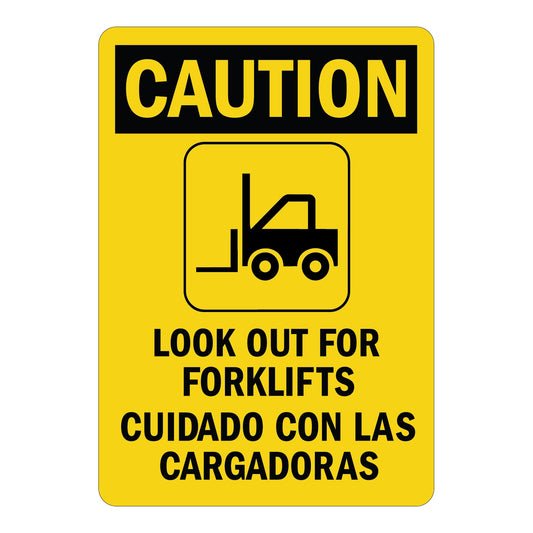
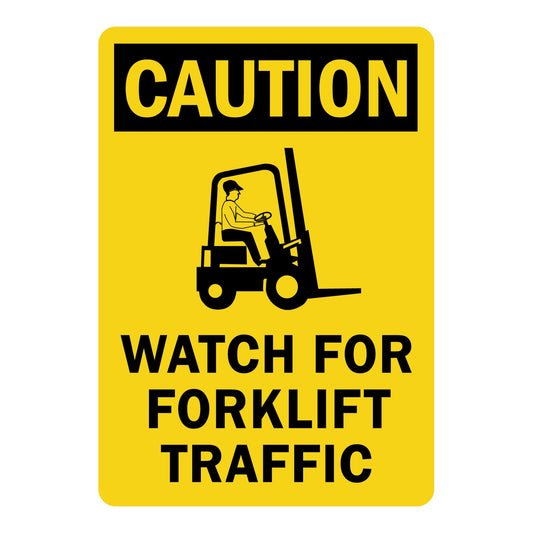
A Caution: Forklift Traffic sign alerts employees and visitors that forklifts may be operating in the area.
You’ll commonly find these signs near warehouse entrances, production areas, loading docks, and storage aisles.
What does it mean?
It tells pedestrians to stay alert, watch for moving forklifts, and avoid entering vehicle routes without checking their surroundings.
For example, an employee walking into a warehouse aisle may not immediately notice a forklift approaching from behind a storage rack. A clearly positioned warning sign can remind them to look for moving equipment before crossing.
These signs are particularly useful in areas where forklifts and pedestrians frequently share space.
2. Warning: Forklift Operating Area Signs
Warning signs identify areas where forklift operations create a potential hazard.
They are useful near loading zones, material handling areas, warehouse entrances, and production floors.
What does it mean?
The message tells people that powered industrial trucks operate within the marked area and that additional caution is necessary.
Depending on the workplace, the sign may include a forklift graphic, a warning message, or instructions to watch for moving vehicles.
Businesses should place these signs where people can see them before entering the operating area, rather than after they have already walked into a hazardous zone.
3. No Pedestrian Access Signs
These signs indicate that pedestrians are not permitted to enter a particular area.
They are commonly used in restricted forklift routes, heavy material handling zones, and designated vehicle-only sections.
What does it mean?
The sign communicates that the area is restricted to authorized vehicles or personnel, depending on the workplace’s access rules.
For example, a warehouse may have a dedicated forklift lane separated from pedestrian walkways. A No Pedestrian Access sign reinforces the restriction and helps prevent people from using the vehicle route as a shortcut.
Where possible, physical barriers and clearly marked pedestrian walkways should support these restrictions.
4. Forklift Speed Limit Signs
Forklift speed limit signs communicate the maximum permitted speed within a designated workplace area.
You may see these signs near narrow warehouse aisles, loading docks, intersections, ramps, and busy pedestrian zones.
What does it mean?
The sign reminds operators to follow the facility’s designated speed limit and adjust their speed according to operating conditions.
For example, a facility may establish a lower speed limit near pedestrian crossings than in a designated vehicle-only area.
Even when a speed limit is posted, operators must maintain a speed that allows them to stop safely under the actual workplace conditions. Wet floors, poor visibility, heavy loads, and sharp turns may require additional caution.
5. Sound Horn at Intersection Signs
Blind corners and warehouse intersections can create visibility challenges for forklift operators and pedestrians.
Sound Horn at Intersection signs remind operators to use the horn when approaching areas where their view may be obstructed.
What does it mean?
The sign communicates that operators should alert people nearby before moving through an intersection or blind corner.
For instance, a forklift approaching an aisle intersection may not be visible to someone walking from the opposite direction. Sounding the horn can provide an additional warning.
However, operators should never rely on the horn alone. They must also slow down, maintain a clear view, and stop when necessary.
6. No Riders on Forklift Signs
Forklifts are designed to carry materials, not unauthorized passengers.
No Riders on Forklift signs remind employees that riding on the forks, standing on the vehicle, or using unauthorized passenger positions is prohibited.
What does it mean?
The sign reinforces the rule that people must not ride on a forklift unless the equipment is specifically designed and authorized for that purpose.
These signs are particularly useful in manufacturing facilities, warehouses, and loading areas where employees work closely with material handling equipment.
7. Keep Clear of Forklift Signs
These signs remind pedestrians and other workers to maintain a safe distance from operating forklifts.
They are especially useful near loading docks, material storage areas, and busy warehouse aisles.
What does it mean?
The message tells people to avoid standing too close to moving equipment, lifting mechanisms, and suspended or elevated loads.
For example, employees should never stand or walk underneath an elevated forklift load. Keeping a safe distance can reduce exposure to falling materials and other hazards.
8. Forklift Parking Area Signs
Not all forklift signs are designed to warn people about moving equipment. Some identify designated parking and storage areas.
Forklift Parking Area signs help operators identify where equipment should be parked when not in use.
What does it mean?
The sign indicates a designated location for parking forklifts and helps prevent equipment from being left in walkways, emergency exits, or busy traffic routes.
A properly designated parking area can also support organized warehouse operations and reduce unnecessary obstructions.
What Do Different Safety Sign Colors Mean?
The color of a safety sign helps communicate the type of message it carries. Recognizing these colors makes it easier for workers to understand safety information quickly.
Here is a simple overview:
| Sign category | Common color scheme | Meaning |
|---|---|---|
| Danger | Red, black, and white | Indicates an immediate danger requiring special precautions. |
| Warning | Orange and black in ANSI-style signage | Highlights a hazard that could result in serious injury. |
| Caution | Yellow and black | Alerts people to a potential hazard or unsafe practice. |
| Notice | Blue and white in ANSI-style signage | Communicates information related to equipment or property. |
| Safety Instruction | Green and white | Provides general safety instructions or information. |
The signal word and color should match the actual hazard and the applicable sign design standard. OSHA’s accident prevention sign requirements distinguish Danger, Caution, and Safety Instruction signs. ANSI Z535 provides additional guidance for modern safety sign formats.
Where Should Forklift Safety Signs Be Installed?
Choosing the right sign is only one part of workplace safety. Its location also matters.
Signs should be installed where workers and visitors can see and understand the message before reaching the hazard.
Here are some common placement locations:
Warehouse Entrances: Install forklift traffic warnings at entrances to alert visitors and employees before they enter operating areas.
Aisle Intersections: Use caution signs and horn reminders near blind corners and intersections where visibility is limited.
Loading and Unloading Docks: Display forklift warnings, restricted-access signs, and relevant loading-area instructions.
Pedestrian Crossings: Use appropriate warning signs and floor markings to identify points where pedestrians and forklifts may cross paths.
Storage and Material Handling Areas: Install keep-clear and restricted-access signs where workers may be exposed to moving equipment or elevated loads.
Designated Parking Areas: Use forklift parking signs to identify approved parking locations and keep traffic routes clear.
Remember to check that signs remain visible, readable, and in good condition. Replace damaged or faded signage when the message is no longer clear.
How to Choose the Right Forklift Safety Signs for Your Facility
Every workplace has different forklift traffic patterns and potential hazards. A sign that works well in a small storage room may not be suitable for a large distribution center.
Before selecting signage, consider the following factors:
1. Identify Workplace Hazards
Review forklift routes, pedestrian crossings, blind corners, loading docks, and material storage areas. Identify where workers need additional warnings or instructions.
2. Select the Appropriate Sign Message
Choose signs that communicate the actual hazard. For example, use Forklift Traffic signs near operating areas and No Pedestrian Access signs where entry is restricted.
3. Consider Visibility and Placement
Choose suitable sizes, colors, and mounting locations. Signs should be easy to read from an appropriate distance and should not be hidden behind equipment or stored materials.
4. Choose Suitable Materials
Warehouses and industrial facilities may expose signs to dust, moisture, sunlight, abrasion, and frequent handling. Select materials and finishes appropriate for the installation environment.
5. Review and Maintain Signage
Inspect signs regularly to ensure they remain readable and accurately reflect workplace conditions. Update them whenever traffic routes or operating procedures change.
Final Thoughts
Forklift operations are an essential part of many warehouses, manufacturing facilities, and distribution centers. But with moving equipment and pedestrian traffic sharing the same environment, clear communication is important.
Understanding different Forklift Safety Signs helps businesses identify potential hazards, communicate workplace restrictions, and remind employees about safe operating practices. From forklift traffic warnings and speed limit signs to pedestrian restrictions and horn reminders, each sign serves a specific purpose.
The right combination of visible signage, designated traffic routes, operator training, pedestrian walkways, and appropriate physical controls can support a more organized and safety-conscious workplace.


