 WhatsApp Us Now

Planning a trip to the United Kingdom? Whether you are visiting London, exploring Edinburgh, or spending a few days in the British countryside, knowing a few practical things can make your journey easier.
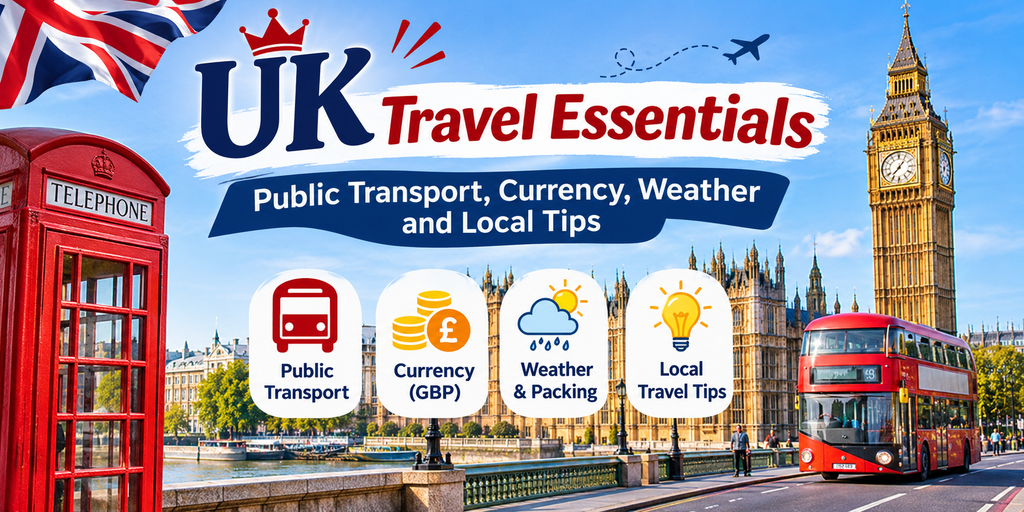
From using public transport to understanding British currency and unpredictable weather, this guide covers the essential UK travel tips every first-time visitor should know.
Getting Around the UK Using Public Transport
The United Kingdom has a well-connected transport network, making it relatively easy to explore major cities and popular tourist destinations without renting a car.
Trains for Long-Distance Travel
Trains are a convenient way to travel between London, Manchester, Birmingham, Edinburgh, and other major destinations.
You can check routes and book tickets through National Rail or individual train operators. Booking in advance often helps you find cheaper fares, especially during busy travel periods.
Buses and the London Underground
London’s Underground, commonly called the Tube, is one of the easiest ways to move around the capital.
Visitors can use an Oyster card or an accepted contactless bank card to pay for journeys. Remember to use the same card or device when touching in and out to benefit from applicable fare caps.
Local buses are also useful for shorter journeys and sightseeing. Outside London, cities have their own bus networks and payment arrangements.
Understanding UK Currency and Payments
The official currency of the United Kingdom is the British Pound Sterling (GBP), represented by the symbol £.
Most hotels, restaurants, supermarkets, and tourist attractions accept debit and credit cards. Contactless payments are particularly common in larger cities.
However, carrying a small amount of cash is useful when visiting local markets, small shops, or rural areas.
Money-saving tip: Check your bank’s international transaction charges before travelling. Paying in British pounds rather than your home currency can sometimes help you avoid costly conversion rates.
UK Weather: What Should You Pack?
British weather can change quickly. A sunny morning might turn into a rainy afternoon, so packing suitable clothing is important.
Weather Throughout the Year
- Spring (March–May): Mild temperatures, occasional rain, and beautiful gardens.
- Summer (June–August): Generally warmer days, longer daylight hours, and busy tourist attractions.
- Autumn (September–November): Cooler weather, colourful landscapes, and frequent rainfall.
- Winter (December–February): Cold temperatures, shorter days, and occasional snow, particularly in northern areas.
Pack a waterproof jacket, comfortable walking shoes, and clothes you can wear in layers. An umbrella is helpful, but a raincoat is often more practical on windy days.
Check Your UK Travel Documents Before Departure
Before booking your journey, check whether your nationality requires a visa or a UK Electronic Travel Authorisation (ETA).
Eligible travellers can explore the Apply for United Kingdom ETA Online service for application assistance and information about the process.
The service advertises mobile-friendly applications, document assistance, secure submission, customer support, and expedited processing options. However, approval decisions and processing times remain under UK immigration authorities’ control.
An ETA is not a replacement for a visa if your nationality requires one. Always confirm your eligibility and receive the necessary travel permission before departure.
Important Local Tips for First-Time UK Visitors
Understanding everyday British customs can make your trip more comfortable.
Follow Queuing Etiquette
People in the UK generally wait patiently in lines at bus stops, shops, and ticket counters. Avoid moving ahead of others who are waiting.
Remember That Vehicles Drive on the Left
Cars travel on the left side of the road. Pay attention when crossing streets, particularly near busy intersections.
Understand Tipping Customs
Tipping is appreciated but not always expected. Restaurants sometimes include a service charge on the bill, so check before leaving an additional tip.
Carry the Right Power Adapter
The UK uses Type G electrical sockets, with three rectangular pins. The standard electricity supply is 230V, so check whether your devices are compatible.
Keep Emergency Numbers Handy
Dial 999 or 112 for emergency assistance involving police, ambulance, or fire services.
Final Thoughts
Travelling around the United Kingdom becomes much easier when you understand its transport system, currency, weather, and local customs.
Plan your train journeys, pack for changing weather, carry a suitable payment card, and check your travel documents before leaving home.
With a little preparation, you can spend less time worrying about practical details and more time enjoying Britain’s historic streets, beautiful countryside, museums, and memorable attractions.


