 WhatsApp Us Now

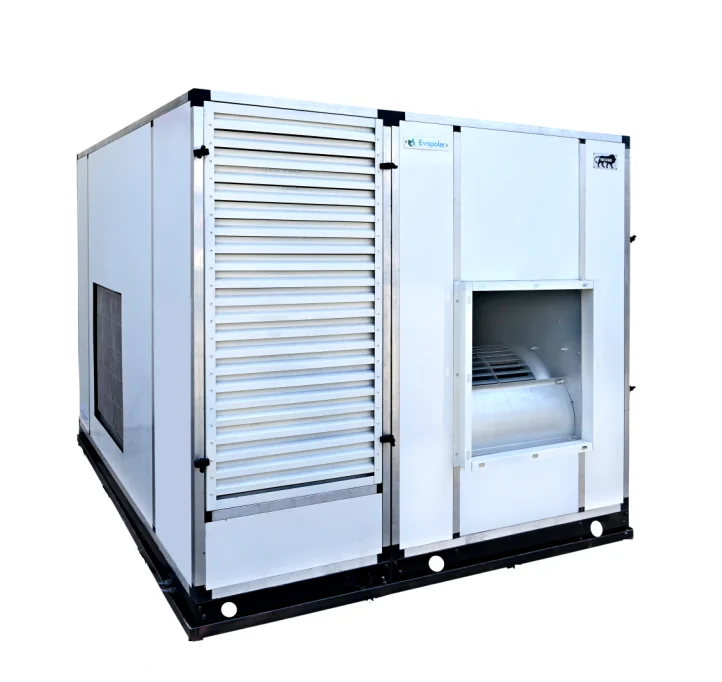
Indirect Evaporative Cooling: An Energy-Efficient Approach to Modern Air Cooling
As temperatures rise and energy consumption increases, businesses are looking for more efficient ways to cool commercial and industrial spaces. Traditional air conditioning can provide effective temperature control, but its electricity requirements may increase operating costs, particularly in large facilities that need continuous cooling.
Indirect evaporative cooling is an alternative cooling technology that uses water evaporation and heat exchange to reduce air temperature without directly adding moisture to the supply air. It offers an approach to improving cooling efficiency while supporting better indoor air conditions.
What Is Indirect Evaporative Cooling?
Indirect evaporative cooling is a cooling process in which one air stream is cooled through evaporation, while another air stream transfers heat through a heat exchanger. The two air streams remain separate, so moisture from the evaporative process does not directly enter the supply air.
This makes the technology different from conventional direct evaporative cooling, where water evaporates directly into the air being supplied to the space.
Because the supply air is cooled without direct humidification, indirect evaporative cooling can be considered for facilities where maintaining indoor humidity is an important requirement.
How Does Indirect Evaporative Cooling Work?
The system generally operates through two separate air streams:
- Primary air: Outdoor air passes through the dry side of a heat exchanger. It is cooled without coming into direct contact with water.
- Secondary air: A separate air stream passes through a wetted section, where water evaporation absorbs heat and lowers the air temperature.
- Heat exchange: The cooled secondary air removes heat from the primary air through the heat exchanger walls.
- Cool air supply: The cooled primary air is delivered to the required indoor space without moisture being added through direct water contact.
This process uses evaporation to remove heat while keeping the supply and secondary air streams separate.
Key Benefits of Indirect Evaporative Cooling
1. Reduced Cooling Energy Consumption
Indirect evaporative cooling primarily uses fans and water pumps rather than relying entirely on energy-intensive refrigeration. Depending on climate, system design and operating conditions, it can reduce cooling energy requirements.
2. Cooling Without Direct Humidification
One important advantage is that the supply air does not come into direct contact with the water used for evaporation. This helps maintain the moisture content of the primary air stream.
3. Improved Fresh Air Circulation
Many indirect evaporative cooling systems are designed to work with outdoor air. They can support ventilation while helping reduce the temperature of incoming air.
4. Lower Dependence on Conventional Air Conditioning
In suitable conditions, indirect evaporative cooling can reduce the cooling load handled by conventional air-conditioning systems. It may also work as part of a hybrid cooling arrangement.
5. Potential Operating Cost Savings
Lower electricity consumption can help reduce operating expenses. Actual savings depend on outdoor humidity, cooling demand, equipment efficiency, water consumption and maintenance requirements.
Applications of Indirect Evaporative Cooling
Indirect evaporative cooling can be considered for different commercial and industrial environments, depending on their temperature, humidity and ventilation requirements.
- Manufacturing Facilities: Helps manage heat in production areas and industrial workspaces.
- Warehouses: Supports ventilation and cooling in large storage facilities.
- Commercial Buildings: Can reduce cooling loads in suitable offices and commercial spaces.
- Data Centres: May support energy-efficient cooling strategies where temperature and humidity requirements are carefully controlled.
- Institutional Buildings: Can be evaluated for schools, hospitals and other facilities with suitable HVAC requirements.
System selection should always consider the facility’s cooling load, climate and indoor air quality requirements.
Indirect vs Direct Evaporative Cooling
Although both technologies use water evaporation, their cooling processes are different.
| Comparison | Direct Evaporative Cooling | Indirect Evaporative Cooling |
|---|---|---|
| Cooling method | Water evaporates directly into supply air | Heat transfers between separate air streams |
| Moisture addition | Increases supply air humidity | Does not directly add moisture to supply air |
| Main components | Wet cooling media and fan | Heat exchanger, evaporative section and fans |
| Suitable applications | Spaces where added humidity is acceptable | Spaces where direct humidification is undesirable |
The right technology depends on the operating environment, local climate and required indoor conditions.
Factors to Consider Before Installing an Indirect Evaporative Cooling System
Before selecting a system, businesses should evaluate several factors:
- Climate Conditions: Outdoor dry-bulb and wet-bulb temperatures influence cooling performance.
- Cooling Requirements: Calculate the required airflow and cooling capacity for the facility.
- Indoor Humidity: Consider the humidity limits required for products, equipment and occupants.
- Water Availability: Evaluate water consumption, quality and management requirements.
- Maintenance: Plan regular inspection of heat exchangers, wetted surfaces, filters, fans and water systems.
- Installation Design: Ensure the system matches the building layout and ventilation requirements.
A proper technical assessment helps determine whether indirect evaporative cooling is suitable for a particular application.
Choosing the Right Cooling Solution
Selecting an appropriate cooling system requires an understanding of the building, operating environment and energy requirements. Indirect evaporative cooling can be a practical option for facilities seeking to reduce cooling energy consumption without directly increasing the humidity of supplied air.
Businesses exploring this technology can learn more about indirect evaporative air cooling and its applications before evaluating suitable solutions for their facilities.
Conclusion
Indirect evaporative cooling combines water evaporation with heat exchange to provide cooling without direct moisture addition to the supply air. Its potential for lower energy consumption, improved ventilation and reduced dependence on conventional refrigeration makes it worth considering for suitable commercial and industrial applications.
However, performance depends on climate, system design and operating conditions. Evaluating these factors before installation can help businesses select an effective and energy-conscious cooling solution.


