 WhatsApp Us Now

What Are Corten Steel Panels?
Corten steel, also known as weathering steel, is a high-strength metal alloy that includes copper, chromium, and nickel. Conventional carbon steel breaks down rapidly when exposed to atmospheric moisture. Corten develops a tightly adhering, protective rust-like patina over its surface. This dense oxide layer halts further corrosion immediately upon formation. Architects specify Corten Steel Panels because they minimize the requirement for protective paint layers completely. The metal delivers heavy structural durability alongside a distinct visual aesthetic. Natural weathering seals the inner metal core away from the harsh elements.
Why Are Corten Steel Panels Popular in Modern Architecture?
Commercial developers and residential builders specify weathering steel heavily in new construction. Public infrastructure projects also use these raw metal sheets to cut long term municipal budgets.
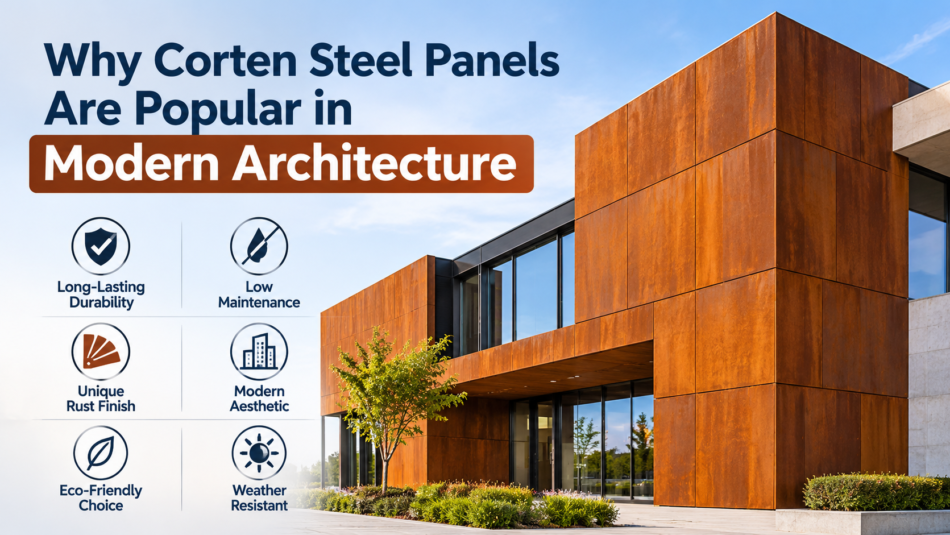
Distinctive Weathered Appearance
The rustic finish stands out against smooth glass and poured concrete. Surface colors shift from bright orange to deep brown for several years. This chemical evolution grounds modern building designs in natural, earthy tones.
Exceptional Weather Resistance
An outer oxide layer completely shields the base metal from further oxidation. Corten survives heavy rain, snow, and harsh industrial atmospheres much better than standard carbon steel. Structural degradation slows to near zero after the initial rusting phase completes.
Long Service Life
Heavy-gauge weathering steel lasts for many decades. Most exterior commercial installations require zero replacement panels during the entire building lifespan. The dense metal resists physical impact and severe weather events effortlessly.
Low Maintenance Requirements
Builders skip the exterior painting phase entirely during construction. Eliminating surface coatings cuts ongoing upkeep budgets significantly. Skipping recoating and scaffolding repairs saves building owners significant long-term maintenance expenses.
Sustainable Building Material
Scrap metal facilities recycle 100 percent of these steel sheets. Extended lifespans mean steel mills manufacture less replacement cladding material. Avoiding toxic paints and chemical sealants keeps local soil and water runoff cleaner.
Key Benefits of Corten Steel Panels
Specifying weathering steel impacts project efficiency and site management directly.
- Excellent corrosion resistance: The natural patina actively blocks moisture and oxygen penetration.
- Modern architectural appeal: Raw steel surfaces contrast sharply with clean modern building lines.
- High structural strength: Yield strength exceeds standard mild steel grades by a significant margin.
- Low lifecycle costs: Initial material expenses drop over time due to zero maintenance requirements.
- Easy fabrication and installation: Fabricators cut, bend, and weld these metal sheets using standard heavy shop tools.
- Fire resistance: Solid metal cladding blocks flame spread effectively across exterior building envelopes.
- Suitable for harsh outdoor environments: Industrial sites and urban centers rarely degrade the core material.
- Minimal maintenance: Property managers inspect the surface occasionally instead of scheduling costly repaints.
- Long lasting performance: Buildings retain their protective exterior skin for fifty years or more under normal conditions.
These physical benefits help structural engineers build commercial spaces that demand fewer resources over time.
Common Architectural Applications of Corten Steel Panels
Construction teams install Architectural Corten Steel Panels across diverse structural elements.
- Building facades: Large exterior walls gain heavy texture and physical color depth.
- Exterior wall cladding: Rain screen systems protect underlying commercial building insulation.
- Privacy screens: Laser perforated sheets block direct line of sight while still allowing heavy airflow.
- Boundary walls: Heavy exterior fencing stands strong against severe environmental wear.
- Landscape features: Heavy retaining walls and steel planters integrate directly into wet soil environments.
- Garden structures: Heavy archways and custom trellises support large climbing plant varieties.
- Commercial buildings: Corporate office complexes use rusty metal facades to create a strong physical brand identity.
- Residential homes: Custom houses feature exterior steel accent walls to contrast with natural timber framing.
- Public infrastructure: Transit stations and foot bridges rely on the material for structural longevity.
- Decorative architectural elements: Precision cut steel panels function as standalone geometric art pieces.
Architects prefer this metal alloy for these applications because it behaves predictably under mechanical stress.
Design Considerations Before Choosing Corten Steel Panels
Site conditions influence material success heavily. High-salt coastal zones accelerate the physical weathering process too quickly. Rainwater runoff carries loose rust particles that stain nearby concrete or glass surfaces permanently. Selecting the correct panel thickness prevents structural warping during rapid thermal expansion. Heavy metal sheets require strong structural framing behind the exterior cladding. Installers handle the raw sheets carefully to avoid uneven initial rusting from heavy machine oil or human fingerprints. Residents should be prepared for the metal surface changing color continuously over the first three years of exposure. Isolating Corten from dissimilar metals like zinc or galvanized steel fasteners prevents severe galvanic corrosion. Thoughtful architectural detailing keeps the building exterior functioning correctly for decades.
Corten Steel Panels vs. Traditional Cladding Materials
Comparing Corten Steel Cladding Panels against aluminum or painted steel suggests distinct operational differences.
Appearance
Painted metal surfaces fade and chalk under heavy UV light exposure. Weathering Steel Panels deepen in color and build a richer surface texture naturally.
Maintenance
Standard metal cladding requires intensive pressure washing and repainting cycles. Weathering steel fixes its surface scratches through the natural chemical oxidation process.
Durability
Painted steel sheets fail rapidly once the protective outer coating chips. Corten steel sustains heavy physical impacts without exposing vulnerable internal metal to the elements. The raw material outlasts most alternative commercial cladding systems easily.
Cost Over Time
Builders pay a premium for raw weathering steel upfront. Decades of zero exterior surface maintenance recover that initial capital premium fast.
Conclusion
Modern architecture relies heavily on materials that balance structural integrity with visual impact. Corten Steel Panels deliver both through their distinct chemical rust finish and extreme weather resistance. Eliminating exterior maintenance budgets pushes more commercial developers toward this specific metal alloy. Commercial contractors worldwide source these architectural steel materials through Ratna Exports. Sourcing the correct material grade determines how well a modern facade will age over time. Proper structural specification prevents costly maintenance issues down the line.


