 WhatsApp Us Now
A decade ago, lab-grown diamonds occupied a genuinely small corner of the jewelry market, treated by a lot of buyers as a novelty or a compromise rather than a real option. That’s changed substantially, and quickly. Today, lab-grown diamonds sit comfortably alongside mined stones in most major retailers’ catalogs, often given equal billing rather than being tucked into a separate, lesser section.
This shift didn’t happen by accident, and it isn’t really about any single factor. It’s the result of several trends converging at once: better technology, changing buyer priorities, and a market that’s had time to genuinely test and validate the product rather than just talk about it.
The Value Proposition Is Simply Stronger Now
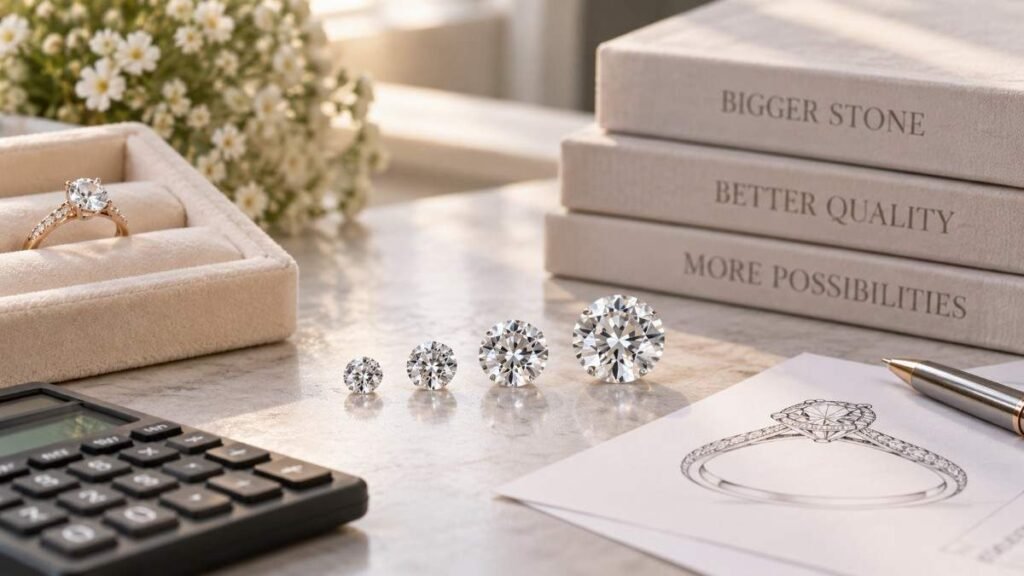
The most straightforward driver is also the most persistent one: lab-grown diamonds typically cost meaningfully less than mined diamonds of comparable size and quality, without any difference in hardness, brilliance, or grading standards. That gap hasn’t shrunk over time; it’s remained a consistent, reliable advantage.
For a lot of buyers, that translates directly into a bigger stone, a higher color or clarity grade, or simply more budget left over for the setting itself. This isn’t a marginal benefit. It genuinely changes what’s realistic within a given budget, which is exactly the kind of practical advantage that tends to shift buying behavior over time, regardless of how a category is initially perceived.
A Generational Shift in Priorities
Buyer priorities have shifted meaningfully over the past decade, and younger buyers in particular tend to weigh transparency, sourcing, and practical value differently than previous generations did. This doesn’t mean sentiment or tradition matters less. It means those things increasingly sit alongside a genuine interest in understanding exactly where a diamond came from and how it was produced.
Lab-grown diamonds fit naturally into that shift, since their origin is inherently transparent and traceable in a way that’s harder to fully verify with some mined diamond supply chains. For buyers who care about that traceability specifically, lab-grown offers a straightforward answer rather than requiring extensive additional research.
The Technology Has Genuinely Matured
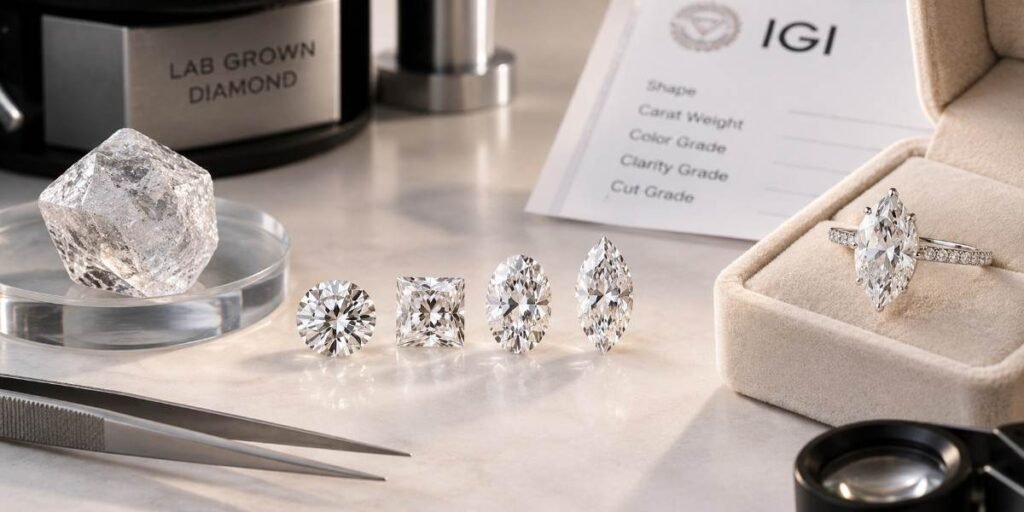
Early lab-grown diamonds, going back for several decades, were often smaller, more limited in color range, and more clearly identifiable as lab-grown to an experienced eye. That’s no longer the case. Advances in both hp ht and cad growth methods have made it possible to consistently produce larger, higher-quality stones across a much wider range of colors and clarifies.
This maturation matters enormously for popularity, since a product needs to actually deliver on its promise before broad adoption follows. Lab-grown diamonds today are graded using the exact same standards as mined diamonds, indistinguishable to the naked eye, and available in the same range of shapes and sizes buyers already wanted, including more distinctive options like a marquise diamond ring, which would have been considerably harder to source in lab-grown form even five or six years ago.
Reduced Stigma and Broader Social Acceptance
Early on, some buyers hesitated over concern that a lab-grown diamond might be perceived as a lesser choice, something to explain or justify rather than simply enjoy. That concern has faded substantially as lab-grown diamonds have become more visible, more widely available, and more openly discussed as a legitimate, mainstream option rather than a niche alternative.
This shift matters more than it might initially seem, since a lot of purchasing decisions and engagement rings especially, carry really social and emotional weight. As the broader perception normalized, the practical advantages, price and traceability became easier for buyers to act without the added friction of feeling they needed to defend the choice.
Retailers Have Made Them Easier to Find and Compare
A decade ago, finding a wide selection of lab-grown diamonds meant seeking specialty retailers specifically focused on the category. Today, most major jewelry retailers carry lab-grown options directly alongside mined diamonds, often with clear, side-by-side comparison tools that make the practical trade-offs easy to evaluate.
This accessibility shift removed a genuine barrier. It’s much easier to choose an option you can compare directly, in the same cataloger, under the same standards, than one you have to go out of your way to research separately.
What This Means If You’re Currently Shopping
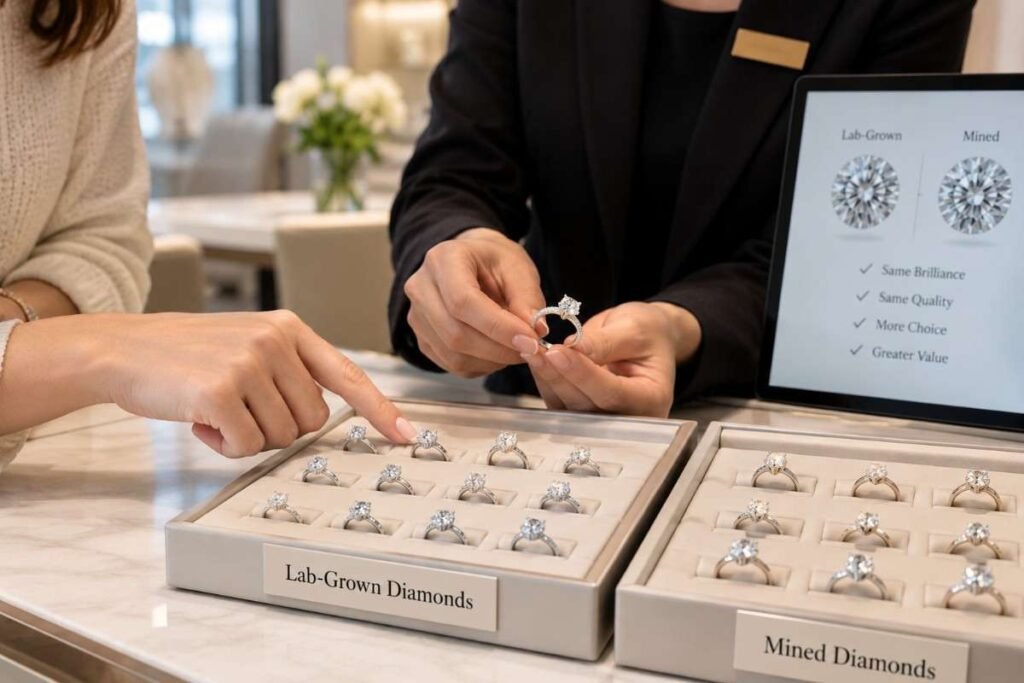
If you’re comparing lab-grown against mined diamonds for the first time, the practical case has become considerably easier to evaluate than it was even a few years ago. Grading standards are identical. Availability across shapes, sizes, and settings has expanded significantly. And the core price advantage that first drew attention to the category has remained consistent.
If you’re planning to Buy engagement ring online, this growing popularity also means more competition among retailers specifically for lab-grown buyers, which has generally translated into better selection and more transparent certification practices across the category as a whole.
Is This Trend Likely to Continue?
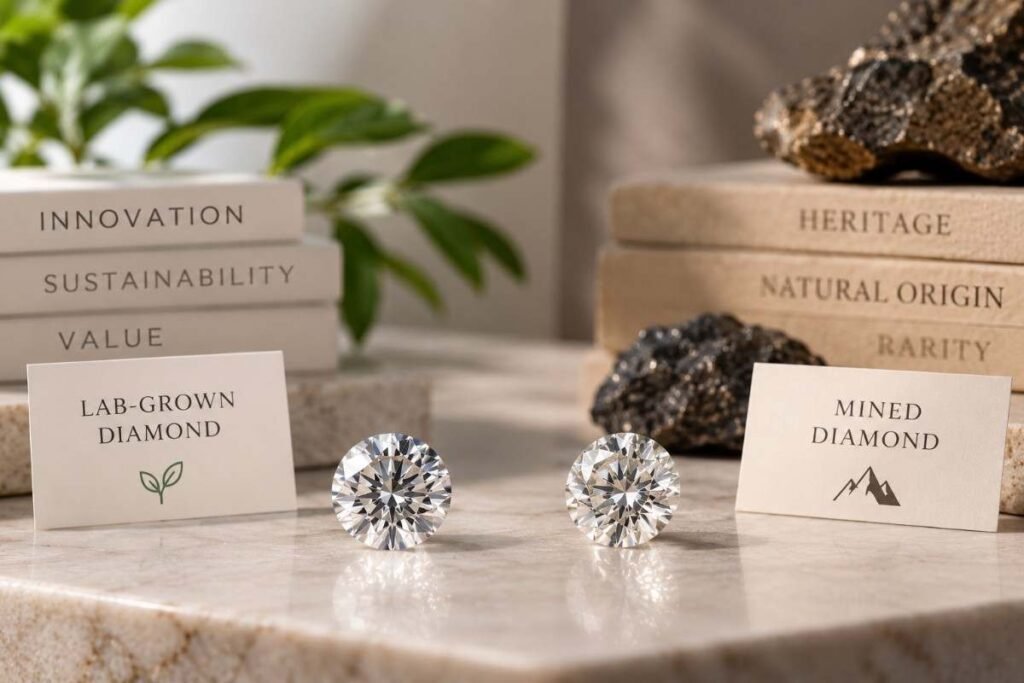
A few structural factors suggest this shift reflects a genuine, lasting change rather than a temporary spike in interest. The price advantage is tied to production economics, not a promotional discount, which means it’s likely to remain a consistent factor going forward. Technology continues to improve rather than plateaus. And buyer priorities around transparency and value don’t show signs of reversing.
None of this means mined diamonds are going away; they carry their own history, rarity, and appeal that will likely continue to matter to a meaningful share of buyers. But the growth in lab-grown popularity reflects real, structural drivers rather than a passing trend, which is worth factoring into how you think about the category if you’re weighing your own options.
Frequently Asked Questions
Are lab-grown diamonds actually cheaper than mined diamonds? Yes, typically significantly cheaper for comparable size and quality, since production is faster and more salable than mining, without any difference in the diamond’s hardness, brilliance, or grading.
Why do younger buyers prefer lab-grown diamonds more often? Younger buyers tend to place more weight on transparency and traceable sourcing, which lab-grown diamonds offer more straightforwardly than some mined diamond supply chains, alongside the practical value advantage.
Has lab-grown diamond quality actually improved over time? Yes, substantially. Advances in hp ht and cad growth methods now allow for larger, higher-quality stones across a much wider range of colors and clarifies than were reliably available even five to ten years ago.
Is there still a stigma around choosing a lab-grown diamond? Much less than there used to be. As lab-grown diamonds have become more visible and widely available through mainstream retailers, they’re increasingly viewed as a legitimate, normal choice rather than a compromise.
Is the lab-grown diamond trend likely to keep growing? Most indicators suggest yes, since the core drivers, price advantage, improving technology, and buyer interest in traceable sourcing, are structural rather than temporary, though mined diamonds are likely to remain popular for their own distinct appeal as well.
The Bottom Line
Lab-grown diamonds haven’t become popular through marketing alone. The shift reflects a genuine combination of stronger value, matured technology, growing demand for traceable sourcing, and a broader retail market that’s made comparison and access considerably easier than it used to be. Understanding why this shift happened makes it much easier to evaluate whether lab-grown fits your own priorities, rather than reacting to the trend without knowing what’s driving it.


