 WhatsApp Us Now
A Practical Guide to Stronger Ground for Modern Construction
Weak or unstable soil can create serious problems for commercial construction projects, from rutting and settlement to drainage and erosion issues. Commercial geocell ground stabilization offers a practical way to improve ground performance without relying entirely on thick layers of traditional materials. But what exactly is geocell, and how does it help create a stronger foundation?
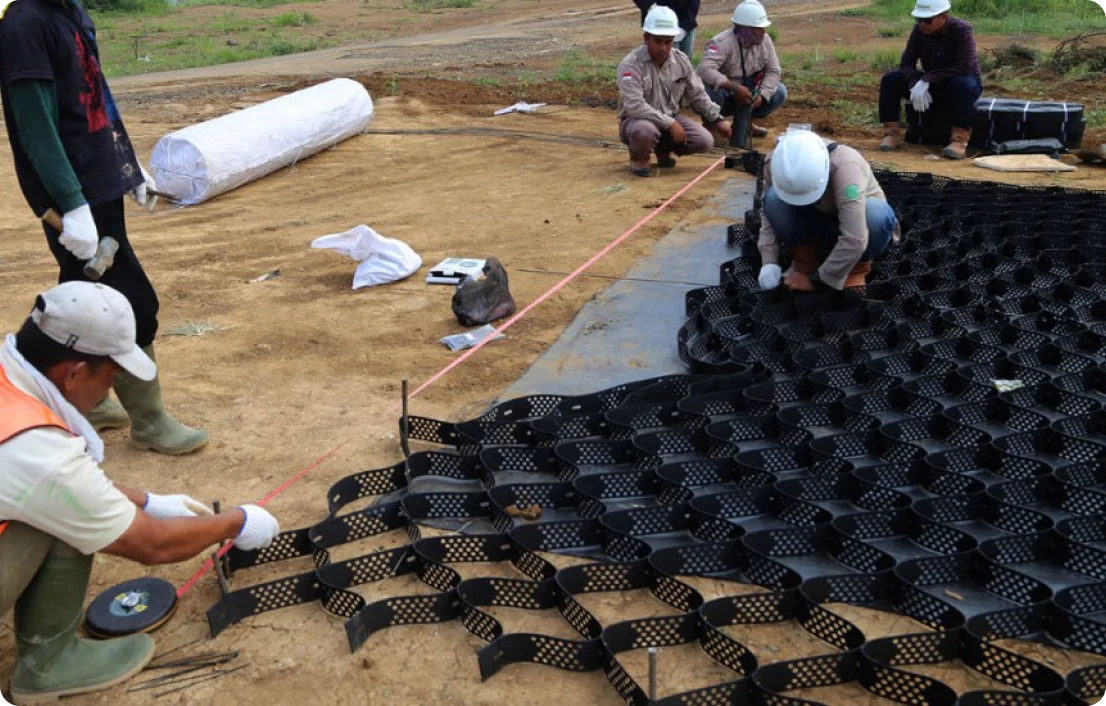
What Is Geocell Ground Stabilization?
Geocell is a three-dimensional cellular confinement system made from interconnected sections that form a honeycomb-like structure when expanded. These cells are placed over prepared ground and filled with materials such as gravel, crushed stone, sand, or suitable soil.
The main purpose is simple: confine the fill material and help it work as a stronger, more stable layer.
Without confinement, loose aggregate can move sideways when vehicles or equipment place heavy loads on the surface. Geocell helps limit this movement, allowing the fill to distribute loads more effectively across the supporting soil.
This makes the system useful for areas where the existing ground is weak, uneven, or difficult to stabilize using conventional methods alone.
How Does Geocell Work?
The strength of a geocell system comes from the way its cells contain the fill material.
When a load is applied to the surface, the cellular structure helps keep the aggregate or soil in place. Instead of allowing the material to spread laterally, the cells provide confinement and help distribute the load over a wider area.
This can improve the performance of the overall ground structure.
For example, consider a commercial access road built over soft soil. Repeated truck traffic may cause the aggregate layer to shift and form ruts. A properly designed geocell layer can help control this movement and provide better support for the surface above.
Key Benefits of Geocell Stabilization
A well-designed cellular confinement system can provide several practical advantages:
- Improved load distribution: Helps spread loads across weak or variable soil.
- Better aggregate confinement: Reduces sideways movement of fill material.
- Reduced rutting: Helps maintain a more stable surface under repeated traffic.
- Erosion control: Can help hold fill materials in place on slopes and exposed areas.
- Less aggregate movement: Confinement can reduce the amount of lateral spreading.
- Flexible construction: Can be used with different fill materials depending on project requirements.
- Potential material savings: Improved confinement may allow engineers to optimize the thickness and amount of aggregate used.
The actual performance depends on soil conditions, cell dimensions, fill material, loading requirements, drainage, and proper installation.
Where Is Geocell Ground Stabilization Used?
Geocell systems can be adapted to many commercial and industrial applications.
Roads and Access Roads
Construction access roads often face heavy equipment, repeated traffic, and poor ground conditions. Geocell can help stabilize the aggregate layer and create a more dependable driving surface.
Parking Areas
Commercial parking areas need to handle regular vehicle loads while maintaining surface performance over time. Cellular confinement can be incorporated into gravel or other aggregate-based parking systems to improve ground stability.
Heavy Equipment Areas
Construction yards, equipment storage areas, and industrial work zones may experience concentrated loads. A properly engineered geocell system can help provide additional support where conventional aggregate layers may struggle.
Slopes and Embankments
Slopes are especially vulnerable to surface erosion and soil movement. Geocell can help confine soil or aggregate and provide a structured layer that supports erosion-control measures.
Drainage and Difficult Ground Conditions
Poor drainage can weaken soil and contribute to settlement. Geocell does not replace proper drainage design, but it can be part of a broader ground stabilization system designed around the site’s soil and water conditions.
What Should Contractors Consider Before Installation?
Good results start with proper planning. Geocell should not simply be placed over the ground without considering site conditions.
Tip 1: Evaluate the soil first.
Understand the existing soil strength, moisture conditions, drainage, and expected loads.
Tip 2: Choose the right fill.
The fill material should be compatible with the application and properly placed and compacted.
Tip 3: Prepare the subgrade.
Remove unsuitable material where required and create a stable, properly graded working surface.
Tip 4: Consider drainage.
Water can significantly affect soil performance. Drainage should be addressed as part of the overall design.
Tip 5: Match the system to the load.
Roads carrying heavy trucks require different design considerations than pedestrian areas or light-duty parking.
Tip 6: Follow an engineered installation plan.
Cell size, depth, anchoring, fill type, and surface treatment should be selected according to project conditions rather than using a one-size-fits-all approach.
Why Proper Engineering Matters
Geocell is not a shortcut for good construction practices. Its performance depends on how well the system is designed and installed.
Engineers and contractors should consider the expected traffic, wheel loads, soil properties, slope conditions, drainage, and desired service life before selecting a stabilization system.
This project-specific approach helps ensure that the geocell system performs as intended rather than treating it as a universal replacement for every ground improvement method.
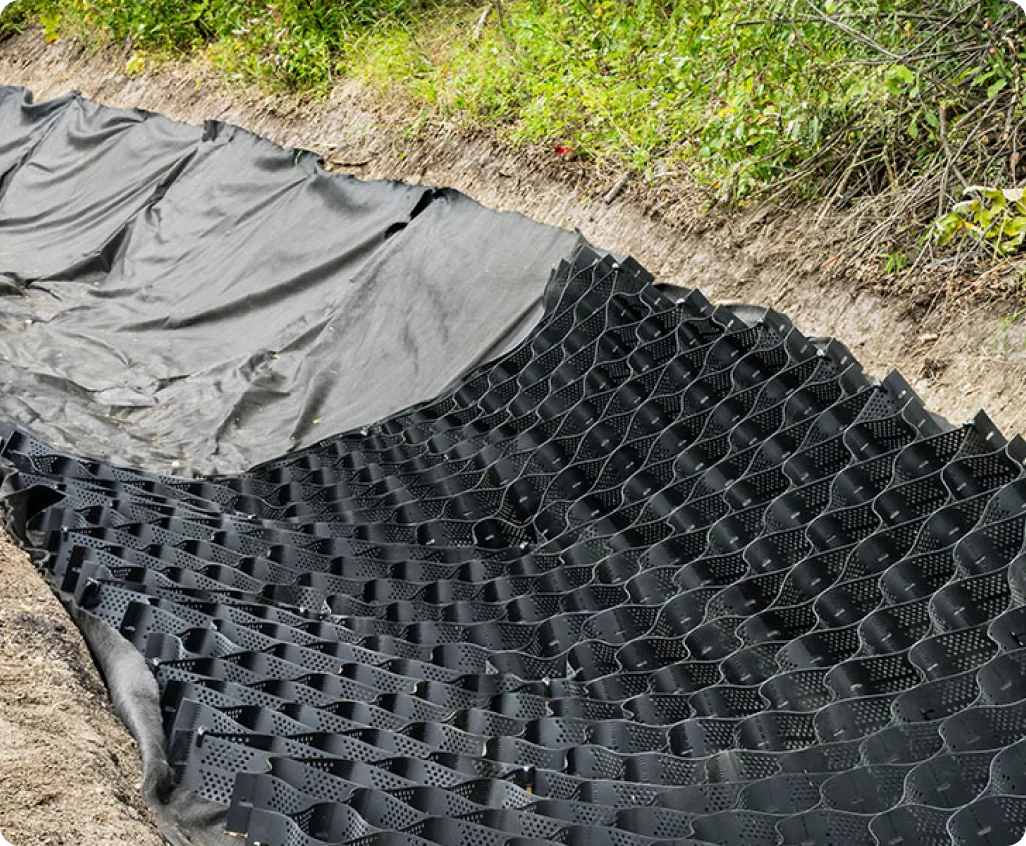
Is Geocell a Good Alternative to Traditional Ground Solutions?
For some projects, geocell can provide an efficient alternative or complement to conventional stabilization methods. It may help reduce aggregate movement and improve the performance of unpaved or aggregate-based surfaces.
However, the best solution depends on the project. Concrete, asphalt, soil improvement, geosynthetics, and cellular confinement systems each have appropriate applications.
The goal should always be to select the system that provides the right balance of strength, durability, installation requirements, cost, and environmental considerations.
Conclusion
Commercial ground stabilization is an important part of building surfaces that can handle demanding conditions. Geocell provides a structured way to improve load distribution, control aggregate movement, and support challenging ground conditions. For project-specific guidance and stabilization solutions, contact BaseCore in Scottsdale, Arizona, and explore how geocell technology can support your next construction project.
Frequently Asked Questions
What is commercial geocell ground stabilization?
It is a ground improvement method that uses a three-dimensional cellular structure to confine soil, gravel, or aggregate. The confinement helps improve load distribution and ground stability in commercial and industrial applications.
Can geocell be used for heavy equipment?
Yes. Geocell systems can be designed for areas exposed to heavy equipment and repeated traffic. The design should account for expected wheel loads, soil conditions, fill material, and surface requirements.
Does geocell prevent soil erosion?
Geocell can help control surface movement by confining soil or aggregate, particularly on slopes and embankments. Proper drainage, vegetation, surface treatment, and site-specific erosion-control measures may also be necessary.
Can geocell reduce the amount of aggregate required?
In some applications, geocell can improve aggregate confinement and load distribution, which may allow engineers to optimize the aggregate layer. The potential reduction depends on site conditions and engineering requirements.
Is geocell suitable for parking lots?
Yes. Geocell can be used in commercial and industrial parking applications, particularly where improved aggregate confinement and ground stability are needed.


