 WhatsApp Us Now
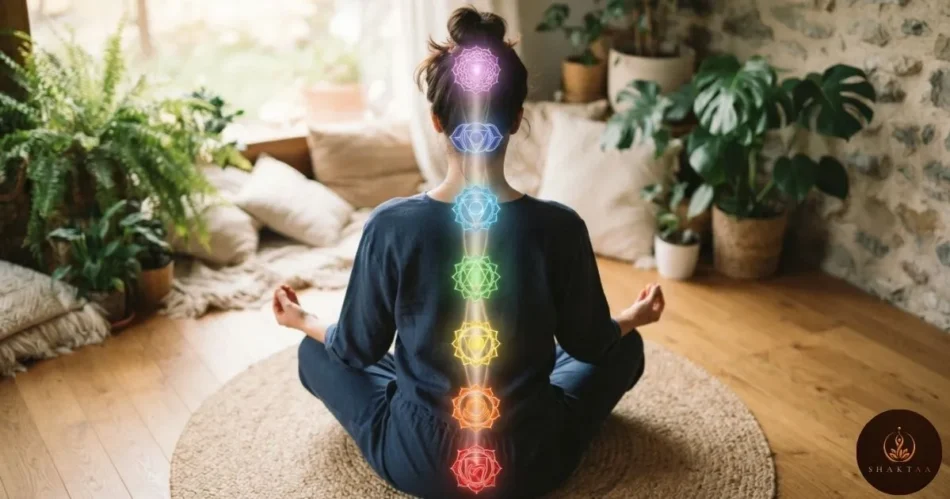
Do you ever leave your mat stressed and exit it feeling somehow lighter, as though something truly happened inside? This is the effect of yoga for chakra balance. It uses particular poses that connect with your seven different chakras to relax and help your body and mind flow once more.
You will find below the poses associated with your chakras, the true benefits of this practice, and a sequence to begin immediately.
What Is Chakra Balancing Yoga?
Chakra balancing yoga is a type of yoga practice that employs certain poses and breathing exercises with a particular purpose of harmonizing the seven chakras – energy centers, according to the tradition, located along the spine, from the bottom to the top of the head. From the perspective of yogic philosophy, every chakra is responsible for certain physical, emotional, and mental characteristics. Whenever a chakra gets ‘blocked’ or becomes overactive, it reflects in the form of physical tension, lack of energy, anxiety, or inability to concentrate.
Contrary to some other types of yoga practices such as Vinyasa or Hatha, chakras balancing or chakra balancing yoga are not a practice on its own. It is rather a perspective one can put into any practice, when choosing particular poses corresponding to a particular chakra and practicing them mindfully, sometimes together with the breath awareness or a brief meditation session.
Just an important disclaimer at the beginning – chakras are concepts rooted in the tradition of yogic and Ayurvedic philosophies but have nothing to do with contemporary medicine.
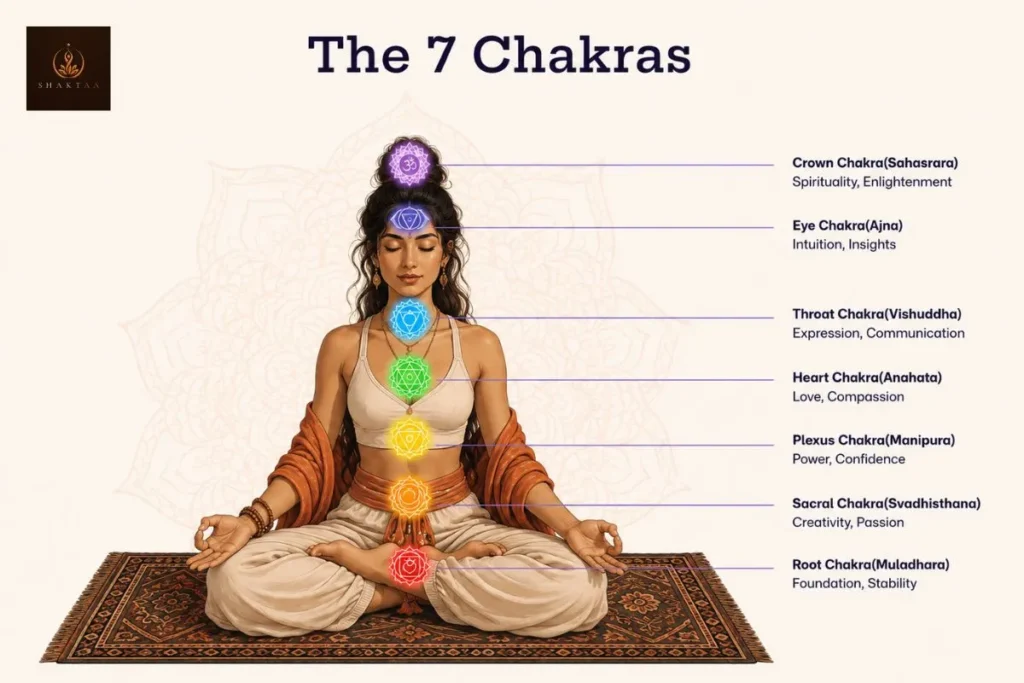
The 7 Chakras and Their Meaning
Understanding the basics of each chakra makes it much easier to choose the right poses for chakra balancing.
1. Root Chakra (Muladhara)
Located at the base of the spine, the root chakra is associated with safety, stability, and your sense of being grounded. When it feels off-balance, you might notice restlessness, anxiety, or feeling disconnected from your body.
2. Sacral Chakra (Svadhisthana)
Found just below the navel, this chakra relates to creativity, emotional flow, and pleasure. An imbalance here can show up as emotional numbness or difficulty adapting to change.
3. Solar Plexus Chakra (Manipura)
Sitting above the navel, this is your center of confidence and personal power. When blocked, people often describe low self-esteem or a lack of motivation.
4. Heart Chakra (Anahata)
Located at the center of the chest, the heart chakra governs love, compassion, and connection. Tightness here is often linked to grief, resentment, or trouble trusting others.
5. Throat Chakra (Vishuddha)
Positioned at the throat, this chakra is tied to communication and self-expression. Imbalance can feel like difficulty speaking up or being misunderstood.
6. Third Eye Chakra (Ajna)
Between the eyebrows, this chakra relates to intuition and clarity. When out of balance, you might feel foggy, indecisive, or overly rigid in your thinking.
7. Crown Chakra (Sahasrara)
At the very top of the head, the crown chakra represents spiritual connection and a sense of purpose. Imbalance here can feel like cynicism or a lack of meaning.
Best Yoga Poses for Each Chakra
Here’s a practical breakdown of chakra balancing poses you can use to target each energy center.
Root Chakra Poses (Grounding)
- Mountain Pose (Tadasana): Builds a stable foundation and body awareness.
- Chair Pose (Utkatasana): Engages the legs and core for a strong sense of grounding.
- Child’s Pose (Balasana): A restful pose that encourages safety and surrender.
Sacral Chakra Poses (Flow & Creativity)
- Goddess Pose (Utkata Konasana): Opens the hips, where emotional tension often sits.
- Bound Angle Pose (Baddha Konasana): Gently stretches the hips and inner thighs.
- Low Lunge with a Twist: Encourages fluid movement through the pelvis.
Solar Plexus Chakra Poses (Confidence)
- Boat Pose (Navasana): Strengthens the core, the physical seat of this chakra.
- Warrior I (Virabhadrasana I): Builds a sense of personal power and focus.
- Camel Pose (Ustrasana): Opens the front body and encourages confidence.
Heart Chakra Poses (Compassion & Connection)
- Camel Pose (Ustrasana): Also excellent here — it opens the chest directly.
- Cobra Pose (Bhujangasana): A gentle backbend that lifts and opens the heart space.
- Fish Pose (Matsyasana): Deeply stretches the chest and throat together.
Throat Chakra Poses (Expression)
- Fish Pose (Matsyasana): Stretches the throat while opening the chest.
- Shoulder Stand (Salamba Sarvangasana): Brings gentle pressure and awareness to the throat (practice with care, or skip if you have neck issues).
- Lion’s Breath (Simhasana): A breathing exercise, not a pose, but a powerful tool for releasing throat tension.
Third Eye Chakra Poses (Clarity)
- Child’s Pose with Forehead Down: Encourages introspection and stillness.
- Eagle Pose (Garudasana): Requires focus and balance, sharpening concentration.
- Seated Forward Fold (Paschimottanasana): Turns attention inward.
Crown Chakra Poses (Awareness)
- Headstand (Sirsasana): An advanced pose associated with the crown (only attempt with proper training).
- Corpse Pose (Savasana): A simple, accessible way to connect with stillness and awareness.
- Seated Meditation: Often paired with the final pose in a chakra balancing yoga sequence.

Benefits of Chakra Balancing Yoga
People who practice chakra balancing yoga and chakras balancing techniques regularly often report:
- Reduced physical tension, especially in areas like the hips, chest, and shoulders where stress commonly accumulates.
- Better stress management through the combination of movement, breath, and mindfulness.
- Improved body awareness, making it easier to notice when you’re anxious, tense, or out of sorts.
- A greater sense of emotional balance, since the practice encourages you to slow down and check in with yourself.
- More consistent energy levels, often linked to better sleep and reduced stress from the practice itself rather than any energetic mechanism.
It’s important to be realistic here: these benefits largely come from the well-documented effects of yoga, breathwork, and mindfulness in general — improved flexibility, nervous system regulation, and stress reduction — rather than from scientifically verified “energy centers.” If you’re dealing with a diagnosed physical or mental health condition, chakra balancing yoga can be a helpful complement to care, not a replacement for it.
How to Practice Chakra Balancing Yoga: A Simple Routine
You don’t need hours of free time or advanced flexibility to get started. Here’s a beginner-friendly sequence that moves through all seven chakras in about 20–30 minutes.
- Start in Child’s Pose (2 minutes) — Ground yourself and set an intention for your practice.
- Move into Mountain Pose, then Chair Pose (2 minutes) — Activate the root chakra.
- Flow through Goddess Pose and Bound Angle Pose (3 minutes) — Open the sacral chakra.
- Practice Boat Pose and Warrior I (3 minutes) — Build solar plexus strength.
- Move into Camel Pose and Cobra Pose (3 minutes) — Open the heart chakra.
- Try Fish Pose, followed by Lion’s Breath (2 minutes) — Release the throat chakra.
- Settle into Seated Forward Fold (2 minutes) — Turn inward for the third eye chakra.
- End in Savasana or seated meditation (5 minutes) — Rest in awareness for the crown chakra.
A few tips for getting the most from this practice:
- Move slowly and breathe deeply. The pace matters more than the pose itself.
- Skip anything that hurts. Chakra balancing yoga should never involve pain, especially in poses like shoulder stand or headstand.
- Use props if needed. A block under your hand in Camel Pose or a cushion under your hips in Bound Angle Pose can make poses more accessible.
- Practice consistently. Even 10–15 minutes, two or three times a week, tends to be more effective than one long session.
Who Should Try Chakra Balancing Yoga?
This style would probably be perfect for individuals who are searching for yoga which is based on mindfulness and intentions. This kind of yoga will be suitable for those individuals who wish to cope with daily stress, become aware of their body and practice yoga techniques that involve breathing and meditation.
When you are pregnant, have any injuries or chronic health problems, you should consult your physician and a yoga teacher prior to practicing the headstand and shoulder stand postures.
Frequently Asked Questions
1. What is chakra balancing yoga good for?
It helps reduce stress, improve body awareness, and release physical tension built up from daily life. It also supports flexibility and mindful breathing.
2. How do I know which chakra is blocked?
There’s no scientific test — most practitioners go by physical or emotional patterns, like tight hips or shallow breathing. Notice where you hold tension or feel emotionally stuck, then choose poses accordingly.
3. Can beginners do chakra balancing yoga?
Yes, most poses used — like Child’s Pose and Seated Forward Fold — are beginner-friendly. Just modify or skip advanced poses like headstand until you’ve had proper instruction.
4. How often should I practice chakra balancing yoga?
Two to three sessions a week is a good starting point for most people. Even short 15–20 minute sessions work well if done consistently.
5. Is chakra balancing yoga scientifically proven?
Chakras are a traditional yogic concept, not something recognized in modern medical science. That said, the poses, breathwork, and mindfulness involved do have well-documented wellness benefits.


