 WhatsApp Us Now

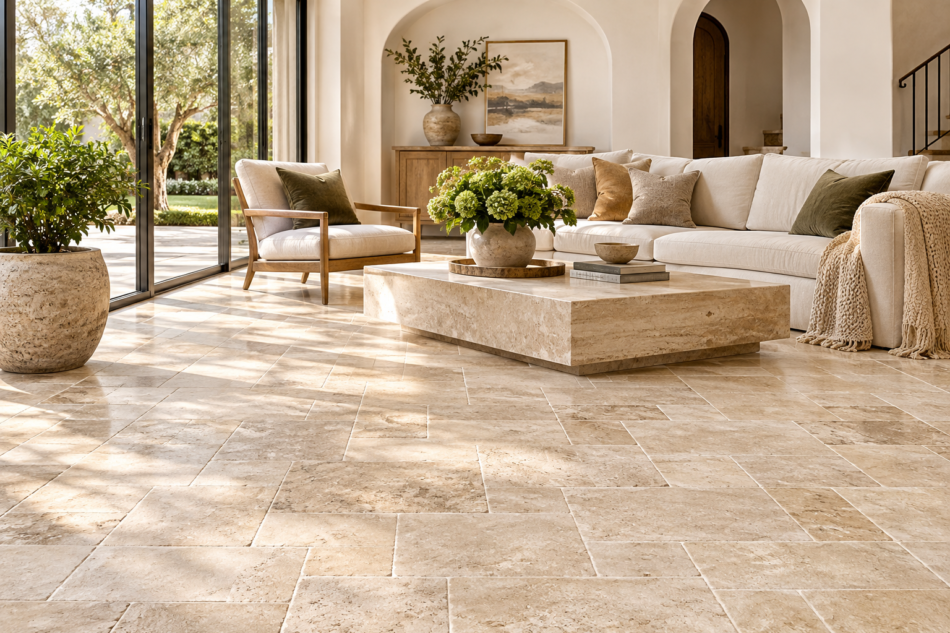
Take away the artwork, the fancy lights and the statement furniture, and what’s left to give a room its character?
Often, it’s the Floor.
It’s rarely the first thing people think about when planning an interior, but its colour, pattern and texture can shape how the whole space comes together. Flooring tends to get less attention than furniture, wall colours or lighting. But it covers a huge part of the room and quietly shapes how everything else looks.
Change its colour, pattern or texture and the same space can feel completely different. Natural stone flooring like French pattern Travertine or Limestone is a great way to do this. It brings colour, texture and natural detail into a room without leaning on lots of extras. So, what happens when the floor gets to lead your interior design?
The Floor Sets the Scene Before Anything Else
The floor is one of the first things people notice in a room. Your floor’s colour and finish set the mood well before any furniture turns up. Light floors make a room feel open and bright, and dark ones make it feel snug and settled. Natural textures add subtle character and a patterned floor can give an otherwise simple room a little life and movement.
That’s why it pays to think about flooring early. It can guide the choices that come after, from wall colours and furniture styles to the type of lighting you pick. So rather than leaving it to the end, try treating the floor as the foundation of the whole design.
When the Floor Does All the Talking
A floor doesn’t need bright colours or complicated designs to stand out. Sometimes a natural pattern or a shift in shade is all it takes to give a room its own identity. The type of stone you choose plays a big part here.
Patterns That Give the Room a Natural Rhythm
Plain flooring works beautifully in plenty of homes. A patterned layout, though, can add another layer of detail without making the room feel busy.
French pattern travertine is one option worth a look. It combines tiles of different sizes in a set layout, so you get a pleasing mix of shapes across the floor rather than one tile size repeated over and over.
This pattern suits living rooms, dining areas and open-plan spaces. Its natural tones also make it easy to pair with simple furniture and soft wall colours.
Picture a plain timber dining table against light walls. A French pattern floor beneath it adds visual interest, while the rest of the room stays calm and uncluttered.
Colours That Create Their Own Personality
Pattern isn’t the only way to give a floor presence. Colour can change the feel of a room just as much.
Tundra Grey Limestone is a lovely choice for interiors that call for a calm, balanced look. Its grey tones sit comfortably alongside many common design choices. You could pair it with:
- Light walls for a clean, open look
- Timber furniture for a warm contrast
- Black details for a sharper, more defined style
- Beige or white soft furnishings for a balanced finish
The natural shade variations in stone also add depth to the floor, so the surface doesn’t need extra patterns or bold colours to keep the room interesting.
A Statement Floor Doesn’t Need a Statement Room
When the floor already has a clear pattern or colour, the rest of the room doesn’t have to compete with it. A simple setting actually helps the flooring shine.
That doesn’t mean everything else in the room has to be plain. It’s really about finding a good balance and a few small choices can help:
- Furniture: Simple shapes work well with detailed flooring and let the floor stay visible
- Wall colours: Neutral shades help tie the floor to the rest of the room
- Rugs: Smaller rugs add comfort without covering too much of the stone
- Lighting: Natural light brings out the colour and texture of stone during the day
- Decor: A few well-placed pieces are often enough to finish the look
The idea is to give each element its own space. When the floor has room to stand out, even basic furniture can look right at home.
Look Beyond the Pattern and Pay Attention to the Details
A sample can look gorgeous in the showroom and still surprise you once it’s in your own room, so it’s worth slowing down before you commit. How a floor looks and behaves in your actual space matters just as much as the sample itself.
Here are a few things to think through when choosing natural stone:
- Finish- The finish changes both the look and the feel underfoot. A honed finish is smooth and soft-looking, while a natural split finish has more texture and character.
- Tile layout- Size and arrangement make a bigger difference than most people expect. A pattern that looks lovely in a small room can come across very differently across a large open area.
- Lighting- Stone shifts depending on the light. Natural daylight and artificial lighting can bring out different tones, so check your sample in the morning, afternoon and evening.
- Maintenance- Natural stone often needs regular care and occasional sealing and the cleaning routine can vary depending on the stone and finish you choose.
- Room use- Think about how the space really gets used. A hallway with constant foot traffic or a kitchen where spills are given will ask more of a floor than a quiet guest room.
If you can, put a sample down in the room itself and live with it for a few days. It’s the easiest way to know whether you’ll still love it once it’s underfoot.
Let the Floor Have the Final Word
A well-designed room doesn’t always need large furniture or eye-catching decor. Sometimes the flooring is what pulls the whole space together. French pattern Travertine adds movement with its mix of tile sizes, while Tundra Limestone keeps things calm and even. They give a room a very different feeling.
The right choice depends on your room, how you use it and the style you’re after. When flooring gets the same attention as every other design element, it does far more than cover the ground. It gives the room a look and feel that lasts.
Disclaimer: The information provided in this blog is to the best of our knowledge and intended as a general guide. We recommend confirming all details based on your specific project requirements before execution.


