 WhatsApp Us Now

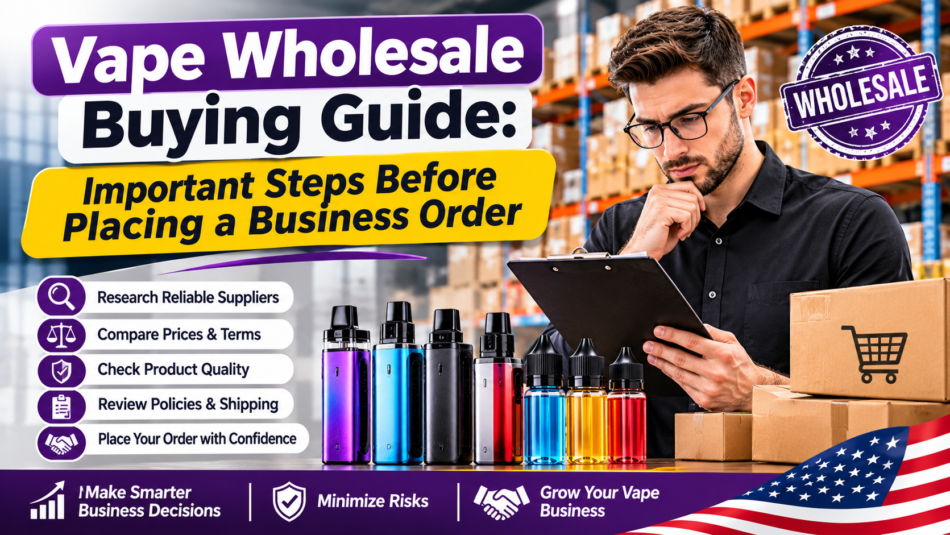
Placing a wholesale order is an important business decision for retail stores. For vape shops, smoke shops, and other eligible retailers in the United States, purchasing products involves more than selecting items and submitting payment. Businesses need to review supplier information, understand ordering conditions, evaluate product documentation, and calculate the total cost before making a commitment.
A structured approach to Vape Wholesale purchasing can help retail businesses make informed decisions and reduce avoidable ordering problems. By following a clear process, store owners can better understand their purchasing requirements, compare available options, and establish more organized relationships with wholesale suppliers.
1. Determine What Your Business Needs Before Ordering
The first step is identifying the actual purchasing requirements of your store. Retailers should review current inventory, available storage capacity, purchasing budgets, and expected replenishment needs before contacting suppliers.
Ordering without a clear plan can result in unnecessary stock, increased expenses, or products that do not match the store’s business requirements.
Consider the following questions:
- Which product categories are relevant to your business?
- What quantities can your store reasonably manage?
- How much purchasing budget is available?
- What storage and inventory management resources do you have?
- Which products are legally permitted for your business and location?
- How frequently will inventory need to be reviewed?
Preparing these details makes supplier discussions more focused and helps retailers request relevant quotations.
2. Verify the Supplier Before Making a Purchase
Supplier verification should happen before an order is placed. Retailers should confirm that they are dealing with an identifiable business with clear contact information and established purchasing procedures.
Review the supplier’s website, business details, account registration requirements, and customer service channels. Where appropriate, request additional information about the company’s distribution arrangements and the products it offers.
Important details to check include:
- Registered or verifiable business information.
- Physical business address and contact details.
- Clear wholesale account requirements.
- Published payment and shipping policies.
- Product information and relevant documentation.
- Procedures for handling order problems.
Be cautious when a supplier provides inconsistent company details, avoids reasonable questions, or requests payment without providing clear order information.
3. Request a Complete Written Quotation
Before confirming a wholesale purchase, request a written quotation that explains the complete financial and commercial terms.
A quotation should ideally identify the products, quantities, unit prices, applicable discounts, shipping charges, and any additional fees. Retailers should also confirm whether the quoted prices are fixed for a specified period or may change before the order is processed.
Do not compare suppliers using unit prices alone. A lower advertised price may not represent the lowest total purchasing cost once additional charges are included.
A detailed quotation helps businesses understand their financial commitment and provides a reference if questions arise during order processing.
4. Understand Minimum Order Quantities
Wholesale suppliers may establish minimum order quantities (MOQs) for individual products or entire orders. These requirements can influence how much inventory a retailer must purchase and how much working capital will be needed.
Before accepting an MOQ, consider whether the required quantity is appropriate for your store’s size, storage capacity, and purchasing budget.
Retailers should also ask whether minimum quantities apply separately to each product or whether different products can be combined to meet an order threshold.
A practical purchasing decision should balance unit pricing with inventory requirements. Ordering larger quantities simply to qualify for a discount may create unnecessary financial and storage pressure.
5. Review Product Specifications and Documentation
Product information should be reviewed before payment and order confirmation. Retailers should request accurate specifications, labeling information, packaging details, and relevant documentation for the products under consideration.
In the United States, electronic nicotine delivery systems and other tobacco products may be subject to federal requirements administered by the Food and Drug Administration (FDA). State and local regulations may also affect product distribution, sales, licensing, taxation, and availability.
Businesses must independently verify whether each product may legally be marketed, distributed, and sold in their jurisdiction. Being listed in a wholesale catalog or offered by a distributor does not establish that a product is authorized for marketing or sale.
Retailers should also review applicable shipping requirements and consult qualified regulatory or legal professionals when their obligations are unclear.
6. Confirm Payment Terms and Additional Charges
Payment conditions should be clear before an order is finalized. Retailers should understand which payment methods are accepted, when payment is due, and whether additional processing charges apply.
Review the following details:
- Accepted business payment methods.
- Payment deadlines and order confirmation procedures.
- Applicable transaction or processing fees.
- Shipping and handling charges.
- Taxes or other required charges.
- Refund and cancellation conditions.
Avoid relying on verbal assurances when important financial terms are involved. Written confirmation of pricing, quantities, and payment conditions can help prevent misunderstandings.
7. Check Shipping and Delivery Arrangements
Shipping arrangements can affect inventory availability and purchasing schedules. Before confirming an order, retailers should understand how the supplier handles processing, dispatch, tracking, and delivery-related problems.
Ask the supplier:
- How is order processing time calculated?
- Is shipment tracking provided?
- Which carriers and delivery methods are available?
- How are damaged or incomplete shipments handled?
- What happens if an order is delayed?
- Are there destination-specific restrictions?
It is important to distinguish between order processing time and carrier transit time. These are separate stages and should be considered when planning inventory replenishment.
Retailers must also confirm that the proposed shipping method and destination comply with applicable federal, state, and local requirements.
8. Read the Return and Refund Policy
Before submitting payment, review the supplier’s policies for incorrect orders, damaged products, missing quantities, cancellations, and returns.
Some wholesale transactions may have different return conditions from ordinary consumer purchases. Retailers should understand which circumstances qualify for a replacement, refund, or other resolution.
Pay particular attention to reporting deadlines and any documentation required to support a claim.
A clear return policy helps businesses understand their options if an order does not arrive as expected or the delivered items do not match the confirmed purchase.
9. Keep Records of Every Wholesale Transaction
Accurate purchasing records support better financial management and make it easier to review supplier performance.
Retailers should retain:
- Supplier quotations and order confirmations.
- Invoices and payment records.
- Shipping and tracking information.
- Product specifications and documentation.
- Relevant business correspondence.
- Records of damaged, missing, or incorrect items.
Organized records can help businesses reconcile invoices, review purchasing costs, and respond to questions about previous transactions.
They also provide useful information when comparing suppliers or planning future orders.
10. Evaluate the First Order Before Establishing Repeat Purchases
A first transaction provides an opportunity to evaluate the supplier’s actual business performance.
After receiving an order, compare the shipment against the original confirmation. Check quantities, packaging, product identifiers, and supporting documentation. Review whether the supplier communicated clearly throughout the process and followed the agreed terms.
Retailers can use the following factors to assess the experience:
| Performance area | What to evaluate |
|---|---|
| Order accuracy | Whether delivered quantities match the confirmation |
| Communication | Clarity and responsiveness |
| Fulfillment | Processing and delivery coordination |
| Pricing | Whether final charges match the quotation |
| Documentation | Accuracy and completeness of records |
| Issue resolution | How problems are handled |
This review helps retailers make more informed decisions about future purchasing relationships.
Conclusion
Preparing a wholesale order requires careful attention to business requirements, supplier verification, pricing, product information, payment conditions, and delivery arrangements. Retailers who review these details before placing an order can make more informed purchasing decisions and avoid preventable misunderstandings.
A consistent buying process also supports better inventory planning and financial organization. Rather than focusing exclusively on advertised prices, eligible retail businesses should evaluate the complete transaction and verify that each purchasing decision meets their operational needs and applicable regulatory requirements.


