 WhatsApp Us Now

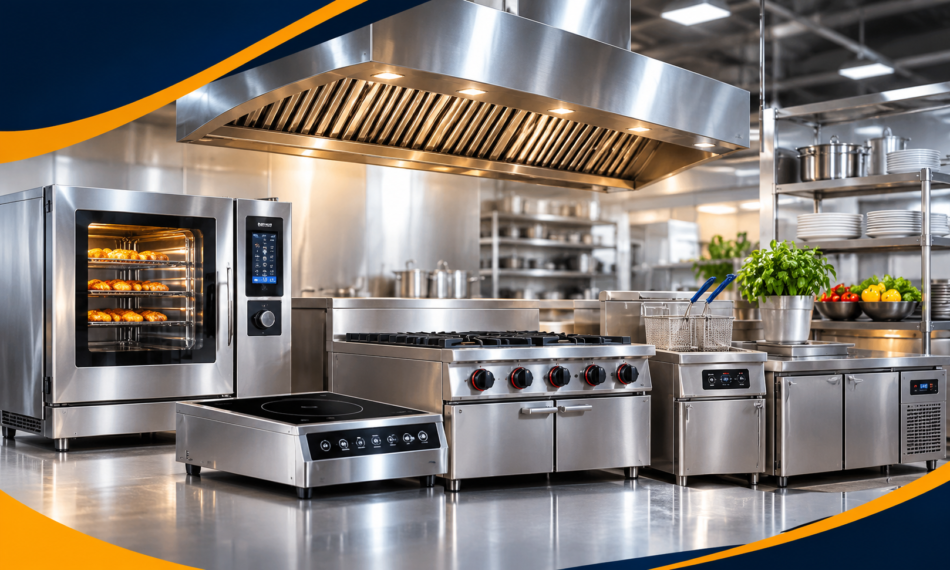
Discover how modern commercial cooking equipment improves kitchen efficiency, energy savings, durability, food quality, and daily operations.
Modern commercial kitchens are evolving at a very fast pace. There are several factors that are driving these changes, including high utility rates, staffing shortages, increased regulation on sanitation, and consumers who want consistent quality in the food products they purchase from restaurants, hotels, catering companies, and ghost kitchens. Therefore, business owners/operators need to take into consideration what types of commercial cooking equipment they are using to prepare their products. Selecting commercial cooking equipment is much more complex than just purchasing an expensive stove or oven. It is a major financial decision that will have direct impacts on the quality of the final product being served, the productivity levels of employees preparing the products, the amount of money spent on utilities used to operate the equipment, and the overall reputation of the company. Understanding how commercial cooking equipment has evolved over time enables operators/managers to select equipment that will continue to provide profits for numerous years to come.
Why Modern Kitchens Are Moving Beyond Basic Appliances
The use of traditional gas burners, conventional ovens, and hand-held tools was common in older kitchens. In contrast, modern commercial kitchens need more control, precision, and speed. Commercial cooking equipments has built-in program functions that can be used to set temperatures accurately and automatically control timers. These functions can eliminate much of the “trial and error” involved with using older versions of commercial kitchen equipment. This type of equipment enables multiple chefs to produce identical meals every single time. It is especially useful for large-scale operations and chain restaurants. Additionally, consistency helps to minimize food waste because there will be fewer meals produced too early, too late, or re-made because of mistakes during production.
Smart Features Changing Daily Operations
Technology can also be found in the commercial kitchen in many other forms, beyond just an administrative function. A prime example would be a combi-oven. A combi-oven has the ability to steam, roast, and bake foods based on pre-programmed settings. Another type of technology that has entered the commercial kitchen is induction cooking. Induction cooking generates heat through the use of cookware. Since induction cooking works this way, it reacts faster than traditional cooking methods and produces less heat. Finally, many pieces of equipment are now equipped with remote monitoring features. These features allow operators to monitor how often the equipment is utilized, how long ago the equipment was last cleaned, and when the equipment may require servicing. However, not all businesses require all of these technological advancements. Consequently, businesses must select equipment that meets their individual process requirements and workflow needs, as opposed to purchasing features that they do not plan on using.
Energy Efficiency and Running Costs
The amount spent on utility services is often times one of the largest components of an organizations operating expenses. Therefore, maximizing the use of your utility dollars through efficiency is important. Utilizing a well-designed oven with top-quality insulation, a high-efficiency burner design, and induction heating technology will greatly decrease the amount of waste heat generated during the food preparation process. Also, proper ventilation will help create a safer and more pleasant work environment for employees. Instead of simply comparing prices when purchasing equipment, buyers should consider how each product has been rated for energy usage, what type of fuel it utilizes, and what the manufacturer indicates as its specifications. While a less expensive piece of equipment may be able to be purchased at a lower cost initially, it may consume considerably more electricity than other products, resulting in the buyer having to pay significantly more over time. To assist buyers in comparing products on an apples-to-apples basis, manufacturers/suppliers can provide consumption information for every product they produce.
Durability, Materials, and Build Quality
In a typical commercial kitchen, there are many types of extreme conditions, including high temperature, moisture, fat/grease, and a great deal of wear-and-tear. Because of this, most manufacturers of commercial kitchen equipment will choose to use stainless steel for most of the components in order to prevent corrosion, allow for simple cleaning, and withstand the constant physical abuse associated with daily operations. Reliability of commercial kitchen equipment is often based upon multiple criteria such as the type of welding applied to the seams/joints; the panel gauge; the hinge durability; and the quality of the burners installed. A reliable piece of commercial cooking equipment should provide easy access to replacement components and clear service agreements so that when issues occur during the course of business operations, those issues can be addressed in a timely fashion to reduce lost profits. You should also take into account the warranty provided with the purchase of the machine as well as the assistance provided by the manufacturer after the sale.
Conclusion
A business investing in the selection of proper equipment for today’s commercial kitchen has several advantages. Advantages include better process control, increased energy efficiency, increased material durability, and easier cleaning, which results in better food quality, improved safety conditions in the workplace, and higher profit levels. To choose equipment for today’s kitchen, an operator must first determine what is actually needed for his/her operation; then evaluate the total cost of ownership (TCO) of each option available; next select equipment providing quality after-sales support; and finally create a kitchen that is capable of operating efficiently during high-volume periods, but also has the flexibility to adapt to menu changes and evolving customer preferences. Purchasing wisely today will provide the basis for long-term development and provide consistent quality products/services.


