 WhatsApp Us Now


Quick Answer
Quick Answer: Skincare for glowing skin comes down to four things: cleansing without stripping, keeping the skin barrier hydrated, wearing SPF 30 or higher every day, and exfoliating gently and rarely. Glow is mostly smooth texture and good hydration reflecting light evenly, so harsh scrubs and long routines tend to work against you. If your skin is sensitive, begin with a mild, low-pH cleanser such as Sea Reset Cleanser, add a simple moisturizer and sunscreen, then give any change at least four weeks.
Introduction
Most of us know the morning when skin looks flat and tired, however many products went on the night before. The usual reaction is to add more: another serum, a stronger exfoliants, a new mask. For sensitive skin, that often makes things worse.
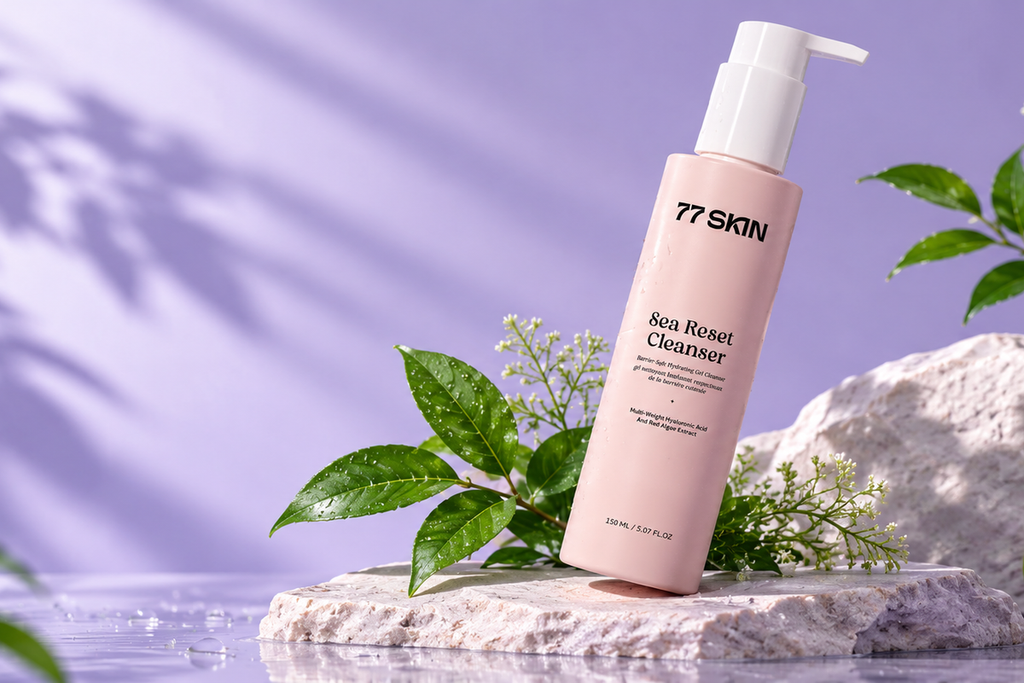
A healthy glow is rarely about adding. It is about removing whatever is in the way: dryness, a rough surface, leftover sunscreen, irritation from over-washing. This guide explains what glowing skin actually is, why sensitive skin can look dull, and how to build a short routine you can follow morning and night. We also look at where a gentle cleanser fits in, and how our own Sea Reset Cleanser is formulated.
What Does Glowing Skin Actually Mean?
Glow is an optical effect. Light bounces evenly off skin that is smooth, comfortably hydrated and free from flaking, so it looks radiant. When the surface is rough or dehydrated, light scatters instead, and the very same skin looks dull. Three things matter most.
Smooth Texture
Tiny flakes of dry skin and rough patches break up the surface. Gentle cleansing and regular moisturizing keep it even, without the need for aggressive scrubbing.
Comfortable Hydration
Skin holding enough water looks softer and slightly plumper, and fine lines are less obvious. We go into this in more detail in our guide to how hydration improves skincare for glowing skin.
Even Tone
Sun exposure and lingering irritation both contribute to uneven colour. Daily sunscreen is the most reliable long-term protection, and calm skin simply looks clearer.
Why Sensitive Skin Often Looks Dull
If your skin reacts easily, the products designed to make it glow can be the very thing dulling it. Sensitive skin has a barrier that loses water faster and reacts sooner to friction, heat and strong ingredients. The result is tightness, patchy texture and a flat finish.
Common culprits include:
- Foaming cleansers with harsh sulphate surfactants that leave skin squeaky and tight
- Very hot water, which strips natural oils
- Physical scrubs and cleansing brushes used too often
- Layering several active ingredients at once
- Skipping moisturizer or sunscreen because skin “feels fine”
The American Academy of Dermatology (AAD) advises using a gentle, non-abrasive cleanser without alcohol and washing once in the morning, once at night and after heavy sweating. It is a modest recommendation, and a useful one.
The Five Habits Behind Skincare for Glowing Skin
You do not need a ten-step routine. These five habits do most of the work, and they suit sensitive skin as well as any other type.
| Habit | What to do | Why it helps |
|---|---|---|
| Cleanse gently | Use a mild, low-pH, sulphate-free cleanser with lukewarm water, twice a day | Removes buildup without leaving skin tight or stripped |
| Moisturise | Apply to slightly damp skin, morning and night | Helps hold water in and keeps the surface smooth |
| Protect | Broad-spectrum SPF 30 or higher every morning | Limits uneven tone and early skin ageing |
| Exfoliate sparingly | Once a week at most to begin with, or skip it if skin stings | Smooths texture without damaging the barrier |
| Stay consistent | Keep the routine the same for at least four weeks | Skin needs time to renew and settle |
Start With the Cleanser: What to Look For
Cleansing is the step people most often get wrong, because the “clean” feeling many of us were taught to chase (squeaky, tight, slightly stingy) is usually a sign the barrier has been stripped. If you are choosing a cleanser for sensitive skin, look for:
- A pH close to the skin’s own, which is naturally slightly acidic (around 5)
- No sulphates, fragrance or alcohol, which are common triggers for irritation
- Hydrating ingredients such as glycerin and hyaluronic acid
- No scrubbing particles, since friction is the enemy of calm skin
- Evidence of testing, such as primary irritation or consumer testing
Where Sea Reset Cleanser Fits
We designed the Sea Reset Cleanser around exactly this brief. It is a low-pH hydrating gel cleanser formulated at approximately pH 5, and it is sulphate-free, fragrance-free and colour-free. Glycerin and sodium hyaluronate help skin feel supple while you wash, and red algae extract is included alongside Lactobacillus ferment and Portulaca oleracea.
It lifts away daily buildup, excess oil, sunscreen and light makeup without that tight, stripped after-feel. It has also undergone primary irritation testing, with a non-irritating result. In our consumer testing, all participants agreed it felt gentle enough for sensitive skin and comfortable for daily use.
Expert tip: If your skin feels tight within a minute or two of rinsing, the cleanser is probably too strong, however “clean” it feels. Healthy cleansing should leave skin feeling soft and comfortable, with no stinging or pulling.
How to Wash Your Face for a Better Glow
- Wet your face with lukewarm water, never hot.
- Take a small amount of cleanser onto wet hands and build a light lather.
- Massage over your face with your fingertips for around 30 to 60 seconds, avoiding the eye area.
- Rinse thoroughly, then pat dry with a clean towel instead of rubbing.
- Apply moisturizer while skin is still slightly damp.
If you wear makeup or a lot of sunscreen, massage the cleanser first, re-wet your hands and rub once more before rinsing. For a fuller walkthrough, see our guide on how to wash your face properly without stripping it.
Skin Care for Sensitive Skin: Keep the Routine Short
The best skin care for sensitive skin is usually the simplest. Every extra product is another chance for a reaction, so build the routine slowly and change only one thing at a time.
Moisturiser
Choose a fragrance-free formula and apply it to slightly damp skin to help trap water. Drier skin types may want a richer cream at night, and our guide to a skin care routine for dry skin covers how to adjust for that.
Sunscreen
Sunscreen does more for visible radiance than almost any serum. The AAD recommends broad-spectrum protection, SPF 30 or higher and water resistance. Many people with sensitive skin find mineral formulas, which use zinc oxide or titanium dioxide, more comfortable, though the best sunscreen is the one you will wear every day.
Exfoliation
Dull skin tempts us to scrub, yet over-exfoliating is one of the quickest ways to lose your glow. Redness, stinging, shiny tight skin or sudden breakouts after exfoliating suggest you have overdone it. Start with a mild exfoliants no more than once a week, and stop if your skin objects.
A Simple Morning and Night Routine
| Step | Morning | Night |
|---|---|---|
| 1. Cleanse | Gentle cleanser, or a splash of lukewarm water if skin is very dry | Gentle cleanser; massage in first if wearing makeup or sunscreen |
| 2. Treat | Optional: one antioxidant serum | Optional: one active, introduced slowly |
| 3. Moisturise | Light, fragrance-free moisturiser | Slightly richer cream if skin feels dry |
| 4. Protect | Broad-spectrum SPF 30 or higher | Not needed |
Wondering whether the morning cleanse is worth it? Our post on whether you should wash your face in the morning looks at it for sensitive and dehydrated skin.
Expert tip: Keep a note of each product you add and the date. If irritation appears, you will know exactly what changed, and you can stop the most recent product first.
Common Mistakes That Dim Your Glow
- Changing too much at once. If five products change in a week, you cannot tell what helps or harms.
- Chasing a squeaky-clean feeling. That tightness is a sign of stripping, not cleanliness.
- Skipping sunscreen on cloudy or cold days. UV exposure continues year-round, including through the Canadian winter.
- Over-exfoliating. More scrubbing rarely means more glow.
- Expecting overnight results. Skin renews over weeks, not days.
How Long Until You See a Difference?
Skin renews itself roughly every month, and more slowly as we get older. That is why most routine changes need around four weeks before you can fairly judge them. Skin may feel softer and more comfortable within days of switching to a gentler cleanser, while a more even, radiant look builds over several weeks of consistency.
When to See a Dermatologist
Persistent redness, burning, rashes, or a sudden change in how your skin behaves deserve professional advice rather than another product. A dermatologist or pharmacist can help rule out conditions such as eczema, rosacea or contact dermatitis, which a skincare routine alone will not fix.
Frequently Asked Questions
What is the best skincare for glowing skin?
The most effective skincare for glowing skin is a consistent, simple routine: a gentle cleanser, a moisturizer, daily SPF 30 or higher and light exfoliation when needed. Healthy texture and hydration matter more than any single product.
Can sensitive skin still look glowing?
Yes. Sensitive skin often looks dull because of dryness and irritation, not because it cannot glow. Once the barrier is comfortable and well hydrated, radiance usually follows. Choosing skin care for sensitive skin that is fragrance-free and non-stripping is the best place to begin.
Is a cleanser for sensitive skin enough, or do I need other products?
A good cleanser is the foundation, but it works best alongside a moisturizer and morning sunscreen. Add other products slowly, and only if you have a specific concern.
How often should I exfoliate if my skin is sensitive?
Start with once a week at most, using a mild formula, and pause if you notice stinging, redness or tightness. Some sensitive skin does best with very little exfoliation at all.
Is Sea Reset Cleanser suitable for all skin types?
It is formulated for sensitive and all skin types, and is fragrance-free, colour-free and sulphate-free. As with any new skincare product, patch test first if your skin is very reactive.
How long does it take to see a glow after changing my routine?
You may feel the difference in comfort within a few days. A more visible glow generally takes around four weeks of steady use, as skin renews itself.
Conclusion
Skincare for glowing skin is less about doing more and more about doing the basics well: cleanse gently, moisturise, protect from the sun and exfoliate with a light hand. For sensitive skin, patience and simplicity pay off more than any trending product.
If you are ready to start with the cleansing step, you can meet the Sea Reset Cleanser and see whether it suits your routine. Either way, we hope this guide helps you build one that keeps your skin comfortable, and looking its best.


