 WhatsApp Us Now

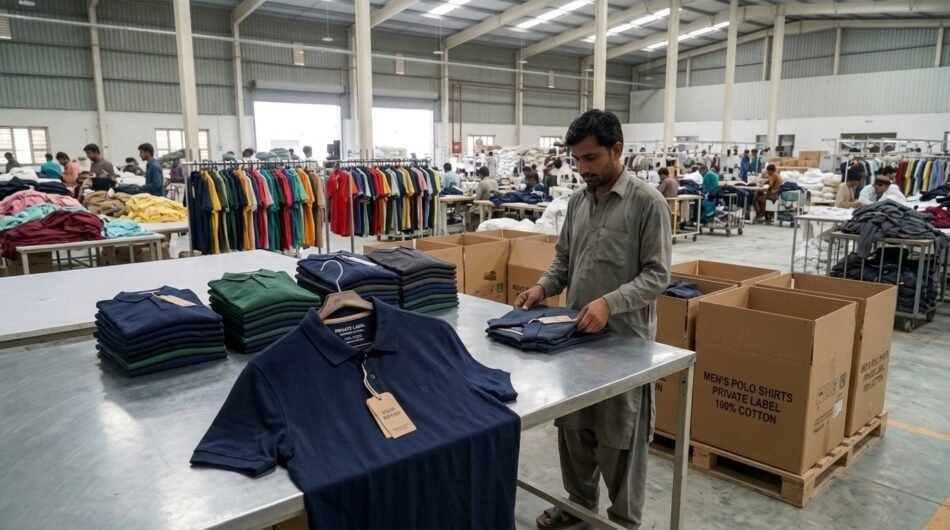
The polo shirt is one of the few garments that moves easily between a golf course, a corporate office, and a weekend outing. That flexibility makes it a dependable product for clothing brands, uniform suppliers, and retailers. But a good polo is more demanding to produce than a basic tee, because the collar, placket, and sleeve bands must all hold their shape wash after wash. If you are searching for a private label mens polo shirt manufacturer Faisalabad offers, this guide covers fabrics, construction details, MOQs, costs, and how to choose the right partner. At AAKnits, we work with brands on these exact decisions.
What Is a Private Label Polo Shirt?
A private label polo shirt is produced by a factory according to your specifications and sold under your own brand name. You select the fabric, fit, colors, collar style, labels, and packaging, while the manufacturer handles cutting, sewing, and finishing. Unlike buying ready-made stock, Private Label Polo Shirts let you create a product that reflects your brand identity, price point, and target customer.
What Makes a Polo Shirt Different from a T-Shirt?
A polo has a knitted collar, a front placket with two or three buttons, and usually ribbed or hemmed sleeve openings. These extra components add complexity, so quality depends heavily on how the collar is knitted, how the placket is stabilized, and how the shirt recovers after stretching. A poorly made collar curls or loses shape quickly, while a well-made one stays crisp even after repeated washing.
Popular Fabrics for Mens Polo Shirts
Fabric affects comfort, appearance, and durability.
- Cotton pique: The classic polo fabric, with a textured, breathable surface that hides sweat marks and wrinkles.
- Cotton jersey: Smoother and lighter, suited to casual, fashion-focused polos.
- Interlock: Thicker and more stable, giving a premium feel and a cleaner surface for embroidery.
- Polyester and performance knits: Moisture-wicking and quick-drying, ideal for sports and golf collections.
- Cotton-polyester blends: Better shrink resistance and wrinkle control at a friendly price.
GSM typically ranges from about 160 for lightweight summer polos to 240 or more for heavy-duty uniforms.
Fits, Collars, and Design Details
Brands often stand out through small choices. Slim, regular, and relaxed fits each suit different customers, while collar styles can range from classic folded collars to modern band collars. Details such as contrast tipping, side vents, tonal buttons, embroidered chest logos, and ribbed cuffs can give a standard polo a distinct identity. Corporate buyers often prefer simple, clean designs with space for logo placement, whereas fashion labels may add color blocking or textured fabrics.
How Private Label Polo Production Works
Most projects follow a clear path.
- Design brief and tech pack: Share sketches, size charts, fabric preferences, and target pricing.
- Sampling: The factory develops a prototype to check fit, collar shape, and placket quality.
- Approval and revisions: Adjustments are made until the sample meets your standard.
- Bulk fabric and trims: Fabric, buttons, collars, and labels are sourced and confirmed.
- Cutting and stitching: Production begins with in-line quality checks.
- Finishing and dispatch: Garments are pressed, inspected, packed, and shipped.
Why Faisalabad Is a Strong Choice for Knitwear
Faisalabad is one of Pakistan’s major textile centers, where spinning, knitting, dyeing, printing, and stitching units work in close proximity. For knitted garments like polos, this integrated supply chain shortens lead times and keeps fabric costs competitive. Brands working with a Mens Polo Shirt Manufacturer based here also gain access to skilled operators for collar knitting, embroidery, and finishing, plus long export experience.
Customization and Branding Options
A capable factory should offer flexibility beyond color. Common options include custom dye colors, woven or printed neck labels, size tags, embroidered or printed logos, custom buttons, contrast tipping, and special washes. Many brands also request branded packaging, hang tags, and barcode stickers, so the product arrives retail-ready.
Understanding MOQ for Polo Shirts
Minimum order quantity is the smallest batch a factory will accept. For polo shirts, MOQs often range from 100 to 300 pieces per style, depending on fabric and color count. Custom-dyed fabrics, special collars, or unusual trims increase the minimum, while stock fabrics make smaller trial orders possible. Ask whether the MOQ applies per color or per style, so you can plan your first order efficiently.
Quality Control Checklist for Polo Shirts
Because polos have more components, quality checks matter at every stage:
- Fabric inspection before cutting
- Collar and cuff recovery after stretching
- Flat, stabilized plackets with securely attached buttons
- Shrinkage, colorfastness, and pilling tests
- Consistent measurements across sizes and batches
- Final inspection using AQL sampling
Certifications such as OEKO-TEX or BSCI show responsible manufacturing and help when selling to international retailers.
How to Choose the Right Manufacturer
Before placing an order, review samples of similar polo styles and confirm whether knitting, dyeing, and embroidery are done in-house. Ask about lead times, payment terms, and previous export experience. Pay attention to communication, since a good partner explains limitations honestly instead of agreeing to everything. AA Knits recommends starting with a small trial order, which reveals reliability far better than a catalog or brochure.
What Affects Polo Shirt Manufacturing Costs?
Pricing depends on fabric type and weight, order quantity, number of colors, embroidery or print complexity, trims, wash treatments, and packaging. Pique and performance fabrics usually cost more than plain jersey. Request a quotation that separates fabric, stitching, decoration, and packing so you can compare suppliers fairly.
Packaging, Branding, and Export Shipping
Polos are usually folded and packed in individual poly bags with size stickers, then placed in master cartons. Retail brands may add hang tags, tissue wrap, or branded boxes. For export orders, confirm Incoterms such as FOB or CIF, carton specifications, and documentation, which typically includes an invoice, packing list, and bill of lading. Sea freight suits large orders, while air freight works for samples and urgent restocks.
Conclusion
A well-made polo can anchor a clothing brand because customers reach for it across seasons and occasions. Success depends on the right fabric, careful sampling, clear specifications, and a partner who understands knitwear construction. Faisalabad’s integrated textile industry gives brands the quality and value they need to compete in 2026. When you are ready to start, choosing the right private label mens polo shirt manufacturer Faisalabad offers can shape your product line, and AAKnits is ready to support you from first sample to repeat orders.
Frequently Asked Questions
What is the minimum order for private label polo shirts?
Most factories start at 100–300 pieces per style, depending on fabric, colors, and trims.
What is the best fabric for mens polo shirts?
Cotton pique is the classic choice, while polyester knits suit sports and blends add durability.
How long does polo shirt production take?
Sampling takes about one to two weeks, and bulk production usually takes three to five weeks after approval.
How can I add my logo to polo shirts?
Logos can be added through embroidery, screen printing, or heat transfer, depending on the fabric and design.
How do I choose a polo shirt manufacturer in Faisalabad?
Compare samples, check certifications and export experience, and start with a small trial order before scaling up.
What documents are needed for export orders?
Typically a commercial invoice, packing list, certificate of origin, and bill of lading, though requirements vary by destination.


