 WhatsApp Us Now

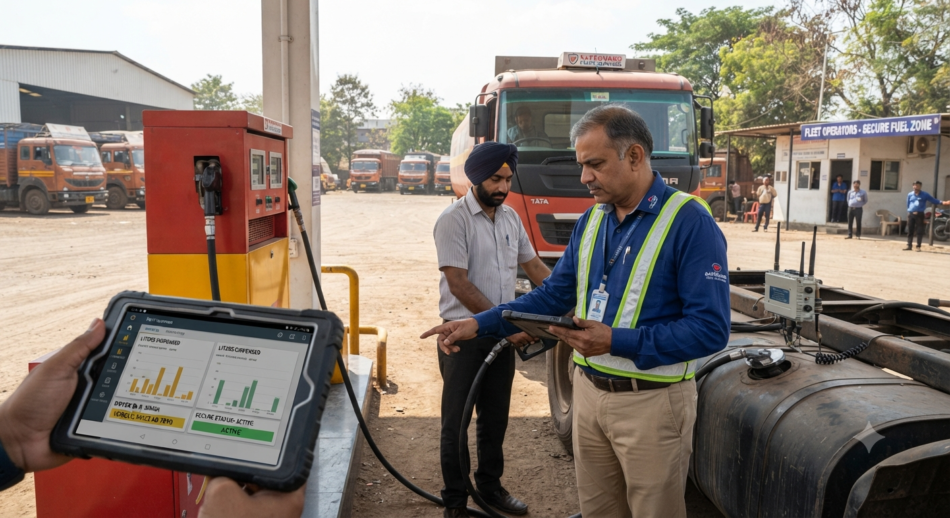
For most transport operators, fuel is the biggest line item after salaries. It is also the one cost that is hardest to verify. A driver says the truck took 300 litres, the pump bill says 300 litres, and the tank looks fine at the next stop. Whether that fuel was actually burned, sold or siphoned out is very difficult to tell without data.
This is why fuel monitoring has moved from a “nice to have” to a basic operational tool for fleets of every size.
Why Fuel Costs Deserve Closer Attention
Fuel accounts for roughly 30% of trucking costs, so even small leaks add up quickly. A few litres lost per vehicle per day may look harmless. Across 50 or 100 vehicles over a month, it turns into a serious loss.
Fuel is usually lost in four ways:
- Siphoning while the vehicle is parked at night or at a dhaba
- Refuelling fraud, such as inflated bills or short-filling at the pump
- Excessive idling that burns diesel without moving the vehicle
- Harsh driving like rapid acceleration and hard braking
Manual logbooks and monthly reconciliation catch these problems weeks too late. By then, the fuel is gone.
What Is Fuel Tracking and How Does It Work?
Modern fuel tracking is built on three layers working together:
- A fuel level sensor inside the tank measures the fuel level continuously.
- A GPS tracker attaches location, ignition status and movement to each reading.
- A cloud platform analyses the data and sends alerts and reports.
Because the software knows where the vehicle is and whether the engine is running, it can tell a normal drop (the vehicle is moving) from a suspicious one (the vehicle is parked and the level falls sharply). That context is what makes the system useful.
Fuel Theft Prevention in Practice
Effective fuel theft prevention is about speed. When a sudden drop is detected, the system sends a time-stamped alert with the exact location, so a supervisor can act while the event is still fresh. Over time, the visible presence of monitoring also discourages theft in the first place.
Roadcast’s fuel monitoring system is designed around this idea. It offers:
- Instant theft and leak alerts with location and time details
- Fill-up accuracy tracking that compares the quantity dispensed with the actual rise in the tank
- Consumption pattern analysis linked to driver behaviour
- Maintenance alerts based on data captured through the sensors
Roadcast states that fleets can reduce fuel costs by up to 20%. Your actual saving will depend on your current losses, vehicle type and routes, so it is best to treat that figure as a benchmark and not a promise.
Reports That Turn Data Into Decisions
Alerts catch incidents, but reports help you fix the root cause. The most useful ones are:
- Fuel consumption report to spot rising usage trends
- Mileage efficiency report to compare fuel used against distance covered
- Refuelling summary showing when, where and how much was filled
- Fuel drain and theft report for time-stamped sudden drops
- Idling and wastage report to cut avoidable engine running
- Driver efficiency report to guide training
For example, if two drivers on the same route show a clear mileage gap, you now have evidence for a coaching conversation instead of a guess.
Not Just for Trucks
Fuel monitoring works on any diesel or petrol asset. Apart from trucks, Roadcast supports construction machines, agricultural equipment, earth movers, tempo travellers, pickups and diesel gensets. Sensors in the range include the LLS4 Digital Omnicom, the Escort BT sensor and the Analog LLS-AF4.
A Realistic Note on Accuracy
No sensor is perfect. In-tank sensors typically have a tolerance of about 1-2%, so very small variations can be normal noise. Large or repeated gaps are what deserve investigation. Pairing sensor data with fuel card or pump transaction records gives the most reliable picture.
How to Get Started
- Check last quarter’s fuel spend per vehicle to set a baseline.
- Start with the vehicles that have the highest consumption or unexplained losses.
- Set alert thresholds and decide who responds to them.
- Review reports weekly and compare against your baseline.
Roadcast also offers a free fuel cost calculator on its page, which helps you estimate potential monthly savings before you commit.
Final Thoughts
You cannot manage what you cannot measure. A well-installed fuel monitoring setup gives you honest numbers, faster response to theft and clear proof for improving driver habits. For any fleet where fuel is a major expense, it is one of the most practical investments you can make.
FAQs
1. Can a fuel monitoring system work on old vehicles?
Yes. Fuel sensors are installed into the tank and connected to a GPS tracker, so most older diesel and petrol vehicles can be fitted. A technician should check the tank type and shape first to choose the right sensor.
2. Will drivers get alerts too, or only fleet managers?
Alerts are usually configured for managers and supervisors. This way, the person responsible for taking action receives the notification immediately, and you can decide who needs access.
3. How soon will I see results after installation?
Data starts flowing once the sensor is calibrated, so you can see refuelling and consumption patterns within the first few days. Meaningful savings usually become clear after a few weeks of comparing against your earlier baseline.


