 WhatsApp Us Now

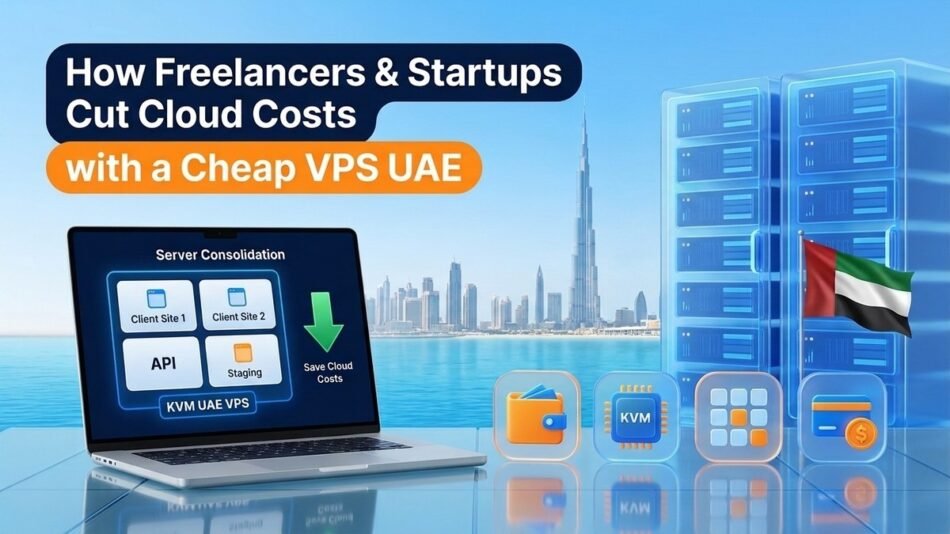
Quick Summary: Freelancers and lean startups cut recurring hosting overhead by consolidating multiple low-traffic client sites, staging apps, and APIs onto one isolated entry-level KVM node. Using a cheap VPS UAE plan with flat-rate pricing, NVMe storage, and local Dubai peering eliminates per-site SaaS markups while keeping Gulf user traffic onshore.
Paying separate monthly invoices for half a dozen WordPress sites, small Node.js demos, and staging environments drains startup runway fast. Instead of managing fragmented shared accounts or oversized cloud instances, solo builders and agencies can group those workloads onto one virtual server. Choosing affordable UAE VPS hosting provides full root access inside a Dubai Tier III datacenter, letting you run proxies, containers, and databases under one bill. A properly configured uae vps cheap node cuts infrastructure spend without sacrificing isolation or speed.
Why Multi-Site Consolidation Beats Per-App Cloud Billing
Most freelancers begin by buying a separate shared plan or PaaS container for every client site. That habit feels simple until promotional rates expire and renewal hikes stack across multiple dashboards. Consolidating onto a budget UAE VPS replaces per-app subscriptions with flat-rate pricing and no renewal trap, protecting project margins as your roster expands.
Unlike shared cPanel environments where noisy neighbors stall PHP workers, 100% KVM virtualization isolates memory and virtual CPU cores alongside pure SSD or NVMe SSD storage and a dedicated IPv4 address. International teams also benefit from broad payment support: beyond VISA, MasterCard, and PayPal, accepting crypto payment methods—Bitcoin, Ethereum, USDT, and BNB—plus Paytm and UPI removes cross-border billing friction.
Architecting One Isolated KVM Node for Multiple Sites
Consolidating modest sites onto an entry-level KVM server works reliably when you enforce isolation from day one. Install Ubuntu 24.04, Debian 12, or AlmaLinux 9 (or Windows Server for .NET workloads), and run Nginx or Caddy as a single reverse proxy handling TLS termination on ports 80 and 443.
Behind that proxy, keep tenants separated:
- Isolate runtimes: Assign each PHP-FPM pool or rootless container its own Linux user and memory limit so one traffic spike cannot starve neighboring apps.
- Scope databases: Run one PostgreSQL or MariaDB instance with separate databases and least-privilege credentials per site.
- Verify capacity first: Before adding another tenant, inspect virtualization, memory headroom, NVMe space, and bound ports:
systemd-detect-virt
free -h && df -h /
ss -tulpn | grep -E ':80|:443'
Confirming kvm output, available RAM without swap thrashing, and clean port bindings prevents silent resource contention before updating DNS.
Local Dubai Peering, DDoS Filtering, and Onshore Residency
Latency and compliance explain why Gulf builders avoid distant budget nodes. In Dubai, Equinix DX1 hosts the UAE Internet Exchange (UAE-IX, powered by DE-CIX), enabling local peering between UAE ISPs—e& (Etisalat) and du—and GCC carriers. Local routing stops international tromboning, where Gulf visitors detour through Europe to reach regional applications.
A 1Gbps network uplink paired with DDoS protection also shields consolidated sites from collateral downtime during traffic floods. For governance, UAE Federal Decree-Law No. 45 of 2021 (PDPL) regulates personal data and sets cross-border transfer safeguards under Articles 22 and 23. Sectoral onshore rules govern Central Bank-regulated banking data and Federal Law No. 2 of 2019 healthcare data, while DIFC and ADGM maintain independent regimes. Server location alone never establishes legal compliance; encryption, access controls, and legal review remain essential.
Managing Tradeoffs: Snapshots, Support Tiers, and Resource Ceilings
Running a cheap vps uae setup still demands clear workload boundaries. Brochure sites, marketing pages, internal tools, and staging builds share an entry-level KVM node cleanly, whereas heavy analytics queries or high-concurrency stores should move to dedicated capacity once CPU steal or disk latency climbs.
Support tiers offer another cost lever in UAE VPS Hosting. Sysadmin-savvy builders save most on unmanaged plans with full root access, while lean teams benefit from managed support and 24/7 technical assistance. Always trigger snapshot support before kernel or PHP upgrades alongside off-server backups.
Frequently Asked Questions
How many small websites can an entry-level KVM VPS host safely?
No fixed site cap exists because footprint depends on caching and concurrency. Cached WordPress or static sites use little memory, whereas dynamic apps need per-container RAM limits and regular free -h checks.
Does a UAE VPS automatically satisfy UAE data residency laws?
No. Keeping workloads in Dubai reduces cross-border exposure under PDPL Articles 22-23, but server location alone never establishes legal compliance. Banking, healthcare, DIFC, and ADGM rules still require dedicated governance controls.
Can freelancers pay for a budget UAE VPS without a corporate card?
Yes. Alongside VISA, MasterCard, and PayPal, flexible billing supports crypto payment options—Bitcoin, Ethereum, USDT, and BNB—plus Paytm and UPI.
Should startups choose managed or unmanaged UAE VPS Hosting?
Teams comfortable configuring Nginx and firewalls save more with unmanaged root access, while product-focused startups benefit from managed plans with 24/7 technical support.
Next Step
Audit your active hosting bills, sum each site’s actual RAM and storage usage, and map them onto one isolated server. Review Onlive Server’s Dubai KVM options, select Ubuntu 24.04, Debian 12, AlmaLinux 9, or Windows Server, and migrate one domain at a time behind a reverse proxy.


