 WhatsApp Us Now

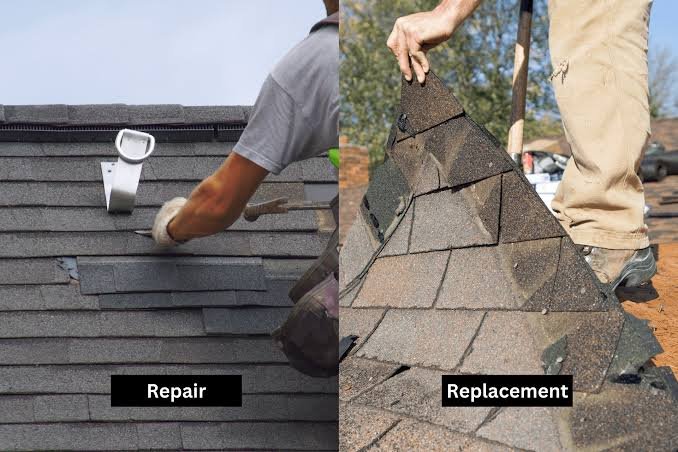
Roofing contractors usually decide between repair and replacement by looking at the roof’s overall condition, the extent of damage, remaining service life, underlying materials, previous repairs, and the cost of each option. A localized problem on an otherwise sound roof can often be repaired, while widespread deterioration, recurring leaks, damaged decking, or an aging roof can make replacement the better choice. Roof age matters, but it is not enough by itself to determine the answer.
How Do Roofing Contractors Decide Whether to Repair or Replace a Roof?
A contractor starts by determining what failed and how far the problem extends.
A missing shingle, damaged flashing detail, or isolated leak does not necessarily mean the entire roof needs to be replaced. The surrounding roofing materials and the components underneath also need to be checked.
The main questions are:
- Is the damage isolated or widespread?
- How much useful life remains?
- Is the roof deck sound?
- Are leaks recurring in different areas?
- Has the roof needed frequent repairs?
- Can the damaged material be repaired or properly matched?
- Does repair provide enough value compared with replacement?
The goal is to correct the roofing problem rather than simply cover the visible symptom.
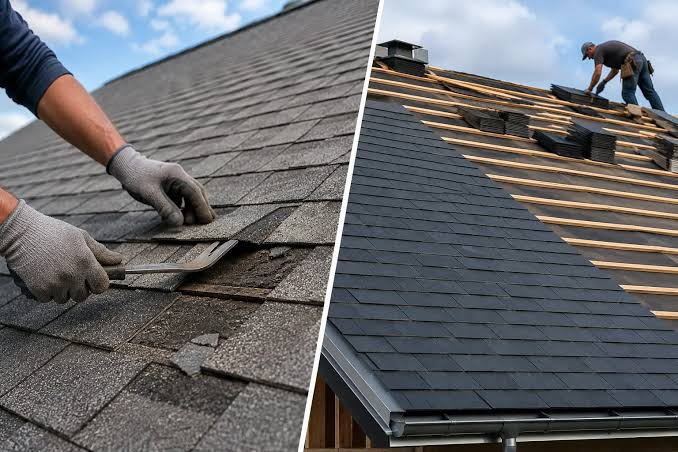
Roof Age and Remaining Service Life
Roof age gives a contractor useful context, but it is not an automatic replacement trigger.
A relatively young roof with isolated storm damage may be a good candidate for repair. An older roof with widespread wear and repeated problems may be closer to replacement.
The expected life also varies by roofing material, installation quality, climate, ventilation, maintenance, and exposure. That is why a contractor should consider remaining service life, not just the number of years since installation.
How Widespread Is the Damage?
The size and distribution of the damage are major factors.
A few damaged shingles on one section can often be addressed with a targeted roof repair. Problems across several slopes, widespread granule loss, extensive curling, or deterioration throughout the roof suggest that the roofing system may be reaching the end of its useful life.
A contractor is looking for a pattern rather than focusing on one damaged spot.
What Is Causing the Leak?
A water stain inside the house does not necessarily show where the roof is failing. Water can travel along roofing materials, decking, framing, or other building components before appearing indoors.
A contractor may inspect areas such as:
- Flashing
- Valleys
- Pipe boots
- Roof penetrations
- Skylights
- Shingles or other roof coverings
- Areas around previous repairs
If there is one identifiable source and the surrounding roof is sound, repair may be appropriate. Multiple leaks in unrelated areas can point toward broader deterioration.
Condition of the Roof Deck and Underlying Materials
What is underneath the roof covering can change the entire recommendation.
Contractors look for signs of:
- Water damage
- Rot
- Soft decking
- Sagging
- Delamination
- Wet insulation
- Deteriorated underlayment
If the underlying structure is sound, a surface repair may be enough. If significant areas of the decking or other components are compromised, replacement or more extensive work may be necessary.
This is one reason an inspection should go beyond the visible shingles.
Previous Roof Repairs
A contractor will also consider the roof’s repair history.
One previous repair does not necessarily indicate a problem. However, if the roof has required repeated repairs in different locations, those repairs may be evidence of broader aging or deterioration.
The important question becomes:
Is another repair likely to restore reliable performance, or will it only postpone a larger roofing project?
Historical repair frequency and cost are recognized factors in evaluating repair versus replacement.
Condition of the Shingles or Roofing Material
The visible roofing material provides another important part of the assessment.
For asphalt shingles, contractors may look for:
- Curling
- Cracking
- Missing shingles
- Excessive granule loss
- Brittleness
- Widespread weathering
- Damaged seal strips
A small damaged section on a roof that is otherwise in good condition is different from material deterioration across most of the roof.
The same principle applies to other roofing systems. The contractor needs to determine whether the existing material can still provide dependable protection after the proposed repair.
Storm and Weather Damage
Storm damage does not automatically mean a full roof replacement.
A contractor should determine whether wind, hail, falling branches, or another event caused damage to a limited area or affected multiple sections of the roof.
For example, a few wind-damaged shingles may be repairable. Extensive storm damage across several slopes may require a larger scope of work.
If an insurance claim may be involved, document the damage and review the policy before assuming that replacement is covered. Insurance coverage depends on the policy and the cause of loss.
Can the Existing Roofing Materials Be Repaired or Matched?
A proper repair should integrate with the existing roof.
Contractors may consider whether compatible replacement shingles or other materials are available. This can become more difficult when the existing roofing product is discontinued, significantly weathered, or no longer matches the surrounding material.
A repair should restore the affected area as reliably as possible rather than create another weak point in the roofing system.
Repair Cost vs. Replacement Cost
Cost is important, but the cheapest immediate option is not always the best financial choice.
A contractor should compare:
- Cost of the proposed repair
- Expected remaining roof life
- Likelihood of additional repairs
- Cost of full replacement
- Condition of the underlying materials
- Expected performance after the work
For a roof with substantial remaining life, a repair can be a sensible investment. For an aging roof that needs increasingly expensive repairs, replacement may provide better long-term value.
Industry guidance recommends considering life-cycle costs when evaluating extensive repairs against replacement.
What Happens During a Roof Inspection?
Before recommending major work, a contractor should evaluate the roof rather than relying only on what can be seen from the ground.
An inspection may consider:
- Overall roof condition
- Damaged or missing roofing materials
- Flashing and penetrations
- Valleys and drainage
- Signs of water intrusion
- Roof decking
- Attic conditions where accessible
- Previous repairs
- Storm-related damage
- Approximate remaining service life
A good inspection should explain what is damaged, what caused it, how extensive it is, and why repair or replacement is being recommended.
For larger projects, getting a second written opinion can also help you compare recommendations.
Repair vs. Replacement: What Usually Points to Each Option?
| Factor | Repair More Likely | Replacement More Likely |
| Damage | Localized | Widespread |
| Roof age | Meaningful life remains | Near the end of useful life |
| Leaks | One identifiable source | Multiple or recurring |
| Decking | Sound | Soft, rotten, or sagging |
| Repairs | Limited | Frequent or repeated |
| Roofing material | Mostly sound | Widespread deterioration |
| Storm damage | Limited area | Multiple roof areas |
| Cost | Repair provides useful life | Repair only delays replacement |
These are decision factors, not absolute rules. The actual recommendation depends on the complete condition of the roof.
When Roof Repair Is Usually the Better Choice
Roof repair may make more sense when:
- Damage is confined to a small area.
- The surrounding roof is in good condition.
- The roof still has meaningful service life.
- The roof deck and underlying materials are sound.
- The cause of the problem can be identified and corrected.
- The repair provides reasonable value compared with replacement.
Examples can include isolated storm damage, a localized flashing failure, or a small number of damaged shingles.
When Roof Replacement Is Usually the Better Choice
Replacement becomes more likely when:
- Damage is spread across the roof.
- Leaks continue to appear in different areas.
- The roof is near the end of its expected service life.
- The decking has widespread damage.
- Roofing materials are severely deteriorated.
- The roof has required repeated repairs.
- A new repair would only postpone a replacement that is already becoming necessary.
In these situations, spending more money on another temporary repair may not make financial sense.
Why There Is No Single Rule for Every Roof
There is no universal age or damage percentage that automatically determines whether a roof should be repaired or replaced.
Two roofs of the same age can be in very different condition. One may have been properly installed and maintained, while another may have ventilation problems, storm damage, moisture intrusion, or years of deferred maintenance.
That is why the decision should be based on the roof’s actual condition and expected remaining performance, not one number or one visible problem.
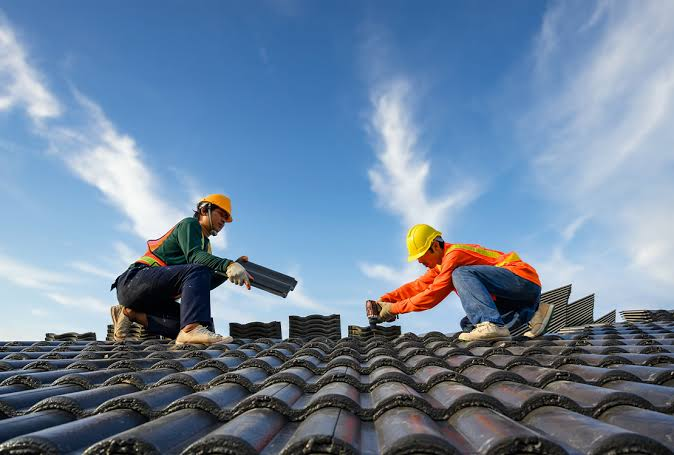
How to Get a Reliable Repair-or-Replace Recommendation
Before approving major roofing work, ask the contractor:
- What exactly is damaged?
- How extensive is the damage?
- What caused the problem?
- Is the roof deck sound?
- How much useful life does the existing roof have?
- What repairs are necessary now?
- What happens if I repair instead of replace?
- What is included in the replacement estimate?
- Can the existing roofing material be matched?
- Can you provide photos or written findings?
For a significant project, comparing written repair and replacement scopes can make the decision much easier.
Conclusion
Roofing contractors generally repair a roof when the damage is localized, the surrounding system is sound, and the roof still has useful life remaining. Replacement becomes more appropriate when damage is widespread, the roof is nearing the end of its service life, the decking or underlying components are compromised, or repeated repairs are no longer providing good value. Brandon Roofing can help evaluate the condition of your roof and explain whether repair or replacement makes more sense for the problems found. Call (607) 247-9580 to discuss your roofing needs.


