 WhatsApp Us Now

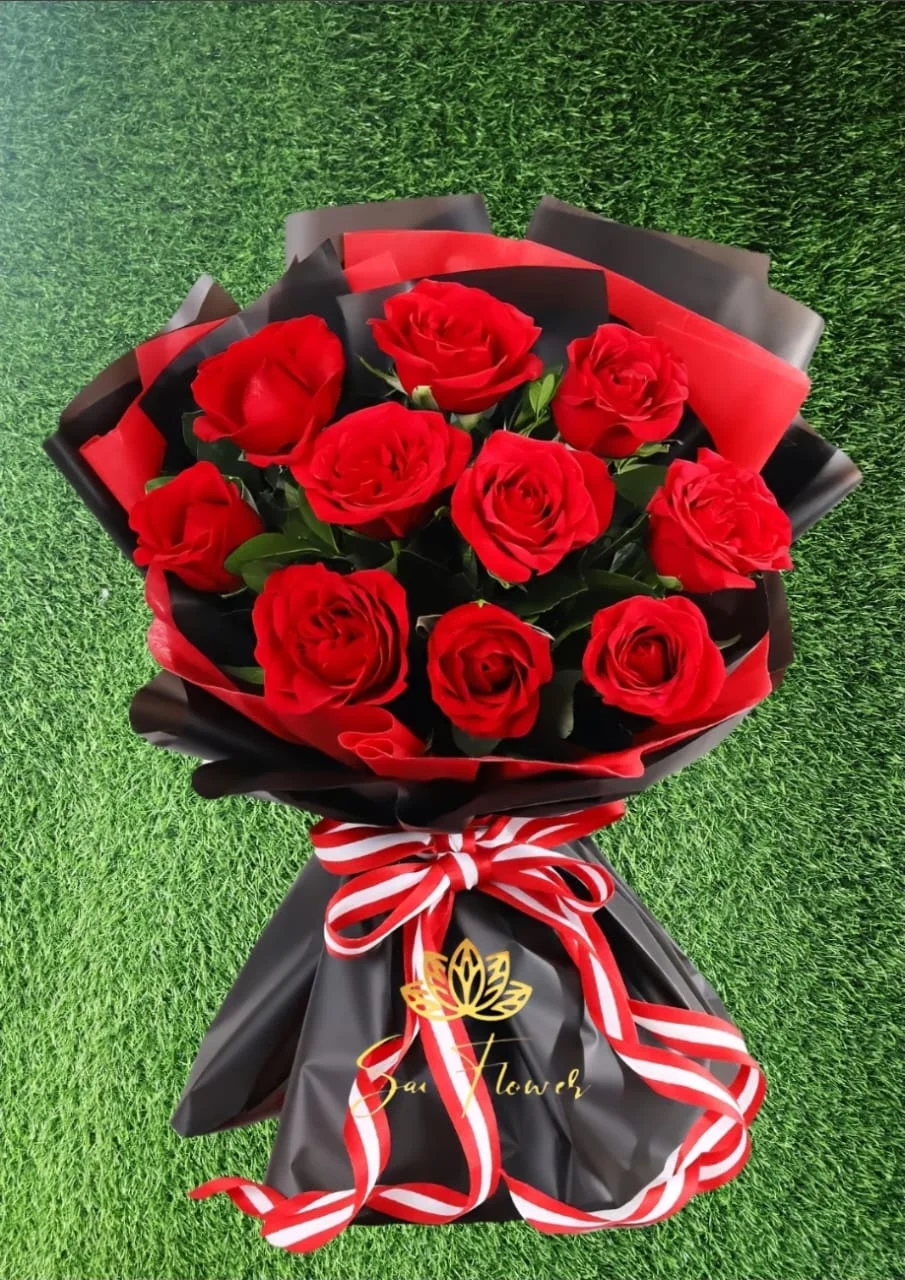
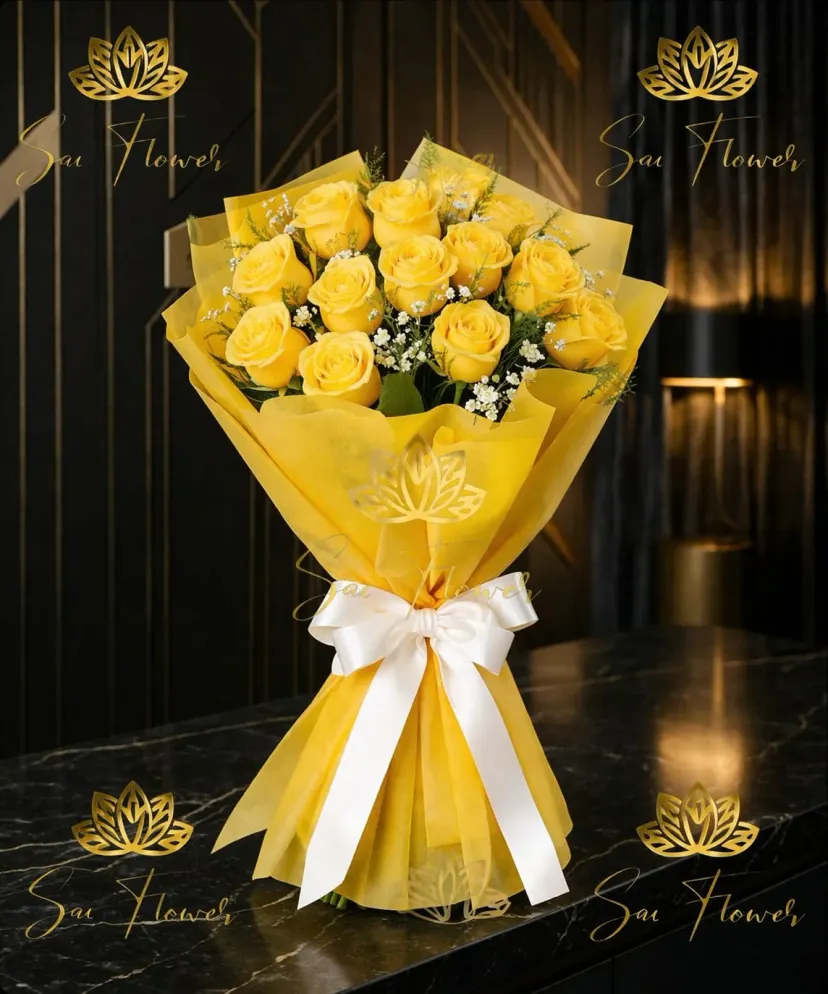
A true Hand Tied Bouquet relies entirely on the balanced friction of spiraling stems held together by a single binding point rather than synthetic floral foam, allowing cut flowers to drink clean water directly and hold an organic, freestanding dome shape. When customers walk into my studio at Sai Flower in Lodi Colony, New Delhi, they often assume a floral arrangement stays upright only because hidden wires or green sponge blocks hold the stems rigid. Over years of crafting daily orders and wedding arrangements across Delhi NCR, I have proven that proper stem angles create a self-supporting architectural network. You can browse our fresh spiral flower arrangements to see how mastering this traditional European floristry method transforms loose garden stems into a balanced gift that lasts days longer in a vase.
What Makes a Hand Tied Bouquet Different from Foam Arrangements?
Structural Mechanics of the Spiral Stem Technique
In a hand-tied bouquet, every stem aligns along a unified rotational trajectory around a central axis.
By angling each successive stem diagonally against the preceding one, the resulting intersections generate mechanical friction that secures the structure.This interlaced lattice effectively distributes the substantial mass of the floral heads evenly throughout the arrangement’s foundation.Furthermore, as the stems splay outward beneath the binding point—resembling the legs of a tripod—the completed composition achieves sufficient stability to remain upright on a flat surface without relying on immediate vase support.
Comparing Hand-Tied Designs vs Floral Foam Arrangements
I consistently recommend that clients opt for hand-tied bouquets rather than foam-stuffed arrangements, particularly when prioritizing both freshness and environmental stewardship.
Conventional wet floral foam is composed of phenol-formaldehyde plastics, which not only obstruct the capillaries within flower stems but also possess an inherent resistance to biodegradation.
The design factor distinguishes between a hand-tied spiral configuration and a floral foam-based arrangement.
Internal support is achieved either by interlocking 45-degree spiral stems bound with natural jute or raffia, or by piercing stems into a saturated synthetic sponge block.
Water uptake occurs through direct immersion in fresh, oxygenated vase water, whereas absorption is limited exclusively to moisture retained within the foam cells.
Environmental Impact 100% biodegradable stems and natural fiber twine Single-use plastic waste
The vase exhibits exceptional adaptability, accommodating placement directly within any wide-necked vessel without necessitating structural modification; conversely, the alternative design remains rigidly confined to the contours of its plastic tray, precluding any alteration of its form.
With regular water exchanges and frequent re-cutting, stems exhibit a longevity of 7 to 14 days, whereas bacterial accumulation typically impedes stem function within a window of 3 to 5 days in the absence of such maintenance.
Spiral hand-tied bouquets surpass traditional floral foam arrangements across three critical metrics—stem hydration, vase longevity, and environmental sustainability—since their open stem termini facilitate direct absorption of fresh water, thereby circumventing the reliance on non-biodegradable synthetic sponges that necessitate moisture transport through inert blocks.
How Do I Select and Condition Stems for a Hand Tied Bouquet?
Categorizing Focal Flowers, Secondary Blooms, and Greenery
When assembling a hand-tied bouquet, I never indiscriminately select stems from a container; rather, prior to securing the arrangement with twine, I meticulously categorize every stem on my workbench according to its specific structural function.
Comprising thirty percent of the floral arrangement, focal flowers serve as the primary visual anchor through their substantial size and commanding presence.
Exemplars include garden roses, Oriental lilies, and sunflowers, which establish the composition’s core aesthetic.When curating these robust central elements, one may investigate an extensive array of varieties, such as our selection of fresh roses available online, to ensure the chosen blooms possess the necessary structural integrity.
Secondary stems, comprising forty percent of the arrangement, incorporate medium-sized blossoms such as spray roses, carnations, or gerberas; these elements are strategically employed to bridge vertical discrepancies and construct a cohesive, rounded dome.
Comprising approximately thirty percent of the overall stem composition, textural fillers and foliage—such as the airy structures of gypsophila, eucalyptus, or ruscus—serve to cushion delicate petals and avert stems from chafing one another.
Step-by-Step Stem Hydration and Sanitization Protocol
Contaminated water accelerates the demise of cut flowers more effectively than elevated temperatures.
In accordance with directives issued by the Royal Horticultural Society, foliage immersed in such water undergoes rapid decomposition, subsequently fostering bacterial proliferation that obstructs the vascular transport of water within the stem.
Eliminate all lower foliage, including leaves, thorns, and lateral shoots, from the basal two-thirds of each stem to ensure that no material remains beneath the binding point.
To facilitate optimal hydration, each stem base should be severed with sanitized floristry shears at a precise 45-degree angle, removing approximately two centimeters; this method is superior to using dull household scissors, which tend to crush the vascular tissues and impede water uptake.
To ensure maximum hydration, immerse freshly cut stems in cool water supplemented with floral preservative for a minimum of two hours prior to arrangement, thereby allowing the petals to achieve complete turgidity.
Successful execution of a hand-tied bouquet necessitates the meticulous categorization of stems into focal points, secondary supports, and foliage, followed by the removal of all lower leaves and the precise angulation of cut ends at 45 degrees to inhibit bacterial proliferation and maximize vascular water uptake.
How Do I Master the Spiral Technique Step-by-Step?
Ensuring the precise alignment of the anchor stem is paramount, particularly in upholding the requisite 45-degree angle.
For those with right-handed dexterity, maintain the Hand Tied Bouquet in the left hand while introducing stems using the right; ensure the grip remains supple around the upper third of the stems, as excessive pressure can crush delicate structures and impede necessary rotation.
To establish the central axis, grasp a robust focal stem vertically, securing it firmly between your thumb and index finger.
Incorporate the first diagonal by positioning a second stem horizontally across the front of the anchor stem, ensuring its head inclines marginally to the left while its base extends outward to the right at a forty-five-degree angle.
Upon incorporating every two stems, rotate the developing bundle a quarter-turn counter-clockwise within your grasp to ensure consistent alignment.
Feed the subsequent stem from the front, maintaining the precise diagonal angle, while alternating the arrangement between focal blooms, secondary flowers, and eucalyptus foliage to create alternate textures.
When inspecting the dome, maintain the arrangement at eye level at eight-stem intervals, ensuring that focal blooms are positioned marginally below the airy fillers to achieve a sense of natural depth.
Binding, Trimming, and Wrapping for Transit or Gifting
Upon achieving a visually balanced silhouette from all angles, encircle the precise junction where the thumb and index finger rest with three tight windings of natural jute twine or raffia, securing the spiral with a double square knot to prevent unwinding.
Level the stem ends by trimming them horizontally to a uniform length, thereby ensuring the hand-tied bouquet rests flat.Should clients opt for our Gift Combo Delivery service in conjunction with artisanal chocolates or confections, the trimmed stems are first encased in a hydrated aqua-pack; thereafter, waterproof Korean wrapping paper and satin ribbon are layered around the binding point to complete the presentation.
To construct a spiral hand-tied bouquet, one must first loosely grasp an anchor stem, then systematically layer each subsequent stem at a uniform 45-degree angle while maintaining a consistent directional orientation; this assembly should be rotated a quarter-turn at regular intervals to ensure the spiral formation, followed by securing the binding point with natural twine and finally trimming the stems to a level base.
My Honest Review of Hand Tied Bouquet Designs for Modern Gifting
Evaluation Criteria and Scoring Breakdown
From my workstation within Lodi Colony, I rigorously evaluate each floral arrangement against five critical parameters: the structural integrity required to withstand transit, the simplicity with which the recipient can assemble it, the density and visual impact of the blooms, the ecological cost of its creation, and the duration for which the composition remains viable in a vase.
Evaluation Metric Score (Out of 5) Practical Studio Assessment
Vase Readiness: Rated 5.0 out of 5, the recipient need only unwrap the paper packaging and submerge the tied bundle directly into water.
Achieving a longevity rating of 4.8 out of 5, the open stem architecture ensures that floral arrangements maintain their freshness for more than seven days, provided the water is replenished at 48-hour intervals.
The visual balance, rated 4.9 out of 5, is achieved through a 360-degree dome symmetry that appears meticulously composed from every vantage point around the dining table.
Sustainability 5.0 / 5 Zero toxic floral foam or plastic cages required for structural integrity.
Rated 3.5 out of 5 for its initial learning curve, the experience is characterized by significant hand fatigue and a tendency for angular drift, which persist through the first five attempts until muscle memory finally establishes itself.
With an overall florist rating of 4.6 out of 5, this establishment stands out as my premier choice for commemorating anniversaries, celebrating milestone birthdays, and presenting executive gifts.
Although novices encounter a moderate learning curve when mastering hand rotation to prevent stem breakage, the Hand Tied Bouquet commands a 4.6 out of 5 rating, distinguished by its exceptional vase longevity, perfect 360-degree visual symmetry, complete elimination of plastic foam waste, and seamless convenience for the recipient.
Frequently Asked Questions About a Hand Tied Bouquet
Should I cut the string on a Hand Tied Bouquet before putting it in a vase?
When arranging a hand-tied bouquet in a vase, it is essential to maintain the integrity of the binding twine.
Preserving this tie safeguards the spiral architecture constructed by the florist, ensuring the blooms sustain their arched, domed form rather than collapsing outward against the vessel’s rim.This necessity was underscored last month by a client in South Delhi, who expressed concern that her anniversary lilies appeared flattened after she severed the jute cord; upon retied the binding point, the arrangement instantly restored its intended rounded silhouette.
How long can a Hand Tied Bouquet survive out of water during delivery?
When a Hand Tied Bouquet is correctly conditioned and its stem bases are encased in a moisture-retentive wrap, shielded from direct solar exposure, it can endure a period of two to four hours without hydration.
However, during the scorching afternoons of peak summer in Delhi, the intense heat accelerates the evaporation of moisture from the petals with remarkable speed.
Upon dispatching orders from our establishment situated near Sai Mandir on Lodhi Road, extending across the NCR region, we meticulously encase freshly harvested stems in damp absorbent cotton within sealed moisture-retention pouches, ensuring that the botanical material arrives at its destination fully hydrated.
What vase shape works best for a Hand Tied Bouquet?
For an optimal presentation of a hand-tied bouquet, a cylindrical or gently tapered glass vase is ideal, provided its aperture measures approximately half the width of the floral dome.
Should the neck be excessively narrow, the binding point becomes constricted, inevitably crushing the stems; conversely, an overly wide opening permits the splayed legs to separate, causing the dome to lose its structural integrity and flatten.Within my studio practice, I consistently pair a 25-stem arrangement of roses and eucalyptus with a six-inch diameter cylindrical vessel, ensuring it is filled to two-thirds capacity with cool water.
How often should I change the water in my vase to prevent wilting?
In accordance with the Society of American Florists’ care protocols, the vase contents should be refreshed entirely, and the distal one centimeter of each stem meticulously trimmed, every forty-eight hours.
This regimen, which includes scrubbing the vessel’s interior with mild detergent during water renewal, effectively eradicates slime-producing microorganisms and ensures your Hand Tied Bouquet retains its vitality for a fortnight.Furthermore, our comprehensive guide delineates optimal selections for parents, highlighting robust varieties such as carnations and orchids that possess inherent resilience and maintain freshness most effectively within the ambient conditions of Indian residences.
To obtain further visual instruction on preserving uniform stem angles throughout the assembly process, viewers are directed to observe the demonstration of spiral stem wrapping, which details the requisite hand placement and ribbon finishing techniques, Sai Flower, Shop No. 1, Sai Mandir, Lodhi Rd, Gokalpuri, Institutional Area, Lodhi Colony, New Delhi, Delhi 110003, 088020 04527


