 WhatsApp Us Now
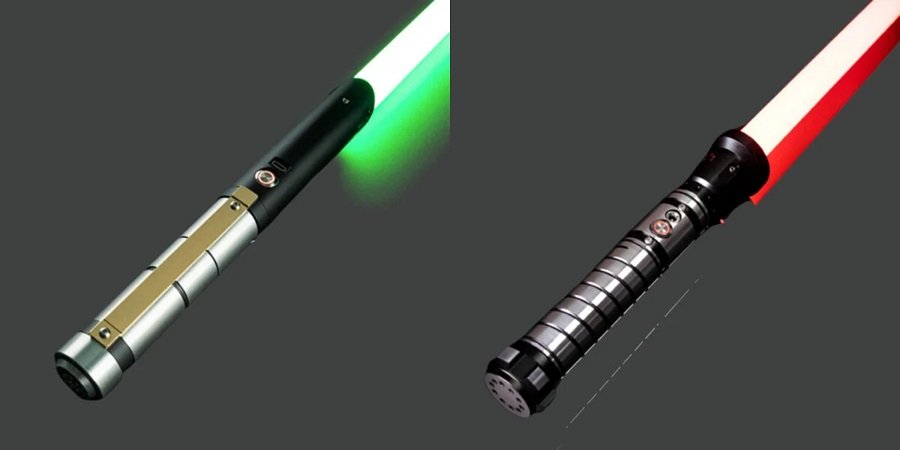
Saber ownership used to end at the display cabinet. That has shifted considerably, with a growing share of buyers now wanting something they can actually swing at another person without watching it disintegrate.
Retailers have responded by separating combat lightsabers into their own category rather than treating durability as an optional upgrade on a display piece.
What Separates a Combat Build
Blade thickness does most of the work. Display blades stay thin because thin looks brighter when lit, though thin polycarbonate splits on the first serious clash.
Combat construction uses thicker walls, reinforced hilt internals and better cushioning around the electronics. Weight increases noticeably as a result — an unavoidable trade-off, and one most duelists accept quickly.
The Range of Combat Sabers Available
The named combat line runs broad. Vini, Valkyrie, Ulan, Triton, Thoosa, Theros, Starflex, Spartan, Spark, Solar, Sol, Skeleton, Sirius and Scora all sit within roughly £94 to £430 depending on hilt and core specification.
Character builds carry higher prices for good reason. Darth Maul staff configurations reach £412 to £731, with Clone Wars and Rebels variants at £370–£590 and £346–£533 respectively. A Yoda combat saber lands around £296 to £431.
At the other end, a Youngling child’s build sits near £34, which makes introducing younger family members considerably less daunting.
Electronics Inside a Moving Target
Pixel blades house an LED strip along their full length, producing genuine ignition travel and clash effects at the point of contact. That also means electronics living inside the part getting hit.
Proper internal protection therefore matters more in combat sabers than in any display build. Xenopixel V2 cores sit around £74 as standalone parts, cross guard variants closer to £94, and Xeno3 RGB near £60. Proffie suits anyone happy configuring sound fonts personally.
Honest Expectations around Combat Lightsabers
Honest Expectations
BM Lightsabers doesn’t dress this up in its FAQ — it says plainly that these sabers are built for light dueling and cosplay, and no, there’s no actual plasma involved. That kind of honesty counts for more than marketing copy ever could, since it sets expectations correctly before anyone’s placed an order. Worth knowing too: the whole thing started with one saber bought back in 2019 and only became a proper public store by 2021, with the catalogue now sorted by character, hilt style, colour and core type.
Blades Are Consumable
Worth stating plainly. Choreographed sparring at moderate speed asks far less of a blade than full-force contact.
Anyone dueling regularly should budget for replacements from the start. Hilts should last years; blades will not, regardless of how much they cost.
Building From Parts
Empty and etched hilts open up self-assembly for anyone wanting something specific. Cores, blades and accessories sell separately, letting a collector upgrade an existing saber rather than replacing it outright.
Customer comments mention secure packaging, quick dispatch and a printed manual arriving separately — small details, though they suggest a retailer thinking beyond the transaction.
Conclusion
The gap between a shelf piece and a sparring saber shows up the moment two of them meet. Deciding which one is actually wanted, before comparing prices, saves both money and a cracked blade in the first week.


