 WhatsApp Us Now

The ability to smell is something many people take for granted until it suddenly becomes weaker or disappears. From enjoying the aroma of freshly brewed coffee to recognising food that has gone bad, our sense of smell plays a bigger role in daily life than most people realise. When familiar scents become difficult to detect, it can affect eating habits, personal safety, and overall quality of life.
A reduced sense of smell should not always be dismissed as a temporary problem. Although it may happen following a common cold or respiratory infection, persistent smell disorders can also be associated with nasal inflammation, chronic sinusitis, nasal polyps, and other medical conditions. Consulting a qualified nose specialist in Singapore can help establish the possible cause and determine whether further assessment is necessary.
Understanding How the Sense of Smell Works
The sense of smell, medically known as olfaction, begins when airborne molecules enter the nasal cavity and interact with specialised sensory cells. These cells send signals to the brain, where different scents are identified and interpreted.
This process is closely connected to taste. That is why food may seem bland when someone has a blocked nose or cannot smell properly. The problem may not be with the taste buds themselves but with the reduced ability to detect aromas.
When the nasal passages become inflamed or obstructed, odour molecules may have difficulty reaching the olfactory region. In other situations, the sensory pathway itself may be affected.
Common Reasons for Losing Your Sense of Smell
Nasal Allergies
Allergic rhinitis can cause swelling inside the nose, excessive mucus production, and persistent congestion. When these symptoms become significant, the normal movement of air through the nasal passages may be affected.
People with recurring allergies may notice that their sense of smell becomes weaker during periods of increased nasal inflammation. Managing the allergy and controlling inflammation may help, depending on the underlying condition.
Chronic Sinusitis
Chronic rhinosinusitis involves prolonged inflammation of the nasal and sinus lining. Patients may experience facial pressure, nasal blockage, thick discharge, and reduced smell.
In some cases, the inflammation affects the area responsible for detecting odours. A sinus specialist Singapore patients consult may recommend nasal endoscopy or selected imaging investigations to assess the condition.
Nasal Polyps
Nasal polyps are soft, non-cancerous growths that develop within the nasal passages or sinuses. They can obstruct airflow and interfere with the normal movement of odour molecules towards the olfactory region.
Patients with nasal polyps may experience a combination of persistent congestion and a noticeably reduced sense of smell. Treatment depends on the size, location, and severity of the condition.
Previous Respiratory Infections
Some viral infections can affect the sense of smell even after other symptoms have improved. Recovery varies between individuals, and persistent smell changes should be discussed with a medical professional.
Other Medical Conditions
Less commonly, smell disorders may be related to head injuries, neurological conditions, medication effects, or other medical problems. This is one reason why a proper assessment is more useful than assuming every smell disturbance comes from sinus congestion.
Different Types of Smell Disorders
A person does not necessarily need to lose their sense of smell completely to have an olfactory disorder.
- Anosmia refers to a complete loss of smell.
- Hyposmia describes a reduced ability to smell.
- Parosmia occurs when familiar smells become distorted or unpleasant.
- Phantosmia refers to smelling something that is not actually present.
These conditions can have different causes and may require different approaches to investigation and treatment.
When Should You See a Nose Specialist?
Occasional changes in smell during a cold are common. However, persistent loss of smell, recurring nasal obstruction, or symptoms that continue after an infection has resolved deserve further attention.
A nose specialist may assess patients who experience unexplained smell changes, persistent sinus symptoms, nasal polyps, or structural abnormalities. Sudden smell loss accompanied by neurological symptoms or other severe warning signs requires urgent medical evaluation.
How a Specialist Assesses Smell Disorders
Medical History and Symptom Review
The consultation may begin with questions about when the smell disturbance started, whether it developed suddenly or gradually, and whether it is associated with congestion, allergies, or a previous infection.
The doctor may also review previous illnesses, medication use, nasal injuries, and other relevant medical history.
Nasal Endoscopy
Nasal endoscopy allows the specialist to examine the internal nasal passages using a thin instrument with a camera and light. It may help identify inflammation, polyps, structural obstruction, or other abnormalities.
Smell Testing and Further Investigations
Depending on the symptoms, formal smell identification testing or imaging may be considered. A CT scan may be useful when chronic sinus disease or nasal anatomical problems are suspected.
Not every patient needs every investigation. The appropriate assessment depends on the clinical findings.
Treatment Depends on the Underlying Cause
Treatment may involve managing allergic inflammation, treating sinus disease, addressing nasal polyps, or investigating other contributing conditions.
Some patients benefit from prescribed nasal sprays or saline irrigation. Selected patients with persistent chronic sinus disease may be considered for Functional Endoscopic Sinus Surgery (FESS).
However, surgery is not a universal solution for smell disorders. The specialist needs to determine whether there is a treatable nasal or sinus problem and explain realistic expectations.
Finding an Experienced Nose Specialist Singapore Patients Can Consult
Choosing the right specialist is an important step when smell disturbances become persistent. Patients should look at relevant ENT qualifications, experience in rhinology, and familiarity with conditions affecting the nose and sinuses.
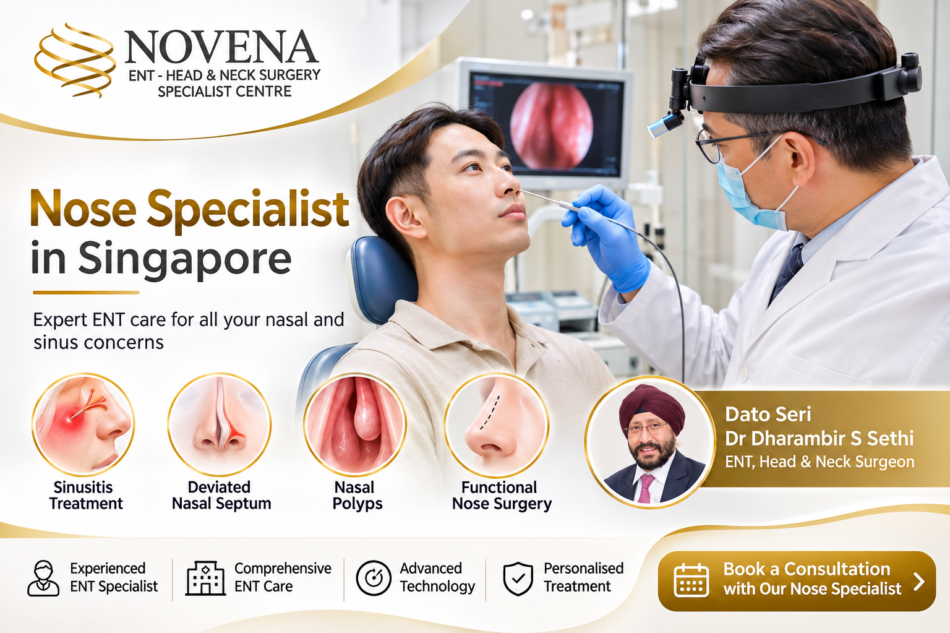
Dato Seri Dr Dharambir S Sethi D.S.L.J. is a senior ENT surgeon at Novena ENT-Head & Neck Surgery Specialist Centre. His clinical focus includes smell disorders, nasal allergies, chronic sinusitis, nasal polyps, deviated septum, and complex conditions involving the nose and sinuses.
His professional background includes experience in endoscopic sinus surgery and skull base surgery, making his clinical profile relevant to patients seeking specialist assessment for more complicated nasal conditions.
Frequently Asked Questions
Can sinusitis cause loss of smell?
Yes. Inflammation and swelling associated with sinusitis can interfere with the normal detection of odours. The degree of smell loss depends on the underlying condition.
Can the sense of smell return after treatment?
Recovery depends on the cause. Some patients improve when nasal inflammation or obstruction is treated, while others may require additional management.
Is losing your sense of smell always serious?
Not necessarily. Respiratory infections and allergies are common causes, but persistent or unexplained changes should be assessed.
Does nasal surgery restore the sense of smell?
Surgery may improve smell in selected patients when nasal obstruction or chronic sinus inflammation is contributing to the problem. Results vary, and improvement cannot be guaranteed.
Take Your Smell Changes Seriously
A reduced sense of smell can affect food enjoyment, safety, and everyday experiences. If you have persistent nasal congestion or unexplained changes in your ability to smell, consider arranging an assessment with a qualified nose specialist in Singapore. Visit the official profile of Dato Seri Dr Dharambir S Sethi D.S.L.J. at Novena ENT to learn about his qualifications and clinical expertise. Contact the clinic to discuss your symptoms and explore an appropriate next step towards better nasal health.


