 WhatsApp Us Now
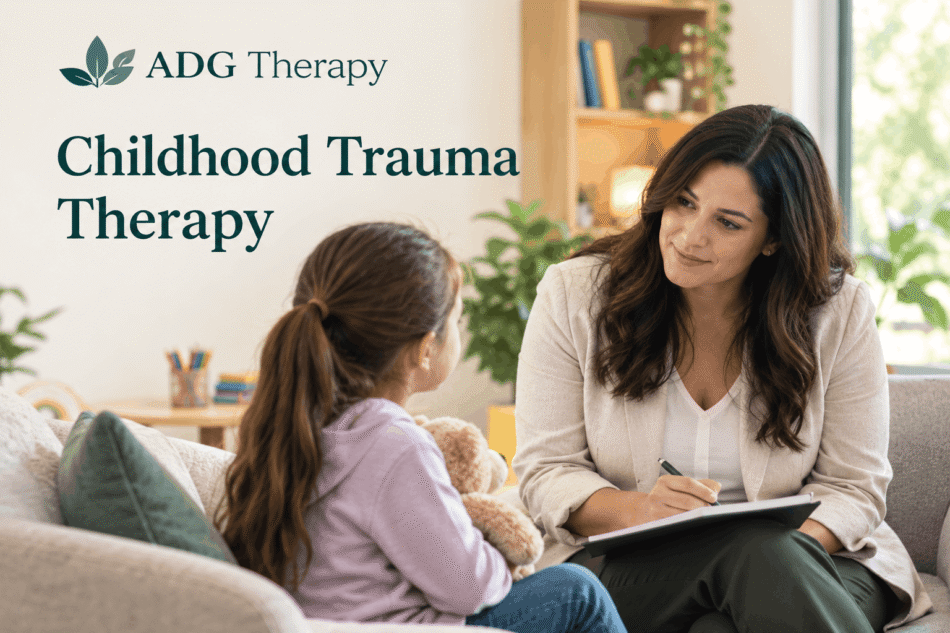
Many of the patterns that shape adult life, how you handle conflict, whether you trust easily, how you respond when someone gets close, were not chosen consciously. They were formed early, often in response to a home environment, a caregiver relationship, or an experience that taught your nervous system how to stay safe. Childhood trauma therapy in Cooper City exists for exactly this reason: to help adults understand where these patterns came from and build new ones that actually serve them now.
This guide looks at how childhood trauma shows up later in life, what effective treatment involves, and what to expect from the process.
Childhood Trauma Doesn’t Always Look Like One Big Event
When people hear the word trauma, they often picture a single dramatic incident. In reality, childhood trauma frequently develops through repeated experiences rather than one moment, growing up with an unpredictable or emotionally unavailable caregiver, feeling responsible for a parent’s emotions, experiencing criticism or neglect, or having to appear strong long before you were ready to carry that weight.
Over time, these repeated experiences train the nervous system to stay alert for danger, even in situations that are actually safe. This is why someone can logically know a relationship or environment is fine, yet still feel anxious, reactive, or unable to relax. The trauma is not necessarily in the memory itself. It is in how the body and mind learned to respond.
How Childhood Trauma Shows Up in Adulthood
Unresolved childhood trauma tends to surface in patterns rather than obvious symptoms. Common signs include:
Attachment and relationship struggles. Fear of abandonment, difficulty trusting others, or feeling torn between wanting closeness and needing distance often trace back to early relationship experiences.
Chronic overthinking or anxiety. A nervous system that learned to anticipate threat as a child often continues scanning for problems well into adulthood, even when there is no immediate danger.
Automatic reactions to triggers. Strong emotional or physical responses that feel disproportionate to the present situation are frequently rooted in past experiences the mind has not fully processed.
Feeling stuck despite understanding the pattern. It is common to intellectually understand why you react a certain way and still feel unable to change it. This gap between insight and actual change is often a sign that the pattern lives in the nervous system, not just in conscious thought.
Difficulty with self-worth. Childhood environments that involved criticism, neglect, or conditional approval often shape a lasting sense of not being good enough, even after the original circumstances are long gone.
What Effective Childhood Trauma Therapy Looks Like
Childhood trauma therapy is not about reliving painful memories in detail or being pushed to talk before you feel ready. Effective treatment is trauma-informed, meaning it prioritizes safety and pacing above all else. This typically includes:
Building safety first. Before deeper processing begins, therapy focuses on helping you feel grounded, regulated, and in control of the pace of your own healing.
Understanding patterns with curiosity, not judgment. Rather than treating reactions or coping mechanisms as flaws, effective therapy explores where they came from and what function they originally served, since many patterns that cause problems now once helped you survive difficult circumstances.
Using evidence-based approaches like EMDR. Eye Movement Desensitization and Reprocessing is a widely used, research-backed method for helping the brain process distressing memories so they lose their emotional intensity, without requiring you to describe every detail out loud.
Working at your own pace. Trauma work is not linear, and a good therapist adjusts the pace based on what you are ready for at each stage, rather than following a fixed timeline.
Why Address Childhood Trauma Now, Even Years Later
A common misconception is that if enough time has passed, old experiences should no longer matter. In practice, unresolved childhood trauma tends to persist precisely because it was never fully processed, not because enough time hasn’t passed. The nervous system does not automatically update old survival responses just because circumstances have changed.
Addressing these patterns as an adult is not about blaming the past. It is about recognizing that what once helped you survive may no longer be what you need to thrive, and giving yourself the chance to build new patterns rooted in your current life rather than old circumstances.
What to Expect From Childhood Trauma Therapy in Cooper City
At ADG Therapy, care is provided by Dr. Acralys Diaz-Gonzalez, a licensed mental health counselor specializing in trauma therapy and EMDR, serving individuals in Cooper City and Fort Lauderdale, FL. The approach centers on understanding each client’s nervous system, processing past experiences at a manageable pace, and building practical tools for feeling more grounded, confident, and present in daily life.
Sessions are collaborative rather than directive, meaning you remain in control of what is addressed and how quickly the work moves forward. This structure is intentional, since trauma recovery tends to be more effective and lasting when clients feel safe enough to fully engage in the process, rather than feeling rushed or judged.
FAQ
Q: How do I know if my current struggles are connected to childhood trauma?
A: Common signs include difficulty trusting others, fear of abandonment, chronic overthinking, strong reactions to triggers that feel disproportionate, and relationship patterns that repeat despite your best efforts to change them.
Q: Does childhood trauma therapy require talking about every painful detail?
A: No. Approaches like EMDR are specifically designed to help the brain process distressing memories without requiring you to describe every detail verbally, making the process more manageable for many clients.
Q: Can childhood trauma affect relationships even if the trauma happened decades ago?
A: Yes. Childhood trauma often shapes attachment patterns and nervous system responses that continue influencing adult relationships long after the original experiences occurred, regardless of how much time has passed.
Q: What is the difference between childhood trauma therapy and general talk therapy?
A: Childhood trauma therapy uses trauma-informed and evidence-based approaches, such as EMDR, that address how the nervous system stores and responds to past experiences, rather than focusing solely on discussing thoughts and feelings.
Q: How long does childhood trauma therapy typically take?
A: The timeline varies by individual and depends on the nature of the experiences being addressed. Treatment is generally paced according to each client’s readiness rather than following a fixed schedule.
Q: Is childhood trauma therapy only for people who experienced severe abuse?
A: No. Childhood trauma can result from a wide range of experiences, including emotional neglect, inconsistent caregiving, or having to take on adult responsibilities too early, not only from severe or obvious abuse.
Final Thoughts
Childhood trauma therapy in Cooper City offers a path toward understanding patterns that were never consciously chosen and were often formed as necessary survival responses to a difficult environment. With a trauma-informed, paced approach, adults can begin to separate old survival patterns from their present life and build the tools needed to feel more grounded, secure, and in control moving forward.
If you are ready to explore childhood trauma therapy in Cooper City or Fort Lauderdale, FL, you can learn more about Dr. Acralys Diaz-Gonzalez’s approach and schedule a free consultation at ADG Therapy.


