 WhatsApp Us Now
Eye tests are the hot topic on George St right now because a new wave of UV‑induced eye strain is hitting office workers and café‑hoppers alike. In this article I’ll break down why the rush is real, what a modern eye test looks like, how to prepare, and which local optometrist can give you the most reliable results. I’ll also cover children’s vision milestones, high‑risk groups, and the tech that’s reshaping eye health in 2026. By the end you’ll know exactly what to expect when you book an eye test on George St and why skipping it could cost you more than a pair of spectacles.
Why the Rush: Seasonal Factors on George St
From what I’ve seen, the late‑summer glare across the harbour and the high‑rise reflections off the glass façades create a perfect storm for glare‑related discomfort. The combination of bright sunlight and the long hours people spend on laptops in co‑working spaces means many are experiencing blurred vision by eye fatigue by and even headaches — And the city’s humidity spikes in spring, which aggravates dry‑eye symptoms for anyone wearing contact lenses.
What typically happens is that people ignore early signs until a routine eye test reveals a problem that could have been caught earlier. The thing is early detection can prevent permanent damage especially for conditions like glaucoma that develop silently. In my experience the surge in appointments on george st coincides with the rollout of new medicare rebates for comprehensive eye health checks making it easier for residents to get a full exam without extra paperwork.
- Bright harbour reflections – up to 1,200 lux on a sunny day.
- Average screen time for office workers – 8‑10 hours per day.
- Humidity rise in October – up to 78 % relative humidity.
What a Full Eye Test Involves on George St Sydney
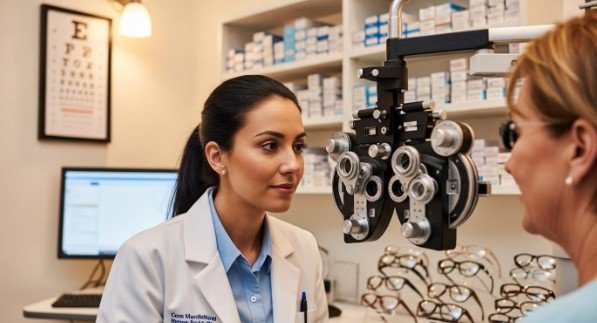
When you walk into an optometrist on George St, you’re not just getting a quick visual acuity check. A full eye test now includes a suite of diagnostics that map the health of your retina, cornea, & optic nerve. Below is the typical flow of a 2026 eye exam, and why each step matters.
Visual Acuity and Refraction
The first part is the classic eye chart, but we also run a computerized refraction that fine‑tunes your prescription in seconds — The device measures how light focuses on the retina and suggests the exact sphere, cylinder, and axis you need for glasses or contacts.
Binocular Vision and Depth Perception
Next we assess how well your eyes work together. A series of stereopsis tests and cover‑test measurements reveal any misalignment that could cause double vision or eye strain.
Intra‑ocular Pressure (IOP) Screening
Using a non‑contact tonometer, we check the pressure inside your eye — Elevated IOP is a key early sign of glaucoma, which is why it’s a mandatory part of any eye test in NSW.
Retinal Imaging and OCT Scans…
Optical Coherence Tomography (OCT) gives a cross‑sectional view of the retina, spotting early macular degeneration or diabetic retinopathy — Honestly, the scan is painless, takes under a minute, and the images are stored for future comparison.
Peripheral Vision and Colour Vision
We run a quick visual field test to catch any blind‑spot development and a colour‑vision test that can reveal optic nerve issues.
- Visual acuity – standard 6‑meter chart.
- Refraction – automated wavefront aberrometer.
- Binocular vision – cover‑test and stereopsis.
- IOP – non‑contact tonometer.
- OCT – retinal layer analysis.
- Peripheral vision – automated Humphrey field test.
Children’s Eye Tests: Early Detection in the Heart of the City
Parents on George St often wonder when to schedule their kid’s first eye test — The answer is simple: at six months, then again at three years, and before school starts at five. Early screening catches amblyopia, strabismus, and refractive errors that can affect learning.
What typically happens is that a child’s teacher notices squinting or frequent headaches, prompting a referral. The optometrist will then perform a child‑friendly version of the standard eye test, using picture charts & interactive games to keep the youngster engaged.
- Six‑month check – red reflex and pupil symmetry.
- Three‑year check – picture chart and cover‑test.
- Pre‑school check – detailed refraction and binocular assessment.
In my experience, children who receive a full eye test before entering primary school are 30 % less likely to develop reading difficulties linked to uncorrected vision. Um, the city’s high‑rise schools often have large windows, so glare can be a problem for kids with uncorrected astigmatism.
High‑Risk Groups & How Often They Should Get Tested
People with diabetes, a family history of glaucoma, or high myopia (over ‑6.00 D) need more frequent eye tests. The guidelines in NSW recommend at least one comprehensive exam every 12 months for these groups, and sometimes every 6 months if the condition is progressing.
And if you work in a high‑traffic environment like the George St transport hub, you’re exposed to dust & pollutants that can irritate the ocular surface. Regular eye tests help catch dry‑eye disease early, before it leads to corneal scarring.
- Diabetes – annual retinal imaging.
- Glaucoma risk – IOP check every 6 months.
- High myopia – refraction and OCT every 12 months.
- Occupational exposure – dry‑eye assessment quarterly.
Technology in 2026: OCT, Wavefront Aberrometry, AI‑Screening at Home
2026 has brought a wave of new tools that make eye tests more precise & faster. Here’s the thing: wavefront aberrometry now maps tiny imperfections in the eye’s optics, allowing for custom lenses that reduce night‑glare for drivers on the busy george st roundabout.
But the biggest change is AI‑driven at‑home screening apps that use your phone’s camera to detect astigmatism and refractive errors. While these tools are handy for a quick check, they’re not a substitute for a full in‑clinic eye test, especially when it comes to retinal health.
- OCT – 10‑micron resolution retinal layers.
- Wavefront aberrometry – up to 0.01 D accuracy.
- AI‑screening – 85 % sensitivity for myopia detection.
Choosing the Right Optometrist on George St
Not every clinic on George St offers the same level of service. Ah, look for an optometrist who is a member of the australian optometric association and has a dedicated retinal imaging suite. In my experience, the best practices combine a modern lobby with a quiet, dim‑lit examination room – essential for accurate OCT scans.
And make sure the clinic can handle both adult and paediatric appointments without a long wait — Some places have a separate “Kids Corner” that speeds up the process for families.
- Accreditation – Australian Optometric Association member.
- Facilities – on‑site OCT, wavefront aberrometer.
- Specialties – paediatric, diabetic, low‑vision.
- Location – easy access from George St tram stop.
After the Exam: Interpreting Results and Next Steps
When the eye test is finished, the optometrist will give you a clear prescription & explain any findings — If you need glasses, they’ll recommend frame styles that suit the high‑rise fashion of George St, and they’ll also discuss UV‑blocking lenses to protect against the strong sea‑breeze glare.
But if the exam uncovers a condition like early cataract or diabetic retinopathy, you’ll be referred to an ophthalmologist for further management. The optometrist will also set up a follow‑up schedule, typically 12 months later for routine checks, or sooner if the eye health check.
- Prescription – sphere, cylinder, axis, & add power.
- Glasses – UV‑blocking, anti‑reflective coating.
- Contacts – fitting and care instructions.
- Referral – ophthalmology for advanced disease.
- Follow‑up – 12‑month review or as advised.
Conclusion
Eye tests on George St are more than a trend; they’re a response to the city’s unique light environment, high‑rise architecture, and the growing awareness of eye health in 2026. From comprehensive retinal imaging to AI‑assisted home screens, the tools available today make early detection easier than ever. To be honest, whether you’re a busy professional, a parent, or someone at higher risk, booking a full eye test now can safeguard your vision for years to come. Stay proactive, choose a qualified optometrist on George St, & keep your eyes in top shape – because the city’s skyline is worth seeing clearly.


