 WhatsApp Us Now
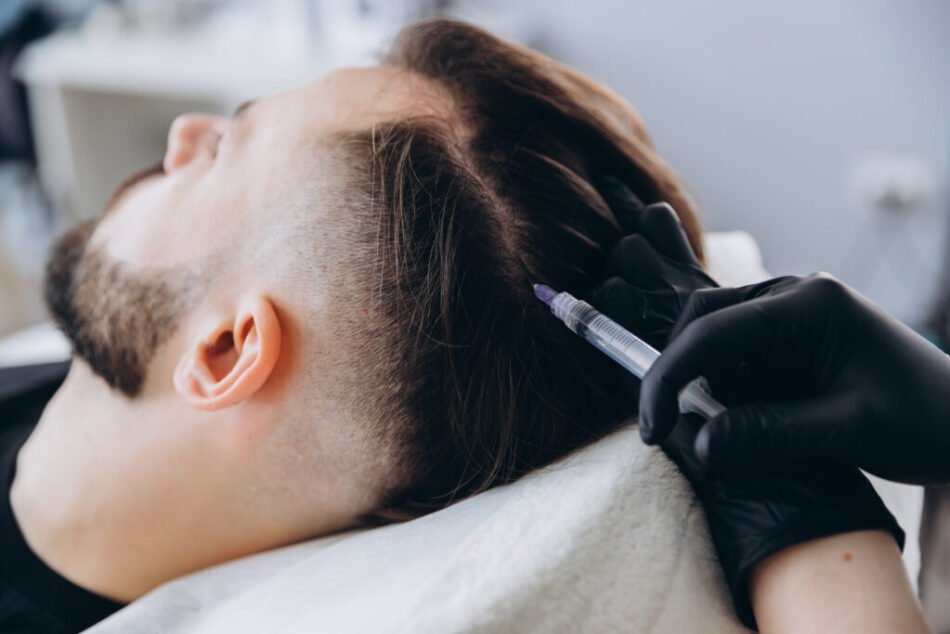
Yes, PRP Hair Treatment can generally be performed as an outpatient procedure, meaning patients can usually return home after the treatment without staying overnight. For people considering علاج الشعر بالبلازما الغنية بالصفائح الدموية في دبي, the treatment is typically performed in a clinical setting and does not usually require hospital admission or an overnight stay.
Why Is PRP An Outpatient Treatment?
PRP Hair Treatment is minimally invasive and does not involve major surgery. The procedure generally involves collecting a small blood sample, processing it to separate the platelet-rich plasma, and injecting the prepared PRP into selected areas of the scalp.
Because the procedure is relatively straightforward and does not usually require general anesthesia or surgical hospitalization, patients can normally leave after the session.
What Happens During An Outpatient PRP Session?
The treatment generally follows several steps:
- Consultation and scalp assessment: The areas of thinning and the patient’s hair-loss pattern are evaluated.
- Blood collection: A small sample of blood is taken, usually from the arm.
- PRP preparation: The blood is processed, commonly using a centrifuge, to separate the platelet-rich plasma.
- Scalp preparation: The targeted areas are cleaned and prepared for injections.
- PRP injections: The prepared plasma is injected into selected areas of scalp thinning.
- Post-treatment guidance: Aftercare instructions are provided before the patient leaves.
The exact process can vary depending on the treatment protocol and individual needs.
Do You Need To Stay At The Clinic After PRP?
Patients generally do not need prolonged observation after PRP Hair Treatment. Once the procedure is complete and the healthcare professional is satisfied that the patient is ready to leave, they can usually return home.
Some temporary tenderness, redness, swelling, or sensitivity may occur around the injection sites. These effects generally improve as the scalp recovers.
Can You Return To Daily Activities After PRP?
One advantage of outpatient PRP is that it generally involves limited downtime compared with surgical hair-restoration procedures. Many patients can resume normal activities relatively soon after treatment.
However, specific recommendations may vary. Patients should follow the aftercare instructions provided by their healthcare professional, particularly regarding scalp washing, hair products, strenuous exercise, and other activities immediately after treatment.
Does Outpatient PRP Mean The Treatment Is Suitable For Everyone?
No. Being an outpatient procedure does not mean PRP is appropriate for every person experiencing hair loss.
The cause of hair loss, scalp condition, follicle health, medical history, and treatment goals should be assessed before proceeding. PRP may be more appropriate for certain types of hair thinning, particularly when viable follicles remain.
How Long Does An Outpatient PRP Treatment Take?
The total appointment time depends on factors such as blood collection, PRP preparation, scalp preparation, and the number of areas being treated.
The treatment is usually completed during a single visit, although a full treatment plan may involve multiple sessions over time.
Does PRP Require General Anesthesia?
PRP Hair Treatment generally does not require general anesthesia. Because the procedure involves small injections into the scalp, a professional may use local numbing or other comfort measures when appropriate.
The exact approach depends on the treatment provider and the patient’s individual needs.
Frequently Asked Questions:
How long does a PRP Hair Treatment session take?
The treatment time varies depending on the treatment area and protocol, but it is generally completed during a single clinic visit.
Does PRP Hair Treatment require anesthesia?
PRP usually does not require general anesthesia. Local numbing or other comfort measures may be used when appropriate.
Can I return home after PRP Hair Treatment?
Yes. Most patients can leave after the procedure and follow their recommended aftercare instructions at home.
Is there downtime after PRP Hair Treatment?
PRP generally involves limited downtime. Temporary redness, tenderness, swelling, or sensitivity may occur around the injection sites.
Can I return to work after PRP Hair Treatment?
Many people can return to normal activities relatively soon, although specific recommendations may vary depending on individual circumstances.
How many PRP sessions are needed?
The number of sessions depends on the cause and severity of hair loss, scalp condition, treatment goals, and individual response.
Is PRP Hair Treatment suitable for everyone?
No. Suitability depends on factors such as the type of hair loss, follicle health, scalp condition, medical history, and treatment expectations.
When do PRP Hair Treatment results appear?
Results develop gradually. Improvements in hair density and thickness may take several months to become noticeable.
Can PRP permanently stop hair loss?
No. PRP may help support existing follicles and reduce thinning in selected patients, but it cannot guarantee permanent control of hair loss.
Conclusion:
PRP Hair Treatment can generally be performed as an outpatient procedure without an overnight stay. The treatment involves collecting a small blood sample, preparing platelet-rich plasma, and injecting it into selected areas of scalp thinning. Because PRP is minimally invasive, patients can usually leave after the session and return to daily activities according to their healthcare professional’s instructions. A professional assessment is important to determine whether PRP is appropriate for the individual’s hair-loss condition.


