 WhatsApp Us Now


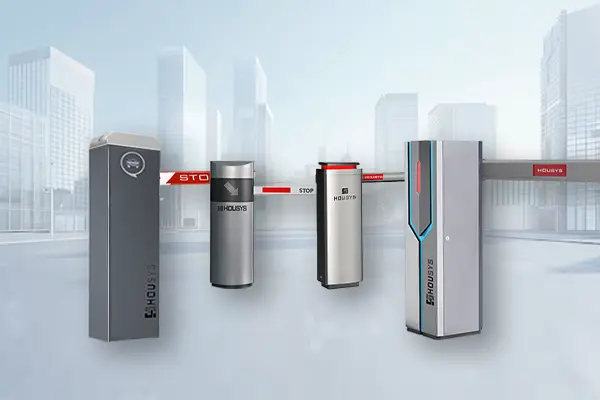
For a car park or housing society, a standard-speed automatic boom barrier with safety sensors and an RFID reader is usually enough. For a toll lane or a busy mall exit, you need a high-speed unit with a heavy-duty motor. Before you ask for a quote, know your lane width, your busiest-hour traffic and how vehicles will be identified (remote, ticket, RFID or number plate camera). Those four details decide most of the price.
Most people start shopping for a boom barrier by searching for a price. That’s reasonable, but it’s also why quotes are so hard to compare. Two vendors can quote the same lane with very different numbers because they’ve assumed different things: different arm length, different motor, different safety kit, and sometimes a different idea of what “installed” means.
This guide is meant for the person who has to make the buying decision. It covers which type of barrier suits which site, what to check before you commit, and exactly what information to send a boom barrier supplier so that the quote you get back is one you can rely on.
What an automatic boom barrier does
An automatic boom barrier is a motorized gate with a horizontal arm. The arm lifts to let a vehicle through and lowers to stop the next one. “Automatic” means it opens on a signal: a remote, an RFID reader, a ticket machine or a camera that reads number plates.
It controls traffic. It doesn’t physically stop a determined crash, and that difference matters for high-security sites. We’ll come back to it.
Which type fits your site
Different sites need different things from the same product. Here’s the practical view.
| Site | What matters most | Usually a good fit |
|---|---|---|
| Housing society | Reliability, easy resident access, guest handling | Standard-speed barrier with RFID |
| Mall or office parking | Smooth link with ticketing or parking software | Standard-speed barrier with ticket, RFID or number plate reading |
| Basement or low-ceiling car park | Headroom | Folding (articulated) arm |
| Toll lane or busy exit | Speed, constant open-close cycles | High-speed, heavy-duty barrier |
| Factory or campus gate | Weather and rough use | Rugged cabinet, simple control |
| Hospital or airport parking | Quiet, dependable operation, backup power | Standard or fast barrier with battery backup |
If your project is a full parking operation, the barrier is one part of a bigger setup. See how it works with a parking management system. For toll lanes, the toll management solution shows how barriers connect with readers and cameras.
The five things that decide your boom barrier price
We’d rather be upfront than hand you a number that doesn’t fit your site. These are the real drivers of boom barrier price:
- Arm length. A wider lane needs a longer arm, and a longer arm needs a stronger motor and sometimes extra support.
- Speed. A high-speed barrier costs more than a standard one. Don’t pay for speed you won’t use. A society with ten cars an hour doesn’t need it.
- Duty cycle. This is how many openings per day the motor is built for. It’s the spec people forget, and it’s the one that decides whether the barrier lasts. A fast arm on a light-duty motor will wear out at a busy gate.
- How vehicles are identified. A remote is cheap. RFID, ticketing and number plate recognition add readers, cameras and software.
- Safety and weather kit. Loop detectors, infrared sensors, auto-reverse, battery backup and a cabinet built for your climate all add cost, and all of them are worth having.
Installation matters too. Ask whether the quote includes foundation work, cutting the loop in the road, cabling, commissioning and training. A low quote that leaves those out isn’t low.
RFID, ticket or number plate: choosing the trigger
This choice shapes how the gate feels to every person who uses it.
RFID boom barrier. A card or tag is read as the vehicle approaches, and the arm is already rising. It’s the best fit for residents, staff and regular visitors. Long-range readers read tags from a few metres away, which suits cars. Short-range readers need the card held close, which suits pedestrians more than drivers.
Ticket and payment. Standard for paid parking. The barrier opens after a ticket is issued at entry or paid at exit.
Number plate recognition (ANPR). No card, no ticket. It works well when lighting and plate quality are good, and causes frustration when they aren’t. Ask for a demonstration in conditions like yours.
Remote or button. Fine for a small site with a guard on duty.
Many sites mix methods: RFID for residents and staff, tickets for visitors.
What to check before you commit
Ask every vendor the same questions. It’s the only way to compare fairly.
- Duty cycle: how many openings per day is the motor rated for?
- Opening time: how long to fully raise the arm?
- Safety: can you see the loop detector or infrared sensor working, and the auto-reverse? Is there a manual release for power cuts?
- Arm options: straight, folding, fence-style or LED, depending on your site.
- Cabinet and finish: what material, and what protection rating for your weather?
- Integration: will it work with your parking, toll or access control software?
- Power backup: is battery backup available?
- Warranty: what exactly is covered (motor, controller, sensors), and for how long?
- Service: where is the engineer based, how fast can they reach your site, and which spares are stocked in India?
Manufacturer or supplier: ask who you’re actually talking to
Both words appear in search results, and they’re used loosely.
A boom barrier manufacturer builds the product, so customisation and spare parts come from the source. A boom barrier supplier sells and usually installs, sometimes from several brands. Both can be excellent. What counts is who installs it, who stocks spares in India and who picks up the phone when a barrier stops at peak hour.
So ask plainly: “Are you the manufacturer, an authorised dealer or a trader?” A trustworthy vendor will answer without hesitation and can back it up with factory details, authorization letters or a project list.
What to send us to get an accurate quote
This is the part most buyers skip, and it’s why quotes come back vague. Send these details and the quote you get will be specific:
- Site type: society, mall, office, factory, toll, hospital, other.
- Number of lanes: entry, exit or both.
- Lane width in metres.
- Peak-hour traffic: roughly how many vehicles in your busiest hour.
- How vehicles will be identified: remote, RFID, ticket, number plate or a mix.
- Software: any parking, toll or access control system it must connect to.
- Environment: indoor, outdoor, coastal, dusty, very hot.
- Power situation: frequent cuts? Need battery backup?
- Extras: LED arm, fence arm, loop detectors, installation, training, maintenance contract.
- Timeline and your city or site location.
Photos of the entrance and a rough sketch help a lot.
When a boom barrier alone isn’t enough
Be realistic about what it does. A boom barrier controls and records traffic. For critical or high-risk sites such as government buildings or infrastructure, add bollards or road blockers. If you also need to control people on foot, pair it with a flap barrier or tripod turnstile at the pedestrian entry.
Mistakes that cost more later
- Buying on price alone and ignoring duty cycle
- Choosing the wrong arm length for the lane
- Skipping safety sensors to cut cost
- Forgetting power backup in areas with frequent cuts
- Comparing quotes that cover different things
- Not asking where service will come from
A barrier that fails every few months costs far more in repairs, lost time and angry drivers than a better one bought at the start.
Frequently asked questions
What is the price of an automatic boom barrier in India?
It depends on arm length, speed, duty cycle, safety features and how vehicles are identified. A basic unit for a small gate costs much less than a high-speed, heavy-duty barrier for a toll lane. Send your lane details to get a written quote for your exact site.
Which boom barrier is best for parking?
A standard-speed automatic barrier with safety sensors, connected to your parking software, suits most parking sites.
What is a toll boom barrier?
It’s a high-speed, heavy-duty barrier built for constant opening and closing, connected to lane controllers, readers and cameras.
Can a boom barrier work with RFID?
Yes. An RFID reader identifies authorised cards or tags, and the barrier opens without manual action.
What is the difference between a boom barrier manufacturer and a supplier?
A manufacturer builds the barrier. A supplier sells and usually installs it. Ask which one you’re dealing with and who provides service and spares.
How long does a boom barrier last?
That depends on duty cycle, build quality, weather and maintenance. Ask the vendor for the rated life of the motor and moving parts.
Do you provide installation and maintenance?
[Confirm and add Houston Systems details here.]
Get a quote for your site
If you’re comparing options, the team at Houston Systems can help match an automatic boom barrier to your lane, traffic and entry method. Send the details from the checklist above and we’ll come back with a written quote.
Request a quote: 9599033679 | sunilkumarhousysgroup@gmail.com |


