 WhatsApp Us Now

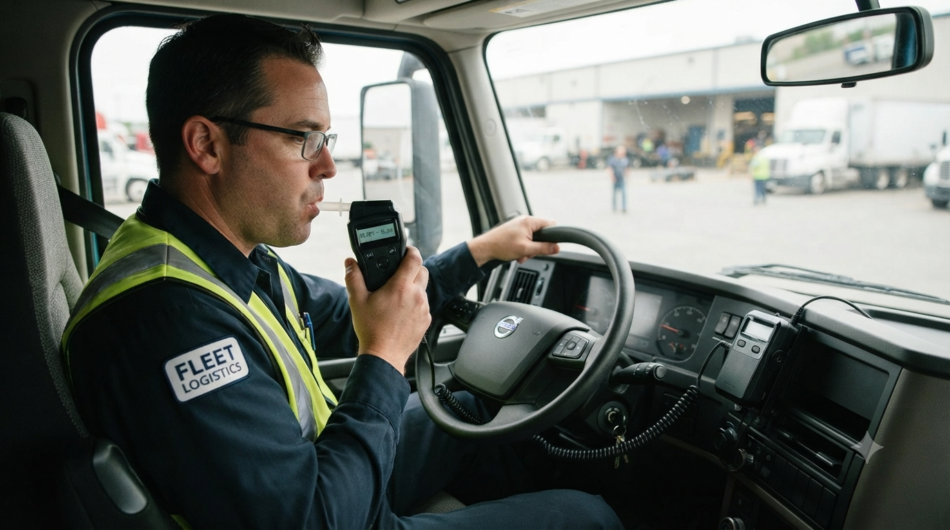
Drunk driving is one of the most preventable causes of road accidents, yet it still puts lives at risk across India. For a fleet owner, one impaired driver can mean injured passengers, damaged cargo, legal trouble and a damaged reputation. An alcohol detector for car and commercial vehicle use lets businesses check sobriety before the vehicle moves. This blog explains how it works, why it matters and what to look for.
Why Drunk Driving Is a Serious Fleet Risk
Alcohol creates a dangerous illusion of control. Reflexes slow, focus weakens and decisions become unreliable, yet the driver often feels fine. That false confidence is exactly what makes impaired driving so risky.
The numbers are worrying. A 2024 survey by Community Against Drunken Driving (CADD) found that 81.2% of 30,000 respondents in Delhi admitted to driving under the influence. Drunk driving also accounts for roughly 2–3% of total road accident fatalities in India every year. For fleets running long hours across highways and city roads, this is a risk that needs a system, not just a policy.
The Legal Limit in India
The legal limit is 0.03% Blood Alcohol Content (30 mg of alcohol per 100 ml of blood), and it applies to commercial vehicle drivers too. Under Section 185 of the Motor Vehicles Act, exceeding it can lead to fines, imprisonment and licence disqualification. Many fleets go further and adopt a zero-tolerance internal policy.
What Is an Alcohol Detector for Car and Fleet Vehicles?
An alcohol detector is a breath analyser. It measures the alcohol concentration in a person’s breath and uses it to estimate BAC. Alcohol in the blood passes into the air in the lungs, and the sensor reads it when the driver exhales.
These devices are compact, portable and non-invasive. They give quick results without blood or urine samples and need minimal training to operate, which makes them practical for busy depots and yards.
How a Driver Alcohol Detection System Works
A driver alcohol detection system combines the breath analyser with identity verification and vehicle controls. A typical flow looks like this:
- The driver is authenticated, for example through RFID or facial recognition.
- The driver blows into the device before starting the trip.
- The device processes the reading and compares it with the preset limit.
- If alcohol is detected above the limit, the engine stays locked.
- The result is saved with the time, driver ID and outcome.
Because the identity check happens before the test, a colleague cannot blow on the driver’s behalf.
Ignition Interlock Devices Explained
An Ignition Interlock Device (IID) is a breath analyser wired into the vehicle’s ignition. The driver must pass a test before every start, and the engine will not turn on if the reading is above the set threshold, usually around 0.02–0.03% BAC. The device also logs breath tests, violations and tampering attempts, so fleet managers have a record to audit.
Key Features to Look for in an Alcohol Detection System
Not every solution suits fleet operations. When comparing options, an alcohol detection system should offer:
- Facial recognition: confirms who is taking the test.
- Offline operation: tests, authentication and engine immobilisation work without internet and sync automatically once connectivity returns.
- Reports and historical data: past tests can be retrieved for analysis and action.
- Easy portability: handheld units that need little training.
- Telematics integration: combines breath test data with other driver safety signals.
Integration with AI and Video Telematics
When breath analysers are paired with video telematics, fleets get a fuller picture of driver safety. Alcohol-related risk can be viewed alongside speeding, lane changes, fatigue and distracted driving, so managers see the whole story instead of one data point.
Benefits for Fleet Businesses
Fewer Accidents and Lower Costs
Stopping an impaired driver before the trip begins protects passengers, cargo and other road users. Fewer accidents can also help qualify the fleet for lower insurance premiums, which makes the device a cost-saving measure and not only a safety one.
Compliance You Can Prove
Every test is logged with its result and time. That creates a clear compliance record for audits and internal reviews. The same setup also works for workplace checks at offices, factories, warehouses and logistics hubs, covering both employees and visitors.
Limitations and Maintenance
A breath analyser shows whether a driver is above the legal alcohol limit, but it does not prove complete fitness to drive. It cannot detect fatigue, drugs or illness, so pairing it with AI-based driver monitoring gives stronger protection.
Calibration matters too. Sensors drift with use, which can make readings inaccurate. As a general guide, professional units are calibrated at least once a year, and heavily used fleet devices may need more frequent checks as per the manufacturer’s guidance.
Final Thoughts
Preventing drunk driving works best before the key is turned. A reliable alcohol detector for car and fleet use, backed by authentication, ignition lock and detailed reports, gives businesses control over a risk that is otherwise hard to see. It protects drivers, passengers and your brand while keeping you on the right side of the law.


