 WhatsApp Us Now

The pharmaceutical, biotechnology, and healthcare industries are continuously evolving with advancements in medical science, drug development, and clinical trials. Clinical research plays an important role in evaluating the safety and effectiveness of new medicines, vaccines, medical devices, and treatment procedures. As clinical trials become increasingly important, the demand for trained professionals with clinical research knowledge is creating opportunities for graduates from pharmacy, biotechnology, life sciences, and healthcare backgrounds.
Enrolling in a professional clinical research course can help students understand clinical trial processes, regulatory guidelines, patient safety, research documentation, and clinical data management. For graduates looking to enter the pharmaceutical and healthcare sectors, clinical research training can provide an opportunity to develop industry-relevant knowledge and explore different career paths.
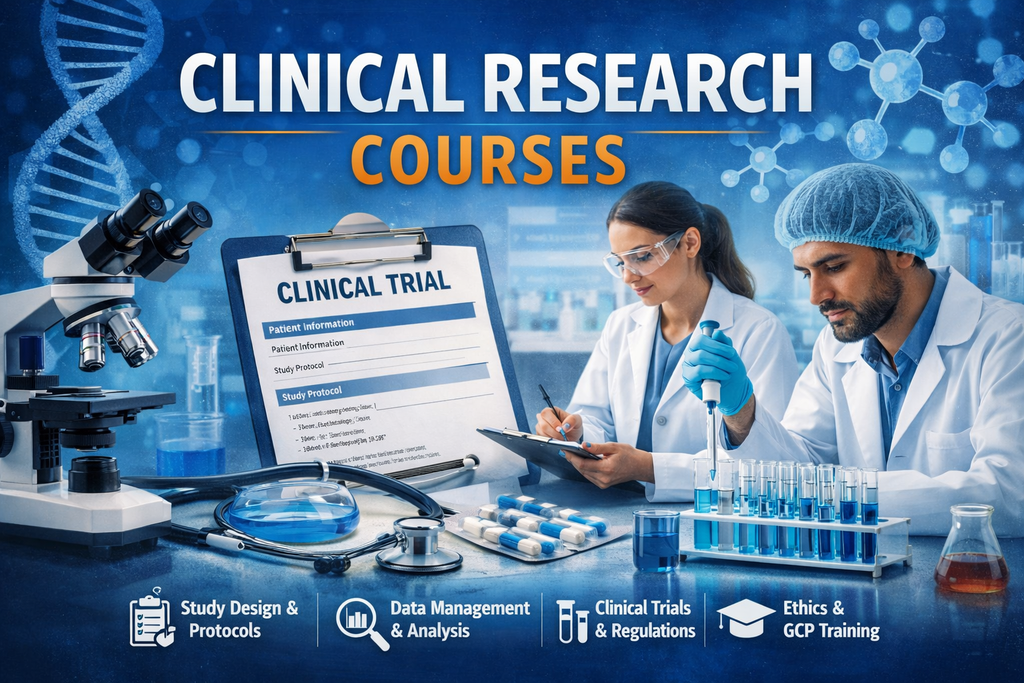
What Is a Clinical Research Course?
A clinical research course is a professional training program designed to teach students the fundamentals of clinical trials and medical research. It introduces learners to the procedures involved in planning, conducting, monitoring, and managing clinical studies while maintaining ethical and regulatory standards.
The curriculum generally includes theoretical concepts and practical learning activities related to clinical trial management, Good Clinical Practice (GCP), clinical trial documentation, informed consent, pharmacovigilance, regulatory affairs, and clinical data management.
These programs are suitable for individuals who want to understand how pharmaceutical companies, hospitals, Contract Research Organizations (CROs), and research institutions conduct clinical studies.
Why Choose a Clinical Research Course After Graduation?
Many graduates want to develop specialized skills that can help them explore opportunities beyond traditional academic pathways. Clinical research training introduces students to the pharmaceutical research ecosystem and helps them understand how new treatments move from development to clinical evaluation.
Some important benefits include:
- Understanding different phases of clinical trials.
- Learning international clinical research guidelines.
- Developing knowledge of patient safety and research ethics.
- Understanding clinical trial documentation and reporting.
- Exploring pharmaceutical and healthcare industry career options.
- Developing communication, analytical, and documentation skills.
- Learning about regulatory requirements and clinical data processes.
A structured training program can also help learners understand professional responsibilities and workplace expectations.
Clinical Research Course Syllabus: What Will You Learn?
Before selecting a training program, students should review its syllabus to understand the subjects and practical concepts covered during the course.
A comprehensive clinical research curriculum may include the following modules:
- Introduction to Clinical Research
Understand the fundamentals of clinical research, drug development, research terminology, and the importance of clinical trials.
- Clinical Trial Management
Learn about clinical trial phases, study protocols, site management, trial monitoring, and the responsibilities of different research professionals.
- Good Clinical Practice (GCP)
Understand ethical and scientific quality standards for designing, conducting, recording, and reporting clinical trials.
- Pharmacovigilance
Learn about adverse drug reaction reporting, drug safety monitoring, and the importance of protecting patients during clinical studies.
- Clinical Data Management
Explore clinical data collection, validation, database management, data quality, and reporting processes.
- Regulatory Affairs
Understand regulatory guidelines, clinical trial approvals, essential documents, and compliance requirements.
- Clinical Trial Documentation
Learn about informed consent forms, case report forms, study protocols, investigator files, and other important research documents.
Practical assignments and case studies can help students connect these concepts with real-world clinical research activities.
Clinical Research Courses Fees: What Determines the Cost?
One of the most common questions among students is about clinical research courses fees. The cost of training can vary depending on the institute, course duration, curriculum, certification, faculty expertise, and practical exposure.
Some institutes offer short-term certification programs, while others provide more comprehensive professional training.
Before choosing a program, students should compare:
- Total course fees and payment options.
- Course duration and training hours.
- Subjects and practical modules included.
- Certification and assessment methods.
- Online, offline, or hybrid learning options.
- Placement assistance and career guidance.
Rather than selecting a course based only on its price, students should evaluate the overall learning experience and professional value it offers. Contacting institutes directly is the best way to obtain their latest fee structure.
Clinical Research Courses With Placement: Career Support for Freshers
Students frequently search for clinical research courses with placement because transitioning from academic education to employment can be challenging. Placement support can help learners understand industry expectations and prepare for recruitment opportunities.
Depending on the institute, career assistance may include resume preparation, mock interviews, interview guidance, job notifications, and opportunities to connect with pharmaceutical companies or CROs.
However, students should understand the difference between placement assistance and guaranteed employment. Before enrolling, check the institute’s placement process, employer network, interview opportunities, and student support services.
Clinical Research Institute in Pune: How to Choose the Right One?
Pune is an established educational and pharmaceutical hub with opportunities connected to healthcare, biotechnology, pharmaceutical manufacturing, and clinical research.
Choosing the right clinical research institute in Pune is an important step for students planning to enter this industry. Consider the following factors before making a decision:
- Industry-oriented curriculum: Check whether the syllabus covers essential clinical research domains.
- Experienced trainers: Look for faculty members with relevant academic or industry experience.
- Practical learning: Prefer programs that include case studies, assignments, and practical examples.
- Flexible training: Compare classroom, online, and hybrid learning options.
- Certification: Understand the certificate awarded after successful course completion.
- Career assistance: Evaluate resume support, interview preparation, and placement assistance.
A good institute should provide structured learning that helps students understand both theoretical concepts and practical industry requirements.
Career Opportunities After Completing a Clinical Research Course
After completing clinical research training, eligible graduates can explore different entry-level opportunities depending on their educational background, skills, and experience.
Some potential career roles include:
- Clinical Research Coordinator
- Clinical Trial Assistant
- Clinical Research Associate
- Clinical Data Management Associate
- Pharmacovigilance Associate
- Regulatory Affairs Associate
- Clinical Operations Assistant
- Clinical Documentation Specialist
With professional experience and additional training, individuals may progress into specialized and senior positions within pharmaceutical companies, CROs, hospitals, and research organizations.
Who Is Eligible for Clinical Research Training?
Clinical research programs are generally designed for graduates from pharmacy, biotechnology, microbiology, biochemistry, life sciences, medicine, nursing, and related healthcare disciplines.
Eligibility requirements can differ between institutes. Some programs may accept final-year students, while others require graduation. Candidates should confirm the admission requirements before applying.
Build Your Career With Clinical Research Training at TechnoBridge Systems
For students looking to enter the clinical research industry, TechnoBridge Systems offers clinical research training in Pune with online and offline learning options. The training focuses on important industry-related subjects, including clinical trials, Good Clinical Practice, pharmacovigilance, clinical data management, and regulatory affairs. Students can benefit from industry-experienced trainers, real-time case studies, flexible learning schedules, and career guidance. TechnoBridge Systems also provides placement assistance and interview opportunities to help learners prepare for employment in the pharmaceutical, biotechnology, and clinical research sectors.
Conclusion
A clinical research career can be an interesting option for graduates interested in medical science, pharmaceutical development, and healthcare innovation. Enrolling in the right clinical research course can help learners develop foundational knowledge of clinical trials, regulatory compliance, patient safety, and research documentation.
Before selecting a program, compare clinical research courses fees, syllabus, practical exposure, faculty experience, certification, and placement assistance. Choosing a reputed clinical research institute in Pune with structured training and career guidance can help graduates prepare for potential opportunities in the growing clinical research industry.


