 WhatsApp Us Now

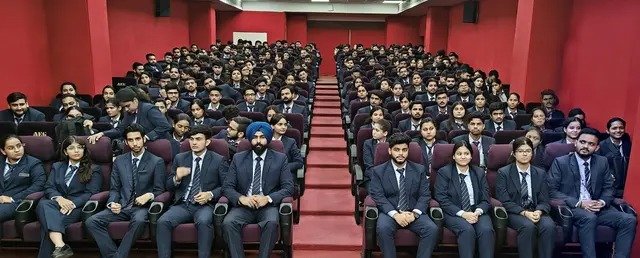
A student can score well in every exam and still go quiet when a manager asks, “So what do you recommend?” Nothing in a textbook prepares you for that moment, because the answer is rarely in the chapter. It comes from having faced a similar problem before. That is why more applicants now ask a different question before enrolling in a pgdm course: not “is it recognised?” but “will it prepare me for an actual workday?”
The Gap Between Knowing and Doing
Classrooms are good at explaining ideas. They are less good at showing how those ideas behave when the data is incomplete, the client is impatient and the team disagrees. Employers know this. When they interview fresh graduates, they listen less for definitions and more for judgment: how you break down a problem, how you explain your reasoning and how you respond when someone challenges it.
Industry exposure is the bridge. It turns knowledge you can recite into skills you can use.
Three Small Moments That Teach Big Lessons
Consider how differently the same subject lands once it touches real work.
- Marketing: You learn consumer behaviour from a framework. Then you study how people in one real customer segment actually buy, and you notice that the framework explains half of it. The other half is what you learn on the job.
- Finance: Ratios look simple on a slide. Applied to a real company’s accounts, they raise questions about timing, one-off costs and what the numbers fail to say.
- Human resources: Conflict resolution reads easily in a case study. Mediating a disagreement inside a student team, with deadlines looming, feels very different.
None of these lessons replaces the classroom. They finish what the classroom starts.
What Corporate Exposure Looks Like in Practice
The phrase gets used loosely, so it helps to know what to look for. Strong programmes usually include:
- Live projects where students work on a company’s actual problem and present recommendations
- Internships that carry real responsibility, not just observation
- Guest sessions with working managers who discuss decisions, mistakes and trade-offs
- Industry visits that show how operations, supply chains or service teams really run
- Simulations and competitions that put you under time pressure
Ask for specifics. “We have industry interaction” is a statement. “Last term, students presented a pricing recommendation to a retail company” is evidence.
A Quiet Benefit: Finding Out What You’re Good At
Many students choose a specialisation on a hunch. Practical work tests that hunch cheaply. Someone planning a marketing career may discover they enjoy the data side of a campaign more than the creative side. Another may realise that coordinating people energises them more than analysing spreadsheets. Learning this during the programme, rather than two years into a job, saves time and gives you a clearer story to tell in interviews.
Choosing Where to Study
If you are comparing pgdm colleges in Delhi NCR, brochures and rankings will only take you part of the way. The region has many options, so the useful differences sit in the details:
- How are internships arranged, and what do students actually do during them?
- How many live projects does a typical student complete?
- Which professionals visit campus, and how often?
- How current is the curriculum on analytics, digital business and AI?
- What support exists for interviews, résumés and career decisions?
Talk to current students and recent graduates if you can. Their answers are usually more specific than any prospectus.
One example is Asian Business School in Noida, which follows an industry-aligned approach through AICTE-approved programmes equivalent to an MBA. It emphasises practical skills, leadership development and corporate exposure, supported by modern campus facilities. As with any institute on your list, compare it using the questions above rather than taking its description at face value.
Preparing for a Workplace That Keeps Changing
The jobs you will enter after graduation are being reshaped by artificial intelligence, digital transformation and shifting customer expectations. No syllabus can predict every change, so adaptability matters as much as knowledge. People who adapt well tend to share a few habits: they question assumptions, work comfortably with unfamiliar problems and collaborate across functions.
Those habits are built through practice. A student who has handled messy data, changed a plan after feedback and presented to sceptical listeners has already rehearsed the things a changing workplace asks for.
More Than a Line on a Résumé
A post graduate diploma in management should leave you with more than a qualification. It should leave you with confidence in your judgment, a feel for how organisations work and a habit of connecting ideas to results. Those outcomes depend less on the title of the programme and more on how much of it puts you in front of real problems.
Making the Final Call
Before you commit, picture your last six months of the programme. Will you have worked on real cases, met working professionals and tried out your specialisation? If the answer is yes, the pgdm course is probably doing its job. Keep that picture in mind as you compare pgdm colleges in Delhi NCR, and choose the one where theory, practice and your own goals line up. When they do, the post graduate diploma in management becomes a launchpad rather than just a credential.
FAQs
1. Why does industry exposure matter in a PGDM?
It lets students apply classroom concepts to real business situations through internships, live projects and interaction with professionals, which builds practical judgment and workplace readiness.
2. How can I judge a college’s industry exposure?
Ask for specific examples: which companies hosted projects, what students did during internships and how often professionals visit campus. Detailed answers are a good sign.
3. Is practical learning useful for every specialisation?
Yes. Marketing, finance, HR, operations and analytics all depend on applying concepts to real situations, so practical work helps students in each of them.


