 WhatsApp Us Now
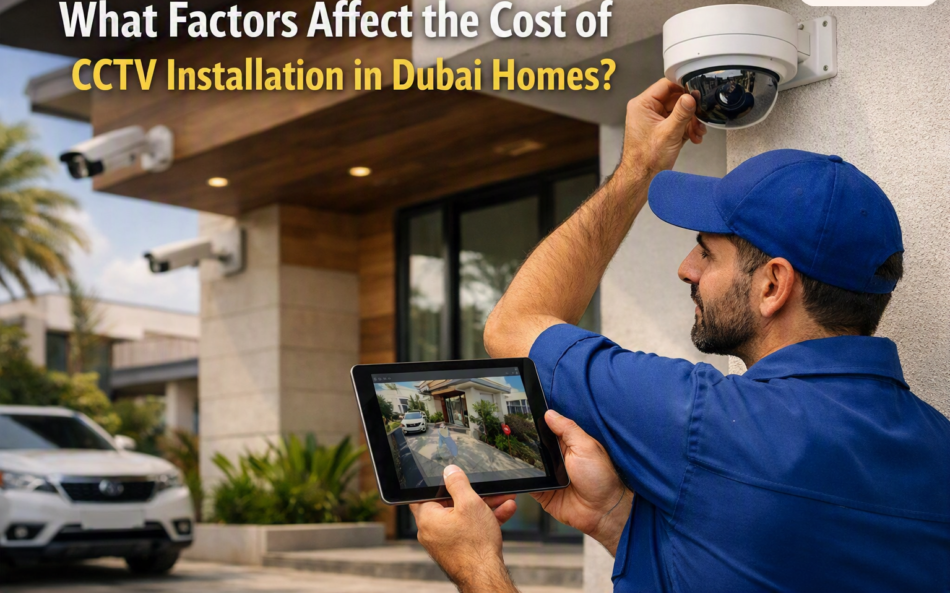
CCTV installation in Dubai can have different costs depending on the type of property, number of cameras, equipment used, and the level of coverage required. A small apartment may need only a few cameras, while a villa, office, shop, or warehouse may need a larger system. Understanding these factors can help property owners plan a suitable security setup without paying for features they do not need.
Number of Cameras Required
The number of cameras is one of the main factors that affects the total cost. A small property may only need cameras at the main entrance, parking area, and other key points. Larger properties usually need more cameras to cover entrances, corridors, outdoor areas, storage rooms, and other important locations.
Adding more cameras also means more cabling, storage capacity, mounting equipment, and installation work. A proper site assessment can help identify areas that need monitoring and prevent unnecessary cameras from being installed.
Type of CCTV Cameras
CCTV cameras are available in different types and designs. Basic fixed cameras are generally suitable for simple monitoring needs. Other options may include dome cameras, bullet cameras, PTZ cameras, and cameras designed for outdoor use.
Features also affect the price. For example, cameras with higher resolution can provide clearer images. Night vision can help record activity in low-light areas, while wide-angle cameras can cover larger spaces. Choosing cameras based on the actual location and purpose is often more practical than selecting the most advanced option for every area.
Camera Resolution
Resolution plays an important role in image quality. A basic camera may be enough for general monitoring, while higher-resolution cameras can be useful where clear details are important.
For example, an entrance may require better image quality to identify faces or other details. A wider outdoor area may have different requirements. Higher resolution can also increase storage needs because video files are usually larger.
Storage Requirements
CCTV systems need a place to store recorded footage. Storage may be provided through a DVR, NVR, hard drive, network storage, or another suitable system.
The amount of storage required depends on the number of cameras, video quality, recording settings, and the number of days the footage needs to be kept. Continuous recording generally requires more storage than motion-based recording.
A property that needs several weeks of recorded footage may require a larger storage system than one that only needs a few days.
Cabling and Wiring
The layout of a property can affect installation costs. Cameras located close to the recording equipment may require less cable, while cameras placed far away may need longer cable runs.
Walls, ceilings, floors, and other building structures can also affect the work involved. In some properties, cables can be installed easily through existing routes. In others, additional work may be needed to keep cables protected and properly hidden.
For outdoor cameras, suitable cable protection may also be needed to help reduce exposure to weather and physical damage.
Property Size and Layout
A property with multiple floors or separate buildings may require more planning than a simple single-floor space. Large villas, offices, warehouses, and commercial buildings often have different monitoring requirements in different areas.
The position of doors, windows, stairways, parking areas, and restricted spaces can influence where cameras should be placed. A well-planned layout can provide useful coverage while reducing blind spots.
Indoor and Outdoor Installation
Indoor and outdoor cameras may have different requirements. Outdoor cameras should generally be designed to handle conditions such as heat, dust, moisture, and changing weather.
Mounting outdoor cameras may also require stronger brackets or additional protection. The height and location of the mounting point can affect the installation work and equipment needed.
Network and Remote Viewing
Some CCTV systems allow users to view cameras through computers, smartphones, or tablets. This may require network connectivity and suitable system configuration.
Remote viewing can be useful for property owners who want to check their premises when they are away. However, network equipment, configuration, and system compatibility can affect the overall setup.
Recording Features and Smart Functions
Modern CCTV systems can include features such as motion detection, human detection, alerts, and other smart functions. These features can help reduce unnecessary recordings and make it easier to review important events.
However, advanced functions may increase equipment costs. The right choice depends on the property’s security needs and how the recorded footage will be used.
Installation Complexity
The installation process itself can affect the final cost. A straightforward installation with easy access to mounting points may require less work. A complex property with difficult access, long cable routes, high mounting points, or several floors may require more time and equipment.
It is therefore useful to consider both equipment and installation requirements when estimating the total cost.
Choosing the Right System
The cost of a CCTV system should be considered together with coverage, image quality, storage, installation requirements, and future needs. Comparing these factors can help property owners choose a system that fits the property rather than simply choosing the cheapest or most expensive option.
By understanding these factors, property owners can make better decisions when planning CCTV installation in Dubai and create a monitoring system that matches their actual requirements.


