 WhatsApp Us Now
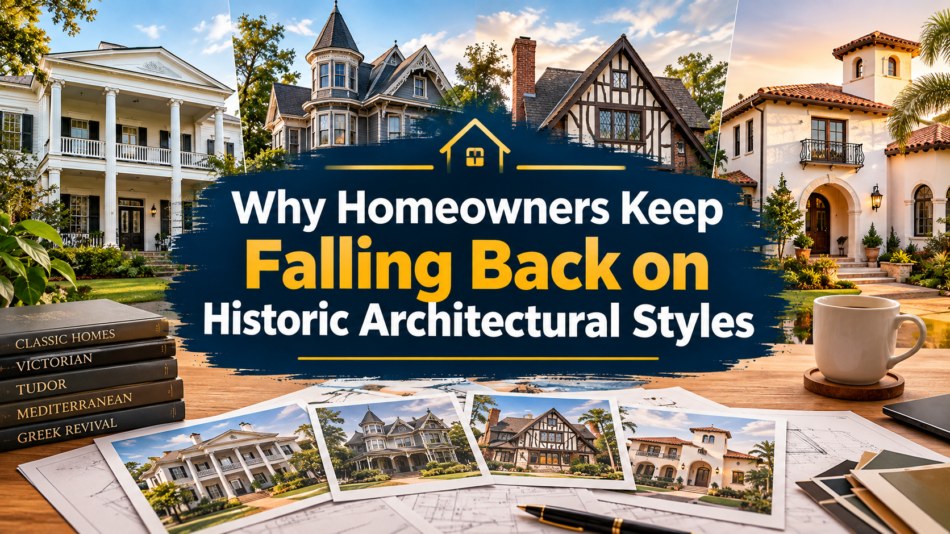
Scroll through any new-build listing in the Southwest or California, and you’ll notice something interesting: alongside the sleek, glass-heavy modern builds, there’s a steady stream of homes borrowing heavily from architectural styles that are well over a century old. Curved rooflines. Thick stucco walls. Deep, shaded porches. None of it looks accidental, it looks deliberate, almost nostalgic.
It raises a fair question. In an era obsessed with clean modern minimalism, why do so many homeowners and developers keep circling back to historic revival styles?
The Pull of Something That Already Feels Familiar
New architectural trends come and go fast, but revival styles have a strange staying power. Part of it comes down to psychology, and part of it comes down to something far more practical.
Familiarity Reduces Buyer Hesitation
Unlike an unfamiliar contemporary design, revival architecture taps into visual cues most people already recognize, even if they couldn’t name the style. That familiarity lowers the emotional barrier to committing to a home, especially for buyers who find ultra-modern design a little cold or hard to picture living in.
Regional Identity Still Sells
In markets where a historic building tradition shaped the local identity in the Southwest, coastal California, parts of Florida homes that nod to that heritage tend to feel like they belong on the street, rather than standing out awkwardly against their surroundings. Developers building in these regions often lean into that regional character deliberately, because it resonates with buyers who chose the area specifically for its character.
Climate-Driven Design Never Really Goes Out of Style
A lot of what reads as “aesthetic” in revival architecture actually solves a practical problem. Thick walls, shaded verandas, and small window openings weren’t decorative choices originally; they were direct responses to hot, dry climates long before air conditioning existed. Building with those same principles today still delivers real thermal benefits, which is part of why the look never fully disappeared.
One Style That Keeps Resurfacing
Among the historic revival movements still influencing new construction, one in particular shows up again and again in the Southwest and along the California coast: a style built almost entirely around the visual language of old Spanish mission buildings.
Borrowed Directly From 18th-Century Missions
The look draws from the simple, sturdy mission buildings constructed by Spanish settlers in the 1700s structures built without ornate tools or fine materials, relying instead on thick mud-brick walls and straightforward geometry. That simplicity is exactly what later designers found appealing when they revived the look generations later.
Distinctive Enough to Recognize at a Glance
Curved, sometimes bell-shaped rooflines, smooth white stucco, and low-pitched red clay tile roofs make this style instantly identifiable, even to people with no architectural background. Arched windows, shaded loggias, and central courtyards round out a look that feels both grounded and distinctly regional.
It’s More Than a Residential Trend
This style shows up well beyond single-family homes in civic buildings, train stations, and institutional structures across the Southwest. That range is part of why it’s stayed relevant for developers working on everything from boutique residential projects to larger community and hospitality builds. For anyone curious about where the look actually came from, the materials that define it, and the specific traits that separate a genuine example from a diluted knockoff, there’s a detailed breakdown of Mission Revival architecture that walks through its origins, materials, and style characteristics in depth.
Why Revival Styles Still Make Sense for New Construction
Choosing to build in a historic revival style today isn’t just a nostalgic gesture. There are practical reasons the approach continues to hold up.
Materials Have Genuinely Improved
Modern stucco systems, engineered tile roofing, and better insulation techniques mean a revival-style build today performs far better structurally and thermally than the original buildings that inspired it, while still preserving the visual character that makes the style recognizable.
It Photographs and Renders Exceptionally Well
Architectural styles built around strong silhouettes, curved parapets, and high material contrast tend to translate beautifully into marketing visuals, which matters more than ever in a market where buyers frequently make decisions based on renderings before a project is finished.
It Ages Gracefully in a Way Trend-Driven Design Doesn’t
A home built to chase a passing design trend can look dated within a decade. A well-executed revival build, by contrast, has already proven its staying power once, and tends to weather changing tastes better than styles tied too closely to a specific decade’s aesthetic.
Bringing a Historic Style Into a Modern Project
For architects and developers considering a revival-influenced design, blending historic character with contemporary functionality takes some intentional planning.
Start With the Defining Traits, Not Just the Surface Look
Simply slapping a tile roof on a modern floor plan rarely reads as authentic. Understanding the deeper structural logic thick walls, arcades, central courtyards, horizontal massing helps a design feel cohesive rather than decorative.
Let Climate Guide Material Choices
Revival styles were shaped by climate first and aesthetics second. Leaning into that logic, rather than treating the style purely as ornamentation, tends to produce buildings that function as well as they look.
Visualize Before You Build
Because revival styles rely so heavily on silhouette, texture, and light, seeing an accurate rendering before construction begins helps confirm the proportions and material choices actually deliver the intended feel, rather than discovering a mismatch once the walls are already up.
Final Thoughts
Historic revival architecture keeps resurfacing in new construction because it solves problems that never really went away: buyer familiarity, regional character, and climate-appropriate design. Styles rooted in centuries-old building logic have already survived one test of time, and for architects and developers willing to study what actually made them work, that staying power tends to carry forward into whatever gets built next.


