 WhatsApp Us Now
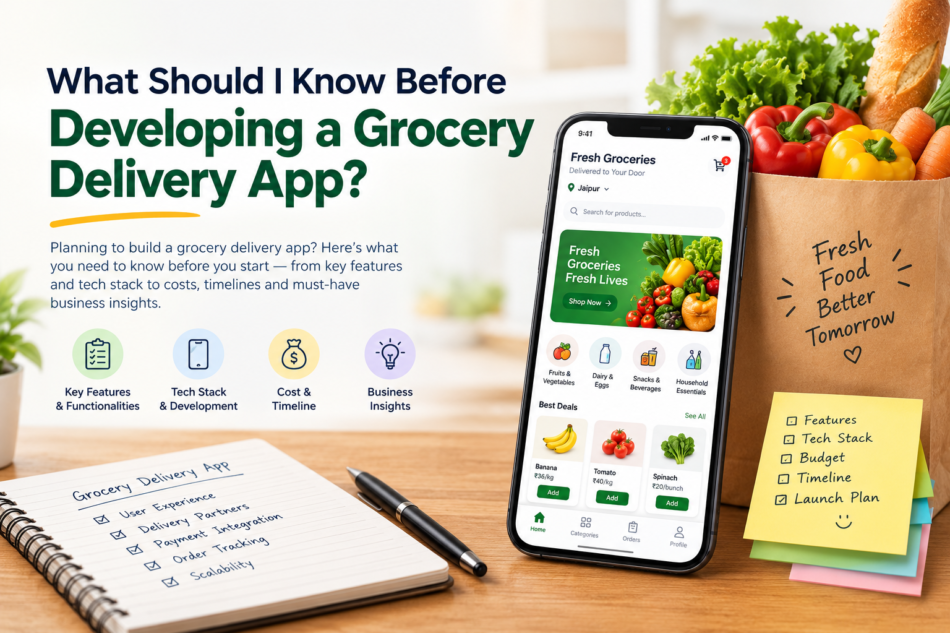
Building a grocery delivery app is more complex than it might initially appear. Beyond the basic idea of letting customers order groceries online, there’s a lot to plan around inventory management, delivery logistics, payment security, and long-term scalability. For entrepreneurs and grocery business owners considering this investment, understanding the key factors involved before development begins, and choosing the right on demand grocery app development company, can save significant time, money, and frustration down the line. In this article, we’ll walk through exactly what you should know before developing a grocery delivery app.
Why Grocery Apps Are More Complex Than They Seem
Unlike simpler on-demand services, grocery delivery apps typically manage large, frequently changing product catalogs, real-time inventory across one or more locations, and orders that often include dozens of individual items. This complexity means grocery app development requires more careful planning around technical architecture, feature prioritization, and operational workflows than many other app categories.
Key Things to Know Before You Start
1. Define Your Business Model Clearly
Before development begins, decide whether you’re building a single-store app, a multi-vendor marketplace connecting multiple grocery stores, or a hybrid model. This decision significantly shapes your technical requirements, feature set, and monetization strategy, so it’s worth clarifying early rather than adjusting mid-development.
2. Real-Time Inventory Management Is Non-Negotiable
One of the most common mistakes in grocery app development is underestimating the importance of real-time inventory syncing. Customers expect accurate stock information, and apps that frequently show unavailable items as in-stock quickly lose customer trust. Planning for reliable, real-time inventory updates from day one is essential.
3. Delivery Logistics Require Careful Planning
Grocery delivery involves more complex logistics than many other on-demand categories, since orders often include perishable items, require careful handling, and may need substitution management when specific products are unavailable. Understanding your delivery model, in-house drivers, third-party logistics, or a hybrid approach, early on helps shape both your app’s features and backend architecture.
4. Payment and Checkout Complexity
Grocery orders typically involve more items and higher average order values than many other on-demand services, making a smooth, secure checkout process especially important. You’ll also need to decide which payment methods to support, cards, digital wallets, cash on delivery, based on your specific target market’s preferences.
5. Compliance and Data Security Matter
Depending on your target market, you may need to comply with data protection regulations covering customer payment information and personal data. Building proper security measures into your app’s architecture from the start, rather than adding them later, is significantly more efficient and reduces long-term risk.
6. Scalability Should Be Planned From Day One
Even if you’re launching in a single city or neighborhood, planning your technical architecture with future growth in mind, additional locations, expanded delivery zones, more product categories, prevents costly rebuilds down the line. Working with an experienced on demand grocery app development company helps ensure this scalability is built into your platform’s foundation rather than bolted on after the fact.
7. Core Features Need Careful Prioritization
A grocery delivery app typically needs several core features working together:
- Product search and category browsing
- Real-time inventory and pricing updates
- Multiple payment options
- Delivery scheduling (same-day or scheduled slots)
- Live order tracking
- Substitution preferences for unavailable items
- Admin dashboard for inventory and order management
Understanding which of these features are essential for launch versus which can be added later helps manage development costs and timelines more effectively.
8. Your Technology Stack Choice Matters
Common technology choices for grocery apps include React Native or Flutter for cross-platform mobile development, Node.js or Python for backend systems, and a combination of relational and NoSQL databases to handle both structured transactional data and flexible, frequently changing product catalogs.
9. Third-Party Integrations Add Complexity
Most grocery apps need to integrate with additional services, payment gateways, SMS or email providers, mapping services for delivery tracking, and potentially existing inventory or point-of-sale systems if you’re digitizing an established physical store. Planning for these integrations early helps avoid technical surprises during development.
10. Customer Experience Directly Impacts Retention
Since grocery shopping is a repetitive, routine activity, small friction points, confusing navigation, slow checkout, inaccurate inventory, can quickly drive customers to competing apps. Prioritizing a smooth, intuitive user experience is just as important as the underlying technical functionality.
11. Delivery Partner Experience Matters Too
If you’re managing your own delivery fleet, your delivery partners need their own dedicated app features: order acceptance, navigation, and earnings tracking. A smooth experience for delivery staff directly impacts delivery speed and reliability for customers.
12. Budget for Ongoing Maintenance
Launching the app is just the beginning. Budget for ongoing costs like hosting, payment processing fees, security updates, and feature improvements based on user feedback, rather than viewing development as a one-time expense.
Common Mistakes to Avoid
- Underestimating inventory management complexity, leading to frequent out-of-stock issues that frustrate customers
- Ignoring scalability early on, resulting in expensive rebuilds once the business grows
- Overlooking delivery logistics planning, causing delays or coordination issues after launch
- Skipping proper security planning, creating risk around sensitive customer payment and personal data
- Building every feature before launch, delaying market entry unnecessarily instead of starting with a focused MVP
Questions to Ask a Potential Development Partner
Before committing to a development team, consider asking:
- Have you built grocery or similar on-demand delivery apps before?
- How do you approach real-time inventory syncing and delivery logistics?
- What does your scalability planning process look like?
- Can you integrate with our existing inventory or POS systems, if applicable?
- What ongoing support and maintenance do you offer after launch?
Why Working With the Right Partner Makes a Difference
Grocery app development involves enough operational and technical complexity that working with a generalist team unfamiliar with this specific niche often leads to costly mistakes, underestimated inventory challenges, poor scalability planning, or clunky checkout experiences. Partnering with a knowledgeable on demand grocery app development company helps you avoid these pitfalls, since an experienced team will already understand the common challenges specific to grocery delivery and how to address them effectively from the start.
Final Thoughts
Developing a grocery delivery app involves considerably more complexity than it might first appear, from real-time inventory management and delivery logistics to scalability planning and payment security. Understanding these key considerations before development begins helps you make more informed decisions, set realistic expectations, and avoid costly mistakes along the way.
For entrepreneurs and business owners considering this investment, taking the time to plan carefully and partner with an experienced development team will set the foundation for a grocery delivery app that’s genuinely ready to compete and grow in an increasingly digital grocery market.


