WhatsApp Us Now

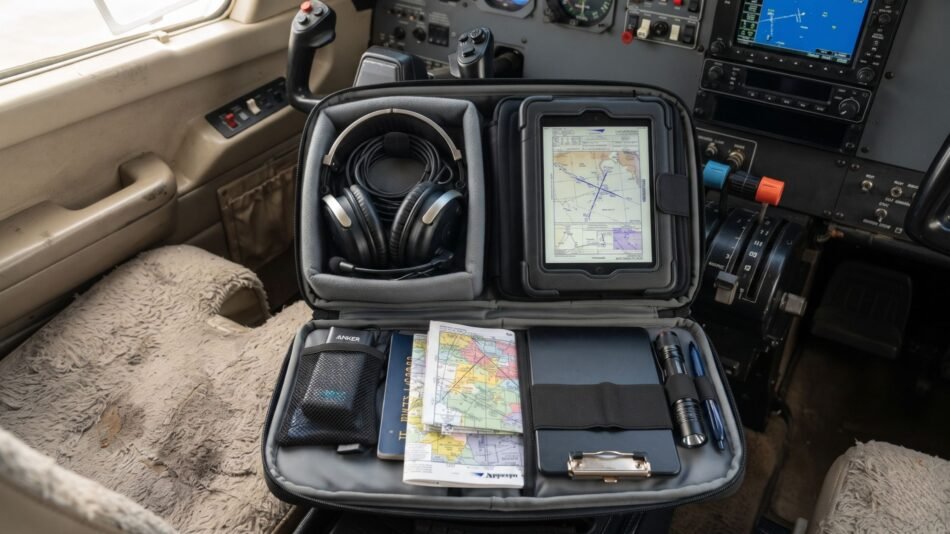
Ask ten pilots what’s in their flight bag and you’ll get ten different answers. But most bags hold the same core items, and each one has its own way of getting damaged. Let’s go through the bag item by item.
The headset
For many pilots, it’s the most expensive thing they own after their share of the plane.
How it gets damaged: crushed in a soft bag under other gear, cords bent sharply at the plug, ear seals squashed flat, or left on a hot seat in the sun.
How to protect it:
- Give it its own padded space, not loose on top of charts and snacks
- Coil the cable loosely, never wrapped tight around the headband
- Take out the batteries if it’ll sit unused for weeks
- Keep it out of a closed, hot cockpit between flights
The tablet
Tablets have replaced paper charts for many pilots, which makes them flight-critical.
How it gets damaged: cracked screens from drops and pressure, and overheating. A tablet sitting in direct sun on the glare shield can get hot enough to shut down mid-flight.
How to protect it:
- Carry it in a padded sleeve or a fitted slot
- Keep it out of direct sun in the cockpit when you can
- Carry a backup: a second device, or paper for the essentials
- Charge it the night before. Don’t rely on the plane’s power.
Batteries and power banks
How they get damaged: loose batteries can short against keys or coins. Lithium power banks can be dangerous if crushed or damaged.
How to protect them:
- Keep spare batteries in their own case or sealed bag
- When flying commercially as a passenger, spare lithium batteries and power banks go in carry-on, not checked bags. Check your airline’s rules.
- Replace any power bank that’s swollen or damaged
Documents and logbook
How they get damaged: bent, wet, coffee-stained or simply lost in a messy bag.
How to protect them: one dedicated folder or pocket that never leaves the bag. Keep it in the same place every time, so you can find it with your eyes closed.
Kneeboard, pens, flashlight and small items
How they get damaged: usually they don’t. They get lost, or they roll around and scratch everything else.
How to protect them: small pockets or a divider panel. A flashlight with a red-light mode is worth a fixed slot, because you’ll need it in the dark.
Soft bag or hard case?
Most pilots start with a soft flight bag. It’s light, flexible and fits behind a seat. It works well for short local flights.
A hard case makes more sense if you:
- Fly with expensive headsets and more than one tablet
- Travel often by airline to fly elsewhere
- Keep your gear in a vehicle or a shared hangar
- Want a bag that keeps its shape and stays organised
A classic hard-shell pilot case in aluminum protects headsets and tablets from crushing, and its fixed dividers keep documents and small items in their place.
A pre-flight bag check
- Headset in place, batteries good
- Tablet charged, backup ready
- Documents and logbook in their pocket
- Spare batteries secured
- Flashlight where you can grab it
Your gear does a lot of quiet work every flight. A few minutes of care keeps it ready for the next one.