 WhatsApp Us Now

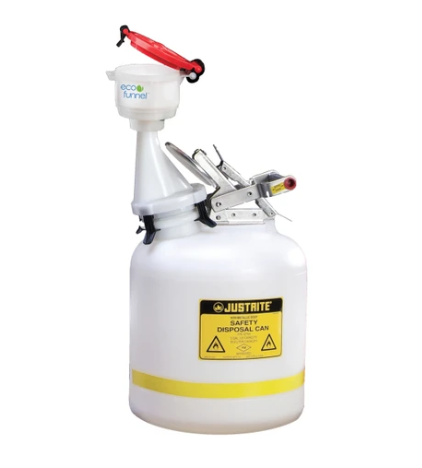
Laboratories depend on suitable equipment to support organized sample preparation, liquid transfer, and routine material handling. Funnels are commonly used for directing liquids into containers and supporting procedures that require controlled transfer. When evaluating laboratory funnels, it is important to consider the materials being handled, the working environment, and the cleaning requirements associated with each application. Selecting suitable equipment can help organizations establish consistent procedures and maintain an orderly workspace.
The Role of Laboratory Funnels
Laboratory funnels are available in different sizes, shapes, and construction materials. Their suitability depends on the procedure and the properties of the substance being handled.
In routine laboratory work, a funnel may be used to guide a liquid into a narrow-necked container, support a transfer between vessels, or assist with another appropriate handling task. The design should match the requirements of the process.
Before selecting a funnel, consider the volume being transferred, the receiving container’s opening, and whether the material may react with or damage the funnel. These factors can help determine which product specifications matter most.
Understanding Sterilizable Funnels
Some laboratory procedures require equipment that can undergo a defined cleaning, disinfection, or sterilization process. In these situations, it is important to distinguish between equipment that is washable and equipment specifically designed to withstand a validated sterilization method.
Sterilizable funnels may be relevant when evaluating equipment for applications with specific hygiene or contamination-control requirements. However, not every funnel can be autoclaved, and not every sterilizable product is suitable for every cycle.
Buyers should confirm whether the product is explicitly rated for the intended method and review the manufacturer’s instructions for temperature, exposure time, handling, and repeated use.
What to Consider When Choosing Autoclavable Funnels
Several considerations can help laboratories select an appropriate funnel.
1. Material construction
The funnel’s material determines many of its handling and maintenance characteristics. Confirm that the material is compatible with the intended substances and the cleaning or sterilization process.
2. Autoclave compatibility
If steam sterilization is required, verify that the specific product is designed for the intended autoclave conditions. Do not assume that a funnel can tolerate high temperatures simply because it is made from plastic or another laboratory material.
3. Intended application
Different laboratory procedures have different equipment requirements. Identify whether the funnel will be used for general liquid transfer, sample handling, or a process with defined contamination-control requirements.
4. Cleaning instructions
Follow the manufacturer’s directions for cleaning before sterilization. Residue and incompatible cleaning agents may affect the equipment or compromise the process.
5. Repeated-use requirements
If the funnel will be reused, determine whether the manufacturer permits repeated cleaning or sterilization and whether inspection or replacement is recommended.
Cleaning, Disinfection, and Sterilization Are Different
These terms describe different processes and should not be used interchangeably.
Cleaning removes visible soil and residues. Disinfection reduces certain microorganisms under specified conditions. Sterilization is a validated process intended to eliminate all forms of viable microbial life within its defined scope.
A funnel’s suitability for one process does not automatically establish suitability for another. Laboratories should follow their established procedures and verify that the selected equipment is appropriate for the required process.
Where the work involves sensitive samples or contamination risks, equipment selection should be part of a broader quality-control approach.
Maintaining a Consistent Laboratory Workflow
Consistent equipment handling can help laboratories manage routine procedures more effectively. Staff should know where funnels are stored, how they should be cleaned, and which applications they are approved for.
Useful practices include:
- Inspecting equipment before use.
- Checking for cracks, deformation, or residue.
- Using appropriate containers and secure work surfaces.
- Following product-specific cleaning and sterilization instructions.
- Separating clean equipment from used equipment.
- Replacing equipment when it no longer meets the required condition.
These practices can support orderly operations and reduce avoidable handling problems.
How to Evaluate Funnel Products
When comparing laboratory funnels, review more than the product name or price. Consider the funnel’s dimensions, material, intended use, maintenance requirements, and compatibility with your procedures.
For applications requiring sterilization, obtain confirmation of the specific product’s compatibility with the planned method. Also consider whether the funnel fits the receiving containers and whether it can be stored appropriately between uses.
If your laboratory follows documented quality or contamination-control procedures, ensure that the selected equipment meets those requirements before introducing it into the workflow.
Find Laboratory Funnels at CP Lab Safety
CP Lab Safety provides laboratory equipment options for organizations seeking products for their operational requirements. Explore the autoclavable funnels collection to review available options and product information.
Before purchasing, verify the listed specifications and ensure the selected funnel meets your cleaning, compatibility, and application requirements.


