 WhatsApp Us Now

Kitchen cupboard door repair maintains the appearance and function of kitchen cabinets. Regular use, moisture, and worn hardware can cause loose hinges, misaligned doors, and damaged surfaces. These issues may affect daily use and damage nearby panels. Early repairs, including hinge replacement and door realignment, can prevent costly cabinet replacements.
Spotting Door Problems Early
Most cupboard doors fail slowly, so small signs matter. Hinge screws loosen as the particleboard or timber around them crumbles. Wide pantry and corner doors carry the most weight, so they usually fail first. Steam from kettles and dishwashers can swell edges, especially in older laminate or thermofoil finishes. Soft-close hinges can also lose their tension after years of daily use.
Look for these warning signs:
- Doors that sag or no longer close flush
- Hinges that rattle or pull out of the panel
- Laminate that peels or bubbles along the edges
- Swollen panels near the sink or dishwasher
- Handles that wobble or tear away from the door
Many of these faults can be fixed without replacing the cabinet. Repairs often involve new hinges, fillers, edge banding, or a refit of the door. This usually costs far less than a full kitchen renovation.

Caring for Your Stone Surfaces
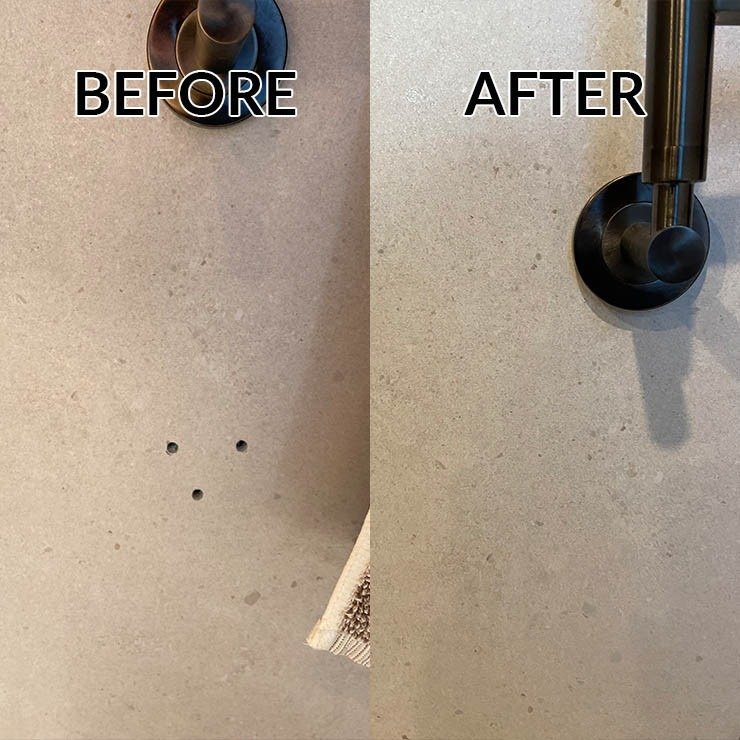
Engineered and natural stones look tough, but both can chip, crack or stain. Heavy pots dropped near an edge are a common cause of chips. Sink and cooktop cutouts are weak points because stress gathers at the corners. Natural stones such as marble also etches when lemon juice or vinegar sit on it. Small chips and hairline cracks can often be filled with a colour-matched resin. Timely stone benchtop repairs also stop moisture from seeping into the damaged area.
These habits protect stone and timber alike:
- Use chopping boards and trivets under hot or sharp items
- Wipe spills straight away with a soft, damp cloth
- Choose pH-neutral cleaners and avoid harsh acidic products
- Reseal porous stone as often as the installer advises
When to Call a Professional
Call a professional when damage goes beyond a quick tighten or touch-up. Warped doors, deep cracks, and lifting edges need specialist tools and materials. A skilled repairer can match the finish, so the repair is hard to spot. Ask for a written quote, a clear timeline, and details of any warranty. Ask if one repairer handles both cabinetry and stone, which can save a second call-out fee.
A little prep helps the visit run smoothly. Clear the work area, photograph the damage, and list every fault you want to check. This lets the repairer quote accurately and finishes most jobs in one visit. Book early if you are selling or finishing a lease, as busy periods fill quickly.
Small faults do not need to become costly ones. A quick monthly check and a trusted repairer will keep your kitchen working well for years. Act early on loose hinges, small chips and fresh stains before they spread. Even one timely kitchen cupboard door repair can stop a minor issue from becoming a major expense.


