 WhatsApp Us Now

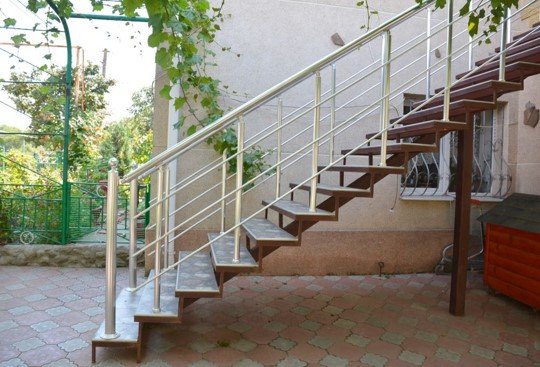
Stainless steel balustrades are corrosion-resistant steel barriers used on staircases, balconies, decks and commercial spaces, providing fall protection with a durable, low-maintenance and architecturally clean finish. In Melbourne, stainless balustrades are popular for both indoor and outdoor use, with 316 grade the standard for any exterior or coastal application.
Key takeaways
- Grade 316 marine-grade stainless steel is recommended for coastal Melbourne areas.
- Grade 316 resists chloride corrosion better than Grade 304.
- Regular cleaning every 3 to 6 months prevents tea-staining.
- Avoid abrasive cleaners, steel wool, and chlorides.
- Periodic passivation restores the chromium oxide layer that provides corrosion resistance.
- Stainless steel balustrade offers low-maintenance, contemporary appeal.
What Are the Types of Stainless Steel Balustrade?
Three main systems. Vertical baluster (also called vertical picket or vertical bar): vertical stainless steel tubes or bars fixed between a top handrail and a bottom rail, the most robust and traditional stainless system; commonly used on staircases and high-traffic areas. Wire rope (horizontal wire): stainless steel wire ropes tensioned horizontally between posts at 100 mm spacing, an architectural look popular on decks and balconies; NCC-restricted where children can climb (the horizontal wires are climbable, so wire rope is not permitted for residential barriers where children have access). Post-and-rail with vertical infill (mix): posts supporting a top handrail, with stainless verticals, glass or a mix between. For stainless steel balustrade in Melbourne, vertical baluster is the most common residential and commercial choice; wire rope is suited to adult-only commercial spaces.
Is stainless steel balustrade suitable for coastal areas in Melbourne?
Yes, stainless steel balustrade is suitable for coastal Melbourne areas when Grade 316 marine-grade stainless is specified. Grade 316 resists chloride corrosion from salt spray better than Grade 304. Regular cleaning with fresh water and non-abrasive cleaners maintains appearance and prevents tea-staining, particularly within 5km of Port Phillip Bay.
What Is the Difference Between 304 and 316 Stainless Steel?
Grade 304 (18/8 stainless): the standard interior grade, with good corrosion resistance for indoor use and dry outdoor sheltered areas. It will tea-stain and pit if exposed to salt air, chlorinated pool water or persistent moisture. Grade 316 (marine grade): contains molybdenum for significantly better corrosion resistance, the standard for any exterior application within 10 km of the coast, near a pool, or in any wet or corrosive environment. For Melbourne (bayside and coastal suburbs especially), 316 grade is the right choice for any exterior stainless balustrade – the cost premium of 15-25% over 304 is repaid in corrosion-free lifespan. Interior staircases away from moisture can use 304. The grade should be specified in the quote – never accept an unspecified grade, as 304 used externally will corrode within 2-5 years in bayside Melbourne.
How Much Does a Stainless Steel Balustrade Cost in Melbourne?
Indicative 2026 Melbourne supply-and-install pricing per linear metre: vertical baluster in 304 stainless (indoor) $350-$550 per metre; vertical baluster in 316 stainless (exterior or coastal) $450-$700 per metre; wire rope balustrade in 316 stainless $400-$650 per metre (where permitted); premium vertical baluster with custom handrail design $600-$900 per metre; commercial heavy-duty stainless balustrade $700-$1,200 per metre. A typical 6-metre balcony or staircase run costs $2,500-$4,500 in 304, $3,000-$5,000 in 316. Pricing depends on stainless grade, baluster thickness (typically 12-19 mm tube), post and handrail design, and any curved or raked sections. Always get an itemised quote specifying grade, tube dimensions and NCC compliance.
Does stainless steel balustrade require maintenance?
Yes, stainless steel balustrade requires periodic maintenance to maintain appearance and prevent surface corrosion. Cleaning every 3-6 months with warm soapy water and a soft cloth removes salt, dirt and contamination. Avoid abrasive cleaners, steel wool and chlorides. Periodic passivation restores the chromium oxide layer that provides corrosion resistance.
What Are the NCC Rules for Stainless Steel Balustrades?
The National Construction Code requires a balustrade where a fall of more than 1 m is possible. Key requirements: minimum balustrade height 1 m (residential floor/balcony) or 865 mm vertical height on a stair (measured from the stair nosing); horizontal load resistance 0.6 kN/m (residential) or 1.0-1.5 kN/m (commercial); no climbable element between 150 mm and 760 mm above the floor – this specifically prohibits horizontal wire rope balustrades on residential barriers where children have access; no gap that a 125 mm sphere can pass through (this sets the maximum vertical baluster spacing at 125 mm); and a continuous handrail required on stairs of more than 4 risers. Commercial balustrades have additional fire egress and load requirements. A compliant stainless balustrade is engineered to NCC and documented – never accept a balustrade installed without engineering certification.
How Is a Stainless Steel Balustrade Installed?
Installation sequence: site measure and design (the installer measures the opening and engineers the system – post spacing, baluster spacing, handrail, base fixing); fabrication (stainless posts, handrails and balusters cut and welded to size; wire rope systems fabricated to length; surface finish applied – polished, satin brushed or bead blasted); preparation (anchor points set in the floor or stairs – typically chemical anchors into concrete, or timber-bolted fixing on timber structures); installation (posts fixed, handrail fitted, balusters welded or mechanically fixed between top and bottom rails at the compliant spacing, wire ropes tensioned); and finishing (welded joints cleaned and polished to match the surrounding finish, surface cleaned and passivated). A typical residential balcony run takes 1-2 days to install; a staircase with raked sections and angle welds takes 2-3 days.
How Do You Maintain a Stainless Steel Balustrade?
Maintenance keeps stainless looking new and prevents tea-staining (surface rust staining). Interior 304 stainless: wipe down with a stainless-safe cleaner (Eezyclean, Shield Industries) every 3-6 months; avoid abrasive cleaners and steel wool (which embed iron particles that rust). Exterior 316 stainless: wash every 1-3 months with fresh water and mild detergent, more frequently in coastal or high-pollution areas; apply a stainless protective wax or oil (Avesta Cleaner, Roff Britol) every 6-12 months to repel salt and contaminants. Tea-staining on exterior 316 can be removed with a stainless pickling paste or oxalic acid cleaner, followed by thorough rinsing and passivation. Wire rope balustrades: check tension annually, re-tension as needed, and inspect for broken strands. With proper maintenance, a 316 stainless balustrade lasts 25-50+ years in exterior Melbourne conditions; neglected 304 used externally will corrode within 2-5 years.
Frequently Asked Questions
How much does a stainless steel balustrade cost in Melbourne?
Indicative 2026 supply-and-install pricing per linear metre: vertical baluster in 304 (indoor) $350-$550; vertical baluster in 316 (exterior or coastal) $450-$700; wire rope in 316 $400-$650 where permitted; premium with custom handrail $600-$900; commercial heavy-duty $700-$1,200. A typical 6-metre run costs $2,500-$5,000 depending on grade.
Should I use 304 or 316 stainless steel?
Use 316 (marine grade) for any exterior application, particularly in bayside or coastal Melbourne where salt air causes 304 to tea-stain and pit within 2-5 years. 304 is fine for interior staircases away from moisture. The 15-25% cost premium for 316 is repaid in corrosion-free lifespan.
Can I use horizontal wire rope balustrade?
Only in adult-only commercial applications. The NCC prohibits horizontal wire rope (and any climbable element between 150-760 mm above floor) on residential balustrades where children have access. Vertical baluster or vertical wire is the compliant choice for residential use.
What is the NCC requirement for a stainless balustrade?
Required where a fall of more than 1 m is possible. Minimum height 1 m (residential floor/balcony) or 865 mm vertical height on a stair; horizontal load 0.6 kN/m residential (1.0-1.5 kN/m commercial); no climbable element 150-760 mm above floor; no gap a 125 mm sphere can pass through (max baluster spacing 125 mm); continuous handrail on stairs of more than 4 risers.
How do I maintain a stainless steel balustrade?
Interior 304: wipe with stainless cleaner every 3-6 months; avoid abrasive cleaners and steel wool. Exterior 316: wash every 1-3 months with fresh water and mild detergent, more often in coastal areas; apply protective wax or oil every 6-12 months. Remove tea-staining with stainless pickling paste or oxalic acid. With proper maintenance, 316 lasts 25-50+ years exterior in Melbourne.
Conclusion
Stainless steel balustrade in Melbourne delivers a contemporary, low-maintenance and durable solution for stairs, balconies and commercial environments. Specify Grade 316 for coastal locations, confirm AS 1288 and AS 1170 compliance, and engage an experienced installer. With regular cleaning and proper specification, stainless steel balustrade retains its appearance and structural integrity for decades, offering excellent long-term value for Melbourne property owners.


