 WhatsApp Us Now
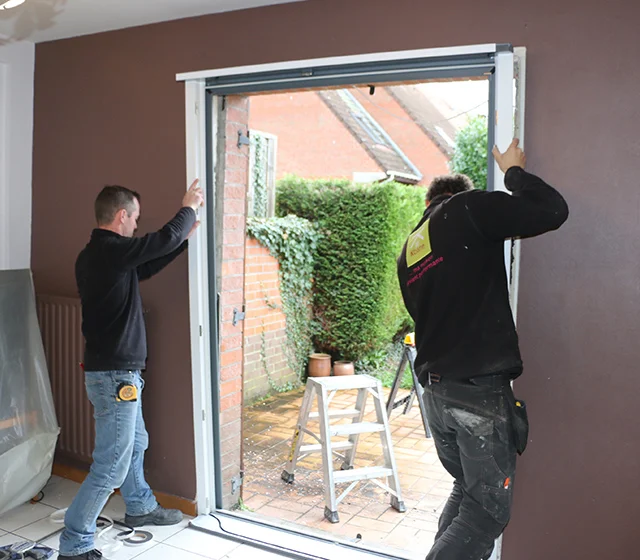
A sliding door is one of the most common weak points in a home. It has a large glass surface, a moving panel and a lock that is often lighter than the one on your front door. In Brussels, where terraces, rear gardens and ground-floor balconies are easy to reach in many neighbourhoods, it pays to know how a sliding door is typically attacked and how to make that harder.
This guide covers the weak spots, practical upgrades at different budgets, and the points to confirm with your landlord, syndic or insurer.
How sliding doors are usually attacked
Understanding the methods helps you spot your own door’s weaknesses.
- Lifting the panel out of its track. On poorly fitted doors, a burglar can raise the sliding panel and swing it out. This works when there are no anti-lift blocks and the track is shallow.
- Forcing the lock. A single hook or latch lock can be levered or snapped with a screwdriver or crowbar.
- Breaking the glass. Standard toughened glass breaks into small pieces. It is noisy, but it gives access fast.
- Opening an unlocked or half-locked door. This is the most common route of all. A door that looks closed but has not been fully latched is an easy target.
Step 1: Check what you already have
Spend ten minutes on an honest inspection.
- Lock type. Is it a single hook, or a multipoint system that locks the panel at several points? Multipoint is stronger.
- Lift resistance. With the door locked, try lifting the sliding panel. If it moves noticeably in its track, it is vulnerable.
- Handle and cylinder. Look at the outside. A cylinder that sticks out beyond the handle plate can be gripped and snapped. A flush or anti-snap cylinder is safer.
- Glass. Look at the edge of the pane for a label. Laminated glass is much harder to break through than ordinary toughened glass.
- Condition. Worn rollers and a loose frame make every other weakness worse.
Step 2: Low-cost improvements
These changes are inexpensive, and most homeowners and many tenants can do them.
- Anti-lift blocks. Small blocks fitted in the upper track stop the panel being raised out of place. They are inexpensive and quick to fit.
- A security bar or track rod. A bar or length of wood cut to fit the lower track prevents the door being slid open even if the lock is defeated. It also gives a visible second barrier.
- Door security bolts or auxiliary locks. Surface-mounted locks add a second locking point. Choose a model with a reputable certification, and check how the screws fix into the frame.
- Window film. Security film holds glass together longer when struck, though it is not a substitute for laminated glass.
- Lighting and visibility. A motion-activated light outside the door and trimmed hedges nearby reduce hiding places.
Step 3: Stronger upgrades
If the door is a priority, or the area is exposed, consider these.
- Replacing the lock with a multipoint system. Many doors can be fitted with a better lock if the frame is sound. A locksmith or door specialist can tell you whether yours can be upgraded.
- Anti-snap cylinders. These are made to resist the common snapping attack on euro cylinders. Look for recognised certification and ask the supplier which standard it meets.
- Laminated glass. The glass stays in place when struck, which slows an intruder and keeps the door intact. Replacing a sealed unit with a laminated one is often possible without changing the frame.
- Alarm contacts and sensors. A door contact or glass-break sensor connects to a home alarm and alerts you early.
- Full door replacement. If the frame is bent, corroded or rotted, no accessory will make it secure. A new door built to a recognised security standard is then the better route.
Ask any supplier to put the security rating of the product in writing, and be sceptical of vague claims such as “burglar-proof.”
Maintenance is part of security
A door that is stiff or loose is a door that people leave unlocked or half-closed. Keep it working well.
- Clean the track twice a year and lubricate with a dry silicone product
- Check the lock engages fully with the strike plate
- Adjust the rollers if the panel sags
- Replace worn seals and brushes
If the door has started to drop, stick or jump, a prompt Réparation Portes Coulissantes services restores correct alignment, which the lock needs to work as intended. A misaligned panel can leave the lock only partly engaged without you noticing.
Everyday habits that help
- Lock the door every time you leave, even for a short trip
- Do not leave a key in the lock or on a hook near the door
- Close curtains or blinds at night so the interior is not on display
- Keep ladders, bins and garden furniture away from terraces where they can serve as steps
- Do not rely on a bar alone if the lock itself is weak
Tenants, owners and co-ownership
Tenants. Ask your landlord before changing locks, glass or fixtures that alter the door. Low-impact additions such as a removable security bar are usually acceptable. Report broken locks in writing and keep a copy.
Owners. You decide on upgrades, but if the door is visible from the street or a shared courtyard, check your building’s rules before changing its appearance.
Co-ownership buildings. The door’s frame and glass may count as a common part. Contact the syndic before making structural changes.
Talk to your insurer
Many home insurance policies set conditions on locks, and some require certified products on ground-floor doors. A claim can be reduced or refused if the policy requires a specific lock and you did not fit it. Ask your insurer:
- What locking standard it requires for ground-floor and terrace doors
- Whether certified upgrades reduce your premium
- What it expects if you are away for several days
Brussels police zones also offer crime prevention advice, and in some areas a free home security assessment. Contact your local zone or commune to ask what is available.
When to call a professional
Get a qualified fitter or locksmith involved if:
- The lock is stiff, bent or has been forced
- The door can be lifted in its track
- The frame is damaged or no longer square
- You want laminated glass or a new multipoint lock
- You have had an attempted break-in
After an attempted entry, do not wait. Damage you cannot see can leave the door less secure than it looks, so ask for a full check.
Final thoughts
A secure sliding door does not need to cost a fortune. Start with a proper inspection, add anti-lift blocks and a track bar, and keep the door well maintained. Move on to better locks and laminated glass if your budget and risk level justify it. Confirm what your landlord, syndic and insurer require, and keep receipts and certificates for any work. Small, consistent steps make a sliding door much harder to defeat.


