 WhatsApp Us Now
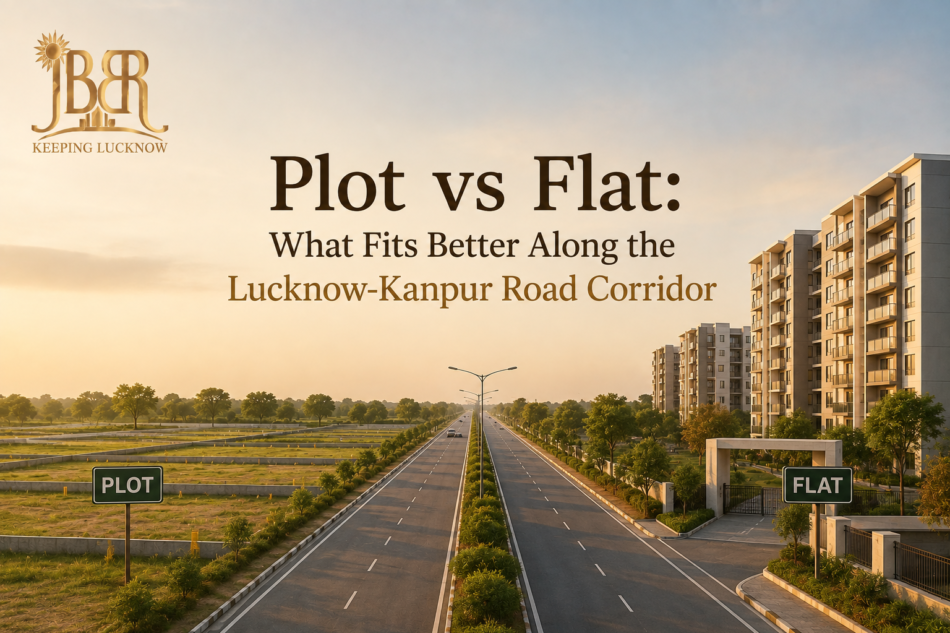
Buyers weighing a land purchase against an apartment often default to whichever option feels more familiar. But for anyone specifically evaluating a plot in Lucknow Kanpur Road, the decision usually comes down to three practical factors: control over the asset, cost structure over time, and long-term value behaviour. This piece breaks down each factor using JBBR Kanvas as a working example.
Control over design and timeline
A plot gives the owner control that a flat simply doesn’t. At JBBR Kanvas, plot sizes range from 1,017 to 1,744 sq ft, which is enough room to design a home around a family’s actual needs rather than adapting to a builder’s fixed floor plan. Construction can begin whenever the owner is financially and personally ready, rather than being tied to a developer’s handover schedule. This flexibility is one of the main reasons land continues to attract buyers even in cities with a growing supply of ready apartments.
Cost structure: land versus construction
At ₹5,499 per sq ft, the land cost at JBBR Kanvas is transparent and fixed at the time of booking. Construction costs are then managed separately, on the buyer’s own schedule and budget, which means the overall financial outlay can be spread across a longer period compared to a flat purchase where the full cost is typically locked in at booking. For buyers managing cash flow carefully, this staggered approach to a plot in Lucknow Kanpur Road can be more manageable than a single large apartment payment.
Appreciation behaviour: land versus built structure
This is often the most overlooked difference. A constructed flat depreciates as a physical asset over time, even as the land beneath it may appreciate. A plot has no depreciating structure — its value is tied directly to land appreciation, which on a corridor like NH27 is influenced by infrastructure development, commercial growth, and overall demand in the surrounding micro-market. Buyers taking a long-term view often find that plotted land in an emerging corridor outperforms a comparably priced flat in an already-developed area, simply because the growth curve is steeper earlier in a location’s development cycle.
RERA compliance as a risk filter
Plotted developments carry a reputation risk that organised apartment projects sometimes don’t — informal land subdivisions without clear title or regulatory oversight are common in India, and buyers have historically been burned by them. This is why RERA registration matters more, not less, for land purchases. JBBR Kanvas being RERA-registered addresses this directly, giving buyers the same regulatory protection they’d expect from a branded apartment project, applied to a plotted format.
Who should lean toward a plot over a flat
- Buyers with a longer investment horizon who can accommodate a 2031 possession timeline.
- Families who want a home built to their own specifications rather than a standard unit layout.
- Investors who understand and want exposure to land appreciation specifically, rather than a mixed land-plus-structure asset.
Who might prefer a flat instead
- Buyers needing immediate move-in without a construction phase.
- Those who prefer a fully managed, amenity-included living environment from day one.
Closing thought
Neither format is universally better — the right choice depends on timeline, control preferences, and investment goals. For buyers who value flexibility, land appreciation, and a documented, RERA-backed purchase process, JBBR Kanvas on the Lucknow-Kanpur Road corridor is a strong fit for the plotted-land side of that comparison.


