 WhatsApp Us Now

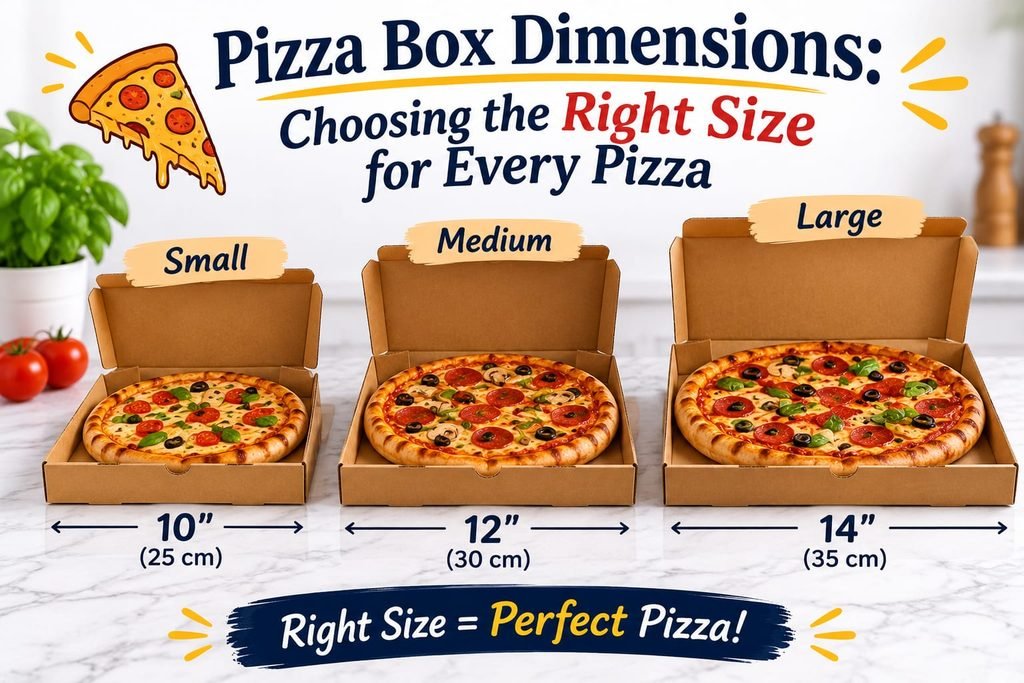
Pizza packaging plays an important role in maintaining food quality, presentation, and customer satisfaction. Choosing suitable pizza box dimensions helps restaurants deliver their products safely while keeping pizzas fresh and appealing. A box that is too small can damage the crust and toppings, whereas oversize packaging may allow the pizza to move during transportation. Understanding the available sizes makes it easier for restaurants and food businesses to select packaging that meets their daily requirements.
Why Choosing the Correct Pizza Box Size Matters
The right packaging size does more than simply hold a pizza. It helps maintain the original shape, prevents unnecessary movement, and protects toppings from getting disturbed.
Restaurants should consider the following benefits:
Better food protection: Properly fitted boxes reduce the chances of pizza damage.
Improved presentation: Customers receive their orders in neat and attractive packaging.
Convenient transportation: Suitable dimensions make stacking and carrying easier.
Reduced packaging waste: Correct sizing prevents unnecessary use of cardboard.
Customer satisfaction: Well-packed food creates a more positive delivery experience.
Understanding Standard Pizza Box Sizes
Pizza boxes are available in different dimensions to accommodate individual servings, family meals, and larger orders. Although measurements can vary between manufacturers, the following sizes are commonly used.
| Pizza Size | Approximate Box Dimensions |
| Small | 10 × 10 inches |
| Medium | 12 × 12 inches |
| Large | 14 × 14 inches |
| Extra Large | 16 × 16 inches |
| Family Size | 18 × 18 inches |
These measurements represent approximate box dimensions. Restaurants should always check the actual internal measurements before purchasing packaging.
How to Select Packaging for Different Pizza Types
Not every pizza requires the same packaging approach. Different crust styles, toppings, and serving portions can influence the type of box needed.
Thin-Crust Pizza
Thin-crust pizzas generally require packaging that provides enough space without allowing excessive movement. A properly fitted box helps preserve the crisp texture and prevents the edges from breaking.
Thick-Crust Pizza
Thick-crust varieties need additional vertical space. Restaurants should consider box height as well as length and width to prevent toppings from touching the lid.
Deep-Dish Pizza
Deep-dish pizzas are heavier and taller than traditional varieties. Strong cardboard and greater box depth help support their weight during transportation.
Specialty Pizzas
Specialty pizzas may include extra toppings, stuffed crusts, or unusual shapes. Measuring the complete product before selecting packaging can prevent fitting problems.
Factors to Consider Before Purchasing Pizza Boxes
Selecting suitable packaging requires attention to several practical details.
Material Strength: Choose durable cardboard that can support the pizza without bending during handling.
Box Height: Consider the thickness of the crust and the amount of toppings.
Ventilation: Appropriate ventilation openings can help release excess steam and reduce moisture buildup.
Food Safety: Packaging materials should be suitable for direct food contact.
Storage Space: Boxes that can be stored flat help restaurants manage inventory more efficiently.
How Proper Packaging Improves Food Delivery
Delivery conditions can affect the quality of freshly prepared food. During transportation, pizzas may experience movement, temperature changes, and pressure from stacked packages.
Businesses that select appropriate pizza box dimensions can reduce these problems by ensuring that each pizza fits securely inside its packaging.
A well-designed box also makes handling easier for delivery staff. Restaurants can improve their packaging process by checking box measurements, testing different materials, and selecting designs that support their particular menu items.
Common Pizza Box Sizing Mistakes to Avoid
Even experienced restaurant owners can make packaging mistakes that affect delivery quality.
- Purchasing boxes without checking internal measurements.
- Ignoring the height of thick-crust pizzas.
- Choosing weak cardboard for heavier orders.
- Using oversize boxes that allow unnecessary movement.
- Forgetting to consider ventilation and moisture control.
Avoiding these mistakes can help businesses maintain consistent packaging standards and provide a better customer experience.
How Bizz Crave Helps You Understand Better Packaging Choices
Finding reliable information about packaging can make purchasing decisions easier for restaurant owners and food businesses. Bizz Crave provides useful insights into different topics, helping readers explore practical ideas and understand important considerations before selecting products or services.
When evaluating pizza packaging, businesses should focus on product dimensions, material quality, durability, and transportation requirements. Making informed choices can improve daily operations and support a more professional food delivery experience.
Conclusion
Choosing suitable pizza packaging is an important part of running a successful food business. The correct measurements protect pizzas, maintain their appearance, and make transportation more convenient. By understanding different box sizes and considering factors such as material strength, height, and ventilation, restaurants can select packaging that meets their specific needs. Careful attention to these details can contribute to better service and greater customer satisfaction.
Frequently Asked Questions (FAQs)
What are the standard pizza box dimensions?
Common pizza box sizes include 10 × 10, 12 × 12, 14 × 14, and 16 × 16 inches, depending on the pizza size.
Why are pizza box dimensions important?
They ensure the pizza fits properly, reduce movement during delivery, and help protect toppings and crust.
Which box size is suitable for a large pizza?
A 14 × 14-inch box is commonly used for large pizzas, although measurements may vary by manufacturer.
Does pizza box height matter?
Yes, Box height provides enough clearance for thick crusts and toppings while preventing the lid from touching the food.
What material is commonly used for pizza boxes?
Corrugated cardboard and paperboard are commonly used because they provide structure, support, and convenient food packaging.


