 WhatsApp Us Now

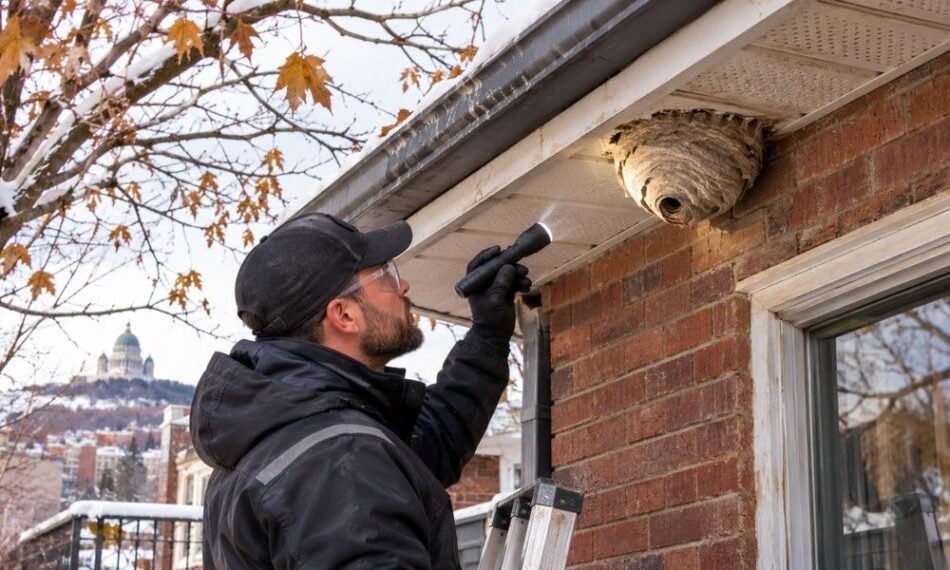
When leaves fall, nests that were hidden by foliage become easier to notice. Late autumn is a sensible time to review exterior pest concerns before winter maintenance begins. Many social wasp colonies decline in cold weather, but an apparently quiet nest should not automatically be treated as abandoned.
Understand What Happens to Wasps in Cold Weather
Many local social wasp colonies follow an annual cycle. Newly mated queens may spend winter in sheltered locations while the old colony declines. A nest that was busy in summer may become inactive, but conditions and species vary.
The distinction between an old nest and a sheltered overwintering insect is important. A paper nest left under a roof edge may remain visible long after the colony has declined. Meanwhile, individual insects may shelter in protected parts of a building. A mild spell or indoor heating can change observed activity. This is why the calendar alone is not enough to determine whether a particular location is safe to disturb.
Inspect From a Safe Distance
Look at accessible roof edges, shed exteriors and sheltered corners from ground level. Do not climb icy ladders or disturb a nest to test whether it is active. If insects are still entering an opening or the location is difficult to assess, consult a wasp exterminator in Montreal.
Use a photograph taken from a safe location to document the nest and its surroundings. Note whether it is near an entrance, a walkway or an area scheduled for repair. If you cannot see the nest clearly, do not move closer simply to obtain a better picture. A professional can advise whether an inspection is necessary based on the location and any observed activity.
Pay Attention to Indoor Sightings
An occasional wasp in a heated room may have emerged from a sheltered location. Repeated sightings near the same window or ceiling suggest that further investigation may be useful. Do not seal a suspected active nest entrance, as insects may seek another route.
Specialists offering insect extermination services can help distinguish wasps from bees and other insects before a response is selected.
If you find an insect indoors, note the room and whether similar sightings have occurred before. A single insect near a sunny window may have a different explanation from repeated activity around a ceiling opening. Keep children and pets away from the immediate area if there is a suspected active nest. People with known sting allergies should avoid approaching or handling the insects.
Decide Whether an Old Nest Needs Removal
An abandoned nest in a harmless location may not need immediate attention. Consider whether it interferes with planned roof work, exterior repairs or access to a storage area. Ask a professional to confirm inactivity when the location or species is uncertain.
An old nest can be an inconvenience without necessarily presenting an ongoing pest problem. For example, a nest under a detached shed roof may not interfere with daily use, while one beside a planned repair could require assessment before work begins. The decision should account for access, species and current activity rather than appearance alone. Never assume a concealed nest is inactive simply because the entrance looks quiet.
Plan Repairs Before Spring
Record damaged screens, loose exterior trim and other openings that may need attention. Keep required ventilation clear and schedule repairs after any active insect problem has been resolved. Check shed doors and outdoor waste containers as part of the same maintenance review.
Make a simple record of locations where nests were observed during summer and autumn. This can help guide exterior maintenance once conditions are suitable. Check whether screens fit properly and whether damaged trim needs attention. Avoid blocking ventilation or drainage openings as part of pest prevention. A building professional can recommend repairs that maintain the intended function of these features.
Prepare Shared Properties for Seasonal Maintenance
Building managers should communicate nest locations to contractors and residents. Avoid scheduling work directly beside a suspected active colony until it has been assessed. Professional extermination services in Montreal can help determine whether intervention is appropriate or whether observation is sufficient.
For commercial properties, Seasonal maintenance may involve contractors working around entrances, signage or rooflines. Share any known nest locations before work starts and establish a procedure for reporting insect activity. If a suspected active nest is discovered, keep people away from the immediate area until it has been assessed. Clear communication can reduce unnecessary disturbance and help maintenance teams plan their work safely.
Frequently Asked Questions
1. Are all wasp nests empty during cold weather?
No. Cold weather reduces activity, but inactivity should not be assumed solely from the date.
2. Will wasps reuse an old paper nest?
Many social wasps do not reuse old nests, although new colonies may establish nearby.
3. Why did I find a wasp indoors in winter?
A sheltered insect may become active in a heated space. Repeated sightings warrant investigation.
4. Should I block a hole where wasps were entering?
Only after confirming that active insects are no longer using it and that the opening is not required for ventilation.
5. Is winter a good time to plan prevention?
Yes. Reviewing potential nesting locations can help guide maintenance before spring.
Get Professional Advice Before Exterior Repairs
Contact Exterminateurs Associés or call 514-351-8989 to discuss wasp-related concerns in Greater Montreal.


