 WhatsApp Us Now

Madagascar is often associated with lemurs, giant baobab trees and beautiful beaches. However, the island has another side that many international travellers overlook. Its traditional celebrations, lively music, colourful clothing, local food and centuries-old customs make it a fascinating cultural destination.
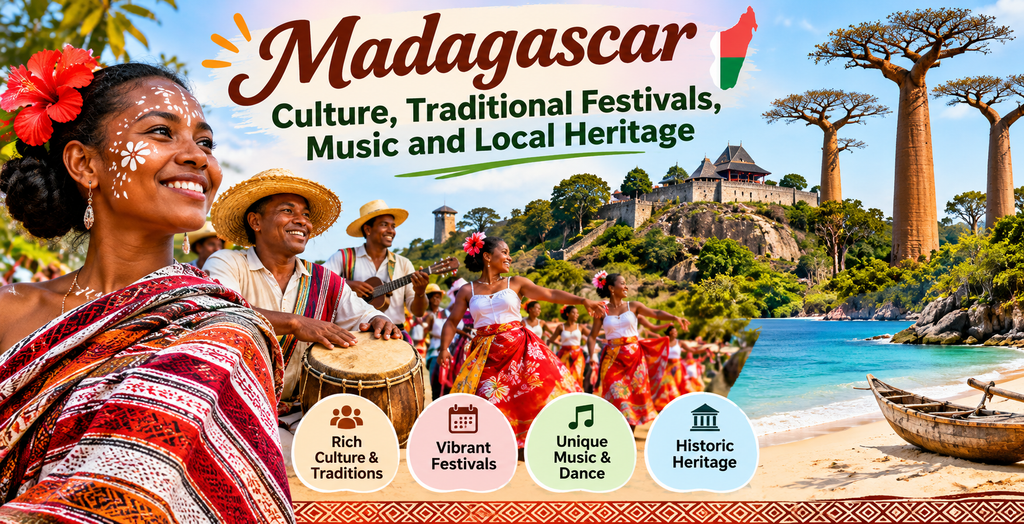
From the busy streets of Antananarivo to the peaceful coastal villages, visitors can discover different ways of life and learn about the history of the Malagasy people.
Understanding Malagasy Culture and Traditions
Madagascar’s culture has developed through African, Southeast Asian and Arab influences over many centuries. Family relationships, community gatherings and respect for elders remain important parts of everyday life.
Many Malagasy communities follow traditional customs known as Fady. These are local rules or restrictions connected with ancestral beliefs. They can differ from one village to another. Travellers should ask local guides about these customs when visiting sacred places or rural communities.
The Lamba, a traditional woven garment, is also an important part of Malagasy cultural identity.
Famous Traditional Festivals in Madagascar
Donia Festival
The Donia Festival is a well-known cultural and musical celebration associated with Nosy Be. It brings together musicians and performers from Madagascar and other Indian Ocean islands. Live music, dancing and artistic performances showcase the region’s diverse cultural identity. Visitors should confirm festival dates before arranging their trip.
Alahamady Be
Alahamady Be is a traditional Malagasy New Year celebration. It is particularly associated with highland cultural traditions. Family gatherings, traditional ceremonies and blessings mark the occasion.
Independence Day Celebrations
Madagascar celebrates Independence Day on 26 June every year. Streets come alive with music, parades, national flags and community events. It is a wonderful opportunity to experience local hospitality and national pride.
Planning a Cultural Holiday in Madagascar
International visitors planning to attend cultural festivals, explore historical villages or experience Malagasy traditions should arrange their travel documents in advance.
Travellers can check the Madagascar eVisa eligibility and application requirements to understand whether they qualify for an online application.
Professional eVisa assistance can help simplify the application process, with expedited processing options of 4–7 working days, secure document handling, mobile-friendly applications, application tracking and round-the-clock customer support. Processing times and approvals remain subject to immigration authorities, while service fee refunds depend on the provider’s applicable terms.
Traditional Music and Dance of Madagascar
Music plays an important role in Malagasy celebrations, weddings and community gatherings. Different regions have their own instruments, rhythms and dance styles.
- Salegy: Energetic dance music popular in northern Madagascar.
- Tsapiky: A fast-paced musical style originating in southwestern Madagascar.
- Hiragasy: A traditional highland performance combining singing, dancing and storytelling.
- Valiha: A traditional bamboo string instrument known for its distinctive sound.
Listening to local musicians is an enjoyable way to understand the island’s cultural diversity.
Exploring Madagascar’s Historical and Cultural Heritage
The Royal Hill of Ambohimanga, a UNESCO World Heritage Site near Antananarivo, offers an interesting look into Madagascar’s royal history and spiritual traditions.
Visitors can also discover the traditional woodworking skills of the Zafimaniry community. Their beautifully carved wooden houses, doors and household items reflect craftsmanship passed down through generations.
Local markets are excellent places to find woven baskets, handmade textiles and traditional souvenirs.
Traditional Malagasy Food and Local Lifestyle
Food provides another window into Madagascar’s culture. Rice is a staple ingredient, commonly served with vegetables, meat or seafood.
Popular Malagasy dishes include Romazava, a meat and leafy vegetable stew, Ravitoto, prepared with crushed cassava leaves, and grilled zebu meat. Coastal communities are also known for their fresh seafood dishes.
Eating at family-run restaurants allows visitors to enjoy regional flavours while supporting local businesses.
Final Thoughts
Madagascar offers much more than its extraordinary wildlife. Traditional festivals, ancestral customs, regional music, historical landmarks and handmade crafts reveal the island’s rich cultural heritage. Taking time to meet local communities and respect their traditions can make a journey through Madagascar especially memorable.

