 WhatsApp Us Now

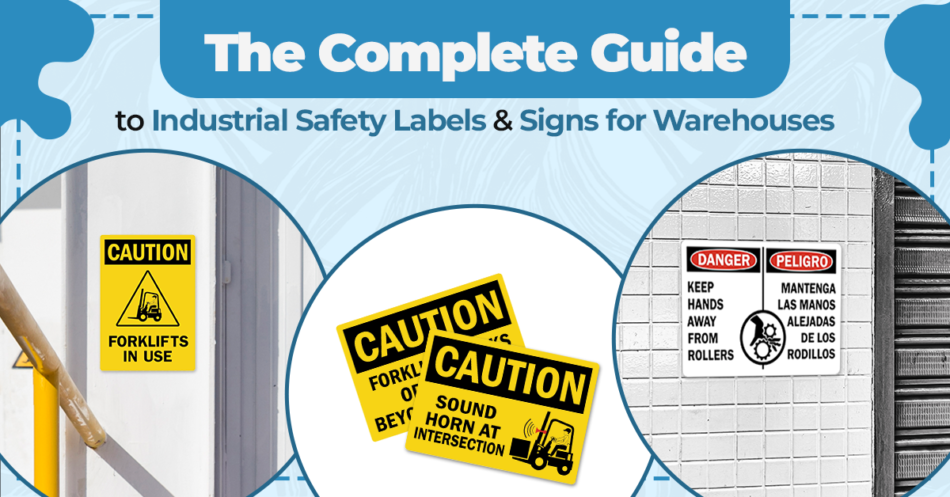
Walk through any manufacturing facility, warehouse, construction site, or industrial plant, and you’ll notice labels placed on machines, electrical panels, chemical containers, storage areas, and equipment. Some warn employees about potential hazards, while others provide operating instructions or remind workers to wear protective equipment.
These labels may look like small details, but they play an important role in workplace safety. They communicate essential information, help employees recognize potential risks, and remind people to follow appropriate safety procedures.
That’s why an industrial safety label is an important part of workplace hazard communication. Whether you’re managing a manufacturing unit or operating a warehouse, choosing the right labels can make safety information easier to understand and follow.
Let’s explore the different types of industrial safety labels, where they’re used, and how to choose the right options for your workplace.
What Are Industrial Safety Labels?
Industrial safety labels are printed identification and warning labels used on machinery, equipment, electrical systems, chemical containers, and other workplace surfaces. Their primary purpose is to communicate important safety information to employees, contractors, maintenance teams, and visitors.
Depending on their purpose, these labels may display warning messages, hazard symbols, signal words, safety instructions, or mandatory protective equipment requirements.
For example, a label on an industrial machine might warn employees about moving parts, while another on an electrical panel may highlight a high-voltage hazard.
Industrial safety labels are commonly used in:
- Manufacturing and production facilities
- Warehouses and distribution centers
- Construction sites
- Electrical and maintenance rooms
- Chemical processing facilities
- Laboratories and industrial workshops
- Automotive and engineering facilities
The right label helps communicate the risk at the point where employees need that information.
Why Are Industrial Safety Labels Important?
Imagine an employee approaching a machine without realizing that it has exposed moving parts. Or a maintenance worker opening an electrical panel without noticing a high-voltage warning.
Clear safety communication can help employees recognize these risks before they interact with the equipment.
Here are some important reasons businesses use industrial safety labels.
1. Improve Hazard Awareness
Industrial workplaces contain different types of hazards, including electrical, mechanical, chemical, and physical risks. Labels help identify these hazards by displaying clear warnings and recognizable symbols.
For example, a pinch-point warning label near a conveyor can remind employees to keep their hands away from moving components.
2. Communicate Safety Instructions
Some labels do more than identify hazards. They also tell employees what actions they should take.
Examples include:
- Wear safety glasses
- Disconnect power before servicing
- Keep hands clear
- Use protective gloves
- Authorized personnel only
These instructions help reinforce workplace procedures and make important information available near the equipment or area concerned.
3. Support Workplace Safety Programs
Safety labels complement employee training, hazard assessments, machine guarding, personal protective equipment, and standard operating procedures.
They provide visual reminders that can support an organization’s broader safety program. However, labels alone cannot eliminate hazards or guarantee compliance.
4. Help Identify Equipment and Restricted Areas
Labels can also identify electrical panels, emergency equipment, chemical storage areas, restricted zones, and specific machine components.
This makes it easier for employees and maintenance personnel to recognize equipment and locate important safety information.
Different Types of Industrial Safety Labels
Not every workplace hazard requires the same type of label. The message, signal word, color, and symbol should match the specific risk or instruction being communicated.
Here are some common types used across industrial facilities.
1. Warning Labels
Warning labels communicate potentially hazardous situations that could result in serious injury or death if not avoided.
They are commonly used around:
- Moving machinery
- Conveyor systems
- Pinch points
- Crushing hazards
- Automated equipment
For example, a Warning Moving Parts label near a machine can alert workers to keep their hands and clothing away from dangerous components.
2. Caution Labels
Caution labels communicate potentially hazardous situations that may result in minor or moderate injury if not avoided.
Common applications include:
- Hot surfaces
- Slippery areas
- Low-clearance equipment
- Minor mechanical hazards
- Areas requiring extra care
A Caution Hot Surface label, for instance, reminds employees that touching a particular component may cause burns.
3. Danger Labels
Danger labels identify hazards that present an immediate risk of death or serious injury if not avoided.
They are generally used for particularly severe hazards, such as:
- High-voltage electrical equipment
- Serious machinery hazards
- Exposed electrical components
- Other immediate life-threatening conditions
Because the signal word communicates a high level of risk, Danger labels should be used only when the hazard meets the applicable criteria.
4. Electrical Safety Labels
Electrical safety labels are used on electrical panels, control cabinets, transformers, generators, and other electrical equipment.
They communicate risks such as electric shock, high voltage, arc flash, and electrical maintenance requirements.
Common examples include:
- High Voltage labels
- Electrical Shock Hazard labels
- Arc Flash Warning labels
- Electrical Panel Identification labels
- Disconnect Power Before Servicing labels
These labels help maintenance personnel and other workers recognize electrical hazards before accessing equipment.
5. Machine Safety Labels
Industrial machinery often contains moving components, sharp edges, rotating parts, and pinch points. Machine safety labels help communicate these hazards directly on or near the equipment.
Popular examples include:
- Keep Hands Clear labels
- Pinch Point Warning labels
- Crush Hazard labels
- Moving Machinery Warning labels
- Entanglement Hazard labels
- Automatic Start Warning labels
Their placement is particularly important because employees should be able to see the message before reaching the hazardous area.
6. Chemical Safety Labels
Chemical safety labels help identify hazardous substances and communicate important handling information.
They may include hazard pictograms, product identification, precautionary statements, and other information required by applicable regulations.
Common applications include:
- Chemical storage containers
- Cleaning product containers
- Industrial chemical drums
- Laboratories
- Manufacturing and processing areas
For workplaces handling hazardous chemicals, labels should be selected and maintained in accordance with applicable Hazard Communication requirements and GHS-related provisions.
7. PPE Required Labels
Personal protective equipment labels remind employees to wear the required protective gear before entering specific areas or operating equipment.
Examples include:
- Safety Glasses Required
- Hard Hat Required
- Hearing Protection Required
- Protective Gloves Required
- Safety Footwear Required
- Respiratory Protection Required
These labels are commonly placed near facility entrances, production zones, construction areas, and machine operating stations.
They support PPE communication but should always be backed by appropriate hazard assessments, equipment selection, training, and workplace procedures.
8. Lockout/Tagout Labels
Lockout/tagout (LOTO) labels and tags communicate important information during equipment servicing and maintenance.
They may identify equipment isolation points, warn against operating machinery, or provide instructions associated with energy-control procedures.
Common examples include:
- Do Not Operate labels
- Equipment Under Maintenance labels
- Lockout Point Identification labels
- Electrical Isolation labels
- Maintenance Warning labels
Remember that a warning label is not a substitute for a complete lockout/tagout program. Proper energy isolation, locking devices, verification, and authorized employee procedures are essential.
How to Choose the Right Industrial Safety Label
Choosing an industrial safety label involves more than selecting a design or color. You need to consider the hazard, application, material, and environment where the label will be used.
Here are some factors worth checking before placing an order.
1. Identify the Actual Hazard
Start by understanding the risk associated with the machine, equipment, chemical, or workplace area.
Determine whether the label needs to communicate an electrical hazard, mechanical risk, chemical danger, PPE requirement, or operating instruction.
2. Choose the Correct Message and Signal Word
The signal word should accurately represent the severity of the hazard. Use clear and direct wording so employees can understand the message quickly.
Avoid unnecessary text that makes the label difficult to read.
3. Select the Right Material
Industrial labels may be exposed to moisture, heat, sunlight, chemicals, oil, dust, and frequent cleaning.
Consider the application environment before choosing a material.
- Vinyl labels: A flexible option for many industrial identification and warning applications.
- Polyester labels: Often selected for applications requiring dimensional stability and resistance to certain environmental conditions.
- Other specialty materials: May be necessary for demanding chemical, temperature, or abrasion conditions.
Always verify the material’s specifications and compatibility with the intended surface and environment.
4. Consider Size and Readability
A label should be large enough for employees to read from the expected viewing distance.
Check the font size, contrast, symbol clarity, and available installation space. Important warnings should not be hidden behind machine components or other objects.
5. Check Relevant Standards and Regulations
ANSI Z535 provides guidance on safety signs, labels, colors, symbols, and formats. OSHA regulations may also apply depending on the hazard and workplace activity.
For example, OSHA’s Hazard Communication Standard addresses labeling requirements for hazardous chemicals, while electrical and machine-related hazards may involve other applicable OSHA requirements.
Always review the relevant standards and regulations for your specific application rather than assuming that one label design meets every requirement.
Common Mistakes to Avoid When Using Industrial Safety Labels
Even a well-designed label may fail to communicate effectively when it is selected or installed incorrectly.
Watch out for these common mistakes:
- Using the wrong signal word: The message may exaggerate or understate the actual hazard.
- Choosing unclear wording: Employees may struggle to understand complicated instructions.
- Ignoring the environment: Labels may deteriorate if their material is unsuitable for the application.
- Poor placement: A label cannot communicate effectively if it is hidden or difficult to see.
- Using damaged labels: Faded, torn, or peeling labels should be inspected and replaced when necessary.
- Relying only on labels: Visual warnings cannot replace machine guarding, training, PPE, maintenance, and safe work procedures.
Regular inspections can help businesses identify labels that need cleaning, repositioning, or replacement.
Final Thoughts
Industrial workplaces deal with different hazards every day, from moving machinery and electrical equipment to chemicals and restricted operating areas. Clear safety communication helps employees recognize these risks and understand the precautions required around them.
Choosing the right industrial safety label involves identifying the hazard, selecting an appropriate message, considering the material, and ensuring proper placement. When used alongside employee training and effective safety procedures, these labels can support better workplace hazard awareness.
Whether you manage a warehouse, manufacturing facility, or industrial workshop, investing in suitable safety labels is a practical step toward clearer communication.
Explore StickerJet’s range of industrial safety labels, machine hazard signs, electrical safety signs, chemical identification labels, and other workplace safety products to find options for your facility.
About StickerJet
StickerJet is a US-based custom printing company offering a wide range of stickers, labels, banners, posters, industrial signs, and DTF transfers. Its product range includes industrial safety labels, OSHA and ANSI safety signs, machine hazard signs, electrical safety labels, chemical identification labels, warehouse labels, fire safety signs, and lockout/tagout signs. Serving industries such as manufacturing, construction, warehousing, logistics, healthcare, automotive, and retail, StickerJet provides customizable printing solutions for businesses and individuals across the USA. With a focus on quality materials, versatile customization, and convenient online ordering, StickerJet helps businesses communicate important information through custom printing products.


