 WhatsApp Us Now
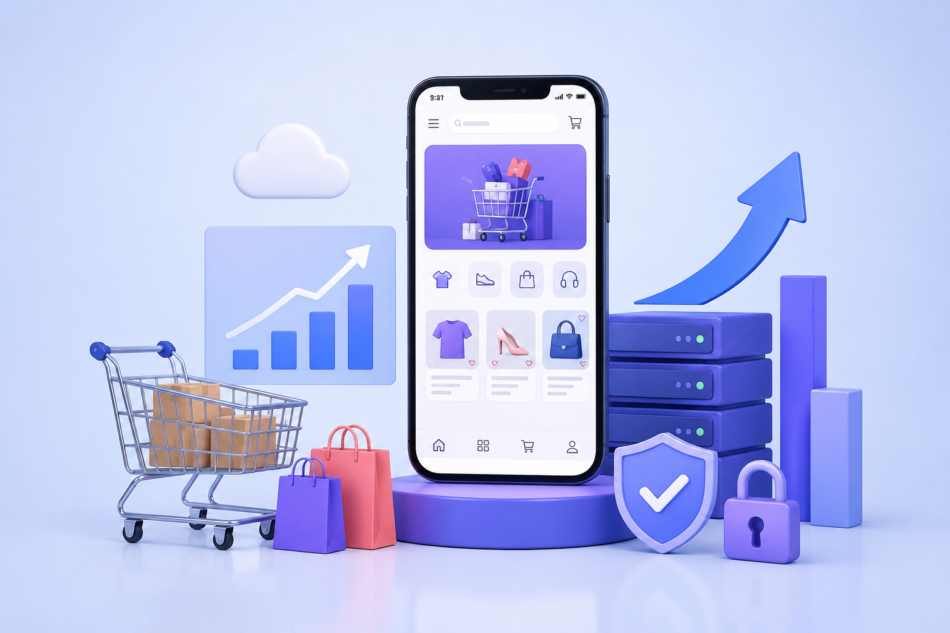
The rapid growth of online shopping has made mobile applications an important part of modern retail strategies. Customers expect fast browsing, personalized recommendations, secure payments, and smooth order tracking from their smartphones. For growing businesses, creating an app that can handle increasing users, products, orders, and transactions is essential for long-term success.
A scalable eCommerce mobile app is designed to grow alongside the business. Instead of building an application that only meets current requirements, businesses need to consider future traffic, new features, integrations, and changing customer expectations from the beginning.
What Makes an eCommerce App Scalable?
Scalability refers to an application’s ability to handle increasing workloads without negatively affecting performance. As an online store grows, the app may need to support thousands or even millions of users, larger product catalogs, more transactions, and additional services.
A scalable application should be capable of handling this growth while maintaining speed, reliability, and security. Choosing the right architecture, database structure, cloud infrastructure, and development approach can make a significant difference. Working with an experienced ecommerce app development company can help businesses establish a strong technical foundation before development begins.
Start With a Clear Business Strategy
Before developing the application, define the business objectives and target audience. Identify the products you will sell, the markets you want to serve, and the customer problems your apps should solve.
Important questions include:
- Who are your target customers?
- What products or services will you offer?
- Which payment methods will customers use?
- What makes your store different from competitors?
- How many users do you expect initially?
- Which features may be required as the business grows?
A clear strategy helps prioritize essential features and prevents unnecessary development expenses.
Choose the Right Technology Architecture
Technology architecture plays a major role in scalability. A poorly structured application can become difficult and expensive to maintain as traffic increases. Businesses should consider technologies that support modular development, efficient APIs, reliable databases, and cloud-based infrastructure. Depending on the business requirements, applications can use native development or cross-platform technologies. An experienced ecommerce mobile app development company can help select an architecture based on expected traffic, functionality, security requirements, and future expansion.
Build a Flexible Product Catalog
The product catalog is one of the most important components of an eCommerce application. As the business expands, the number of products, categories, variations, images, and descriptions can increase significantly.
The application should therefore support:
- Multiple product categories
- Product variations and attributes
- High-quality product images
- Search and filtering
- Inventory information
- Product reviews and ratings
- Related product recommendations
- Dynamic pricing and offers
A flexible catalog structure makes it easier to add new products and categories without major changes to the application.
Focus on Performance From the Beginning
Poor performance can quickly lead to customer frustration and abandoned purchases. A scalable app should load quickly and respond efficiently even when the number of users increases. Businesses can improve performance by optimizing images, reducing unnecessary API requests, using caching, implementing content delivery networks, and selecting efficient database structures. Performance testing should also be performed under different traffic conditions. This helps identify bottlenecks before they affect real customers.
Implement Secure Payment and Checkout
A simple and secure checkout process is essential for converting visitors into customers. The application should support trusted payment methods while protecting sensitive customer information.
Depending on the target market, businesses may integrate cards, digital wallets, bank transfers, and other payment options. Security should also be considered throughout the checkout process. Encryption, secure authentication, tokenization, and regular security testing can help reduce potential risks.
Use Cloud Infrastructure for Growth
Cloud infrastructure provides flexibility when an application experiences changing traffic levels. Instead of depending entirely on fixed hardware resources, businesses can scale infrastructure according to demand.
Cloud solutions can support:
- Automatic resource scaling
- Database management
- Backup and recovery
- Load balancing
- Application monitoring
- High availability
This approach is particularly useful for businesses that experience seasonal demand, promotional campaigns, or rapid customer growth.
Design the App for Future Features
A growing business will likely need new functionality over time. The initial application should therefore be developed with future expansion in mind. Potential future features may include loyalty programs, subscription services, AI-powered recommendations, multiple vendors, advanced analytics, social commerce, and personalized offers. Using modular development makes it easier to introduce these capabilities without rebuilding the entire application.
Prioritize User Experience
Scalability is not only about technical performance. The application must also remain easy to use as features increase. A clean navigation structure, intuitive product discovery, fast checkout, personalized content, and clear order tracking can improve the overall shopping experience. Businesses should regularly analyze customer behavior to understand where users abandon the purchasing journey and identify opportunities for improvement.
Integrate Analytics and Monitoring
Analytics can provide valuable information about how customers interact with the application. Businesses can track product views, searches, cart additions, purchases, retention, and other important metrics. Real-time monitoring can also identify technical issues such as slow APIs, server errors, crashes, or unusual traffic patterns. These insights allow businesses to make data-driven improvements while maintaining application reliability.
Choose a Reliable Development Partner
Building a scalable application requires expertise across design, development, security, testing, infrastructure, and maintenance. A reliable custom mobile app development company can help businesses create an application that is aligned with both current requirements and future growth. The development partner should understand your business model, provide transparent communication, follow secure coding practices, and offer post-launch maintenance and optimization.
Consider Cross-Platform Development
For businesses targeting both Android and iOS users, cross-platform development can be an efficient approach. It allows teams to create applications for multiple platforms while maintaining a consistent user experience.
However, the choice between native and cross-platform development should depend on the application’s functionality, performance requirements, budget, and long-term strategy. Selecting the appropriate approach can make mobile app development for ecommerce more efficient while supporting future expansion.
Test Before and After Launch
Testing should not be limited to the final development stage. Functional, performance, security, compatibility, and usability testing should be performed throughout the project. After launch, continuous monitoring is equally important. User feedback, crash reports, performance metrics, and analytics can reveal areas that need improvement. Regular updates ensure the application remains secure, compatible with new operating system versions, and aligned with changing customer expectations.
Conclusion
Creating a scalable eCommerce mobile app requires more than attractive design and basic shopping functionality. Businesses need a strong architecture, flexible product management, secure payments, optimized performance, reliable infrastructure, and a strategy for future expansion.
By investing in professional mobile app development services, businesses can build a strong digital shopping platform capable of supporting increasing customers and evolving business requirements. A well-planned application can improve customer engagement, streamline purchasing, and provide a foundation for sustainable eCommerce growth. The key is to build for today’s customers while preparing the technology for tomorrow’s opportunities.


