 WhatsApp Us Now

Choosing the right size of baby clothing is not just about matching the baby’s age with the size printed on a label. A romper may be labelled as 3–6 months, but that does not automatically mean it will fit every baby comfortably. Babies grow at different rates, and their body proportions can vary. A romper that fits well around the chest may feel tight around the thighs, while another may have enough legroom but pull uncomfortably around the diaper area.
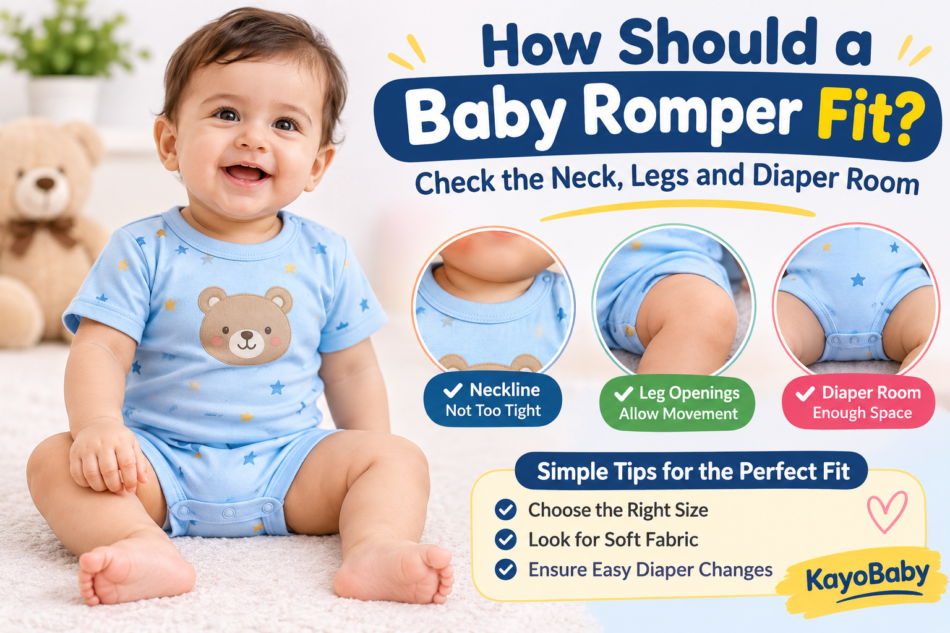
When shopping for Baby Rompers, parents should pay attention to three important areas: the neckline, leg openings and diaper space. These areas directly affect how comfortably a baby can move, sit, sleep and enjoy everyday activities.
A properly fitted baby romper should provide enough room for natural movement without looking excessively loose. It should stay comfortably in place, allow easy diaper changes and avoid unnecessary pressure on the baby’s skin.
Whether you are buying newborn baby rompers, cotton baby rompers for everyday wear or a special outfit for a family occasion, understanding the right fit can help you make a better purchasing decision.
This guide explains how a baby romper should fit, what to check before buying and which fitting mistakes parents should avoid.
Why Does the Right Baby Romper Fit Matter?
Baby clothing needs to accommodate more than a baby’s current body measurements. It should also allow room for movement, feeding, diaper changes and natural growth.
A poorly fitted romper can create several everyday problems.
- Restricted movement: Tight clothing around the chest, shoulders or legs can make crawling, kicking and stretching uncomfortable.
- Skin irritation: Tight elastic, rough seams and narrow leg openings may rub against delicate baby skin.
- Diaper discomfort: Insufficient room around the bottom can cause the fabric to pull or make the diaper feel compressed.
- Difficult diaper changes: A romper with inconvenient snaps or insufficient bottom space can make routine changes unnecessarily difficult.
- Frequent size replacements: Buying clothing based only on age instead of actual measurements can result in outfits becoming too small sooner than expected.
The ideal fit is comfortable, secure and practical. Parents should be able to move the fabric gently without noticing tightness or excessive pulling around the baby’s body.
1. Check the Neckline: It Should Never Feel Tight
The neckline is one of the first areas parents should inspect when choosing baby rompers. Babies have delicate skin around the neck, and a narrow or poorly designed neckline can cause discomfort.
A good neckline should sit comfortably around the base of the neck without pressing against the skin.
Signs of a Properly Fitted Neckline
Before purchasing a romper, check the following:
- The neckline should not leave visible pressure marks.
- The fabric should not pull tightly when the baby turns their head.
- The opening should allow the romper to be dressed and removed without unnecessary difficulty.
- The neckline should not sit so loosely that the garment slips off the shoulders.
- Stitching around the neck should feel smooth against the skin.
Which Neckline Style Should Parents Choose?
Different neckline designs offer different levels of convenience.
Envelope Neckline
Envelope necklines have overlapping fabric around the shoulders. They can make dressing and undressing easier because the opening stretches more comfortably.
They are particularly useful for newborn baby rompers and infants who do not yet have good head control.
Round Neckline
Round necklines are common in everyday baby clothing. They offer a simple appearance and work well when the opening has enough flexibility.
Parents should check that the neck opening is not too narrow.
Button or Snap Neckline
Some designs include buttons or snaps around the neckline. These can provide additional dressing flexibility, but the fasteners should be securely attached and should not create uncomfortable pressure.
Buying Tip: Do not choose a romper simply because its neckline looks attractive. Check its stretch, finishing and opening size before purchasing.
2. Check the Leg Openings: Avoid Tight Elastic and Restricted Movement
The leg openings are another important fitting area. Babies naturally kick, stretch, bend their knees and move their legs throughout the day. A romper should support these movements without pulling against the thighs.
If the leg openings are too tight, the elastic or fabric may leave marks on the baby’s skin.
How Should Baby Romper Leg Openings Fit?
A properly fitted leg opening should:
- Sit comfortably around the upper thigh.
- Allow the baby to bend and stretch their legs.
- Avoid digging into the skin.
- Stay in position without excessive looseness.
- Have smooth seams and soft finishing.
Parents should pay particular attention to rompers with elasticated leg openings. Elastic should hold the garment in place without squeezing the baby’s thighs.
Signs That the Leg Openings Are Too Tight
Look for these warning signs:
- Red marks around the thighs after removing the romper.
- Fabric pulling when the baby kicks.
- Elastic leaving visible indentations.
- Difficulty putting the baby’s legs through the openings.
- The garment riding up when the baby moves.
If you notice these problems, consider a larger size or a different design with more generous leg openings.
Should Baby Rompers Have Loose Leg Openings?
Not necessarily. Extremely loose leg openings can allow the garment to shift, bunch up or expose more of the diaper than intended.
The goal is a comfortable fit rather than a tight or oversized design.
For everyday use, cotton baby rompers with soft, flexible leg openings are a practical option. They offer a comfortable balance between ease of movement and garment stability.
3. Check the Diaper Room: Make Sure There Is Enough Space
One of the most overlooked factors when purchasing baby rompers is diaper room.
A romper may fit perfectly around the shoulders and chest but still feel uncomfortable because there is not enough space around the bottom.
Babies wear diapers throughout much of their early years, so their clothing needs to accommodate the additional space required around the diaper area.
What Does Proper Diaper Room Mean?
Diaper room refers to the additional space provided around the baby’s bottom and crotch area.
A properly designed romper should accommodate a normally fitted diaper without pulling tightly across the baby’s lower body.
Check for these features:
- Enough fabric around the bottom.
- Comfortable space through the crotch.
- No excessive pulling between the legs.
- Convenient bottom snaps or closures.
- Fabric that does not compress the diaper.
Why Is Diaper Room Important?
1. Better Everyday Comfort
A baby should be able to lie down, kick and move without the romper pulling tightly around the diaper.
2. Easier Diaper Changes
Rompers with bottom snap closures make diaper changes more convenient. Parents can access the diaper area without removing the entire outfit.
3. Less Fabric Pulling
When there is insufficient room around the bottom, the fabric may stretch between the legs and pull against the shoulders.
4. Better Fit During Movement
Babies spend time lying on their backs, sitting, crawling and being carried. Adequate diaper space helps the garment remain comfortable during these activities.
How to Check Diaper Space Before Buying
If you are purchasing a romper online, look carefully at its product images and size information.
Pay attention to:
- The length of the garment from shoulder to crotch.
- The shape and cut of the bottom section.
- The number and placement of snap buttons.
- Whether the design offers additional room for a diaper.
For in-store purchases, try the romper with the baby’s usual diaper whenever practical.
Important: A romper should not compress the diaper or cause it to leak. If the fabric pulls tightly around the crotch, choose a better-fitting design.
4. Check the Chest, Shoulders and Overall Body Fit
Although the neckline, legs and diaper area deserve special attention, parents should also check the overall body fit.
The chest and shoulders should provide enough room for comfortable movement without making the romper excessively loose.
Chest Fit
The fabric should sit comfortably across the baby’s chest. It should not stretch tightly when the baby moves their arms or takes a deep breath.
Avoid designs that feel restrictive around the upper body.
Shoulder Fit
The shoulder seams should sit naturally without pulling towards the neck or sliding too far down the arms.
If the shoulder area looks stretched or the sleeves pull when the baby moves, the romper may be too small.
Sleeve Fit
For full-sleeve baby rompers, check that the sleeves provide enough length for natural arm movement.
The cuffs should not squeeze the wrists or leave marks on the skin.
For sleeveless designs, check that the armholes do not rub against the baby’s underarms.
5. Choose the Right Baby Romper Size Instead of Guessing by Age
Age-based sizing is a useful starting point, but it should not be the only factor in your buying decision.
A four-month-old baby may need a different size from another baby of the same age because of differences in height, weight and body proportions.
Before ordering baby rompers online, check the brand’s size guide.
What Measurements Should Parents Check?
Baby’s Height
Measure from the top of the head to the heel while the baby is lying down. Height is useful when comparing overall garment length.
Chest Measurement
Measure around the fullest part of the chest without pulling the measuring tape tightly.
Weight
Compare the baby’s current weight with the size range provided by the manufacturer.
Garment Length
Check the shoulder-to-crotch and overall garment measurements whenever available. These are particularly important for one-piece clothing.
Why Brand-Specific Size Charts Matter
Different brands may follow different sizing standards. A 3–6 month romper from one manufacturer may fit differently from a similar-sized product from another brand.
When shopping at KayoBaby, parents should refer to the available product size information rather than relying only on the baby’s age.
It is also worth considering the baby’s diaper size and body shape when deciding between two sizes.
6. Choose Fabric That Supports a Comfortable Fit
The fabric of a baby romper can influence how comfortable it feels throughout the day.
Even a correctly sized garment may feel uncomfortable if its material is rough, stiff or poorly finished.
Why Cotton Baby Rompers Are a Popular Choice
Cotton baby rompers are commonly preferred for everyday clothing because they offer several practical benefits.
- Soft feel: Quality cotton fabric can feel gentle against delicate skin.
- Breathability: Cotton allows air to circulate through the fabric.
- Everyday comfort: It is suitable for regular clothing when the fabric weight is appropriate for the weather.
- Easy styling: Cotton rompers are available in different colours, prints and designs.
- Practical maintenance: Many cotton garments can be washed regularly according to their care instructions.
However, not all cotton fabrics feel the same. Fabric thickness, weave, stitching and finishing also affect comfort.
Cotton vs Stretch Fabric
Cotton provides a familiar, soft feel, while cotton blends containing elastane or other stretch fibres may offer additional flexibility.
For babies who move frequently, a little stretch can help the garment accommodate natural movement.
When comparing options, consider:
- Fabric softness.
- Stretch and recovery.
- Stitching quality.
- Breathability.
- Washing instructions.
- Whether the material feels comfortable against the skin.
Avoid choosing a fabric based only on appearance.
7. Understand the Difference Between a Snug Fit and a Tight Fit
Parents sometimes assume that baby clothing should fit closely to prevent the garment from looking oversized. However, there is an important difference between a neat fit and a restrictive fit.
A snug-fitting romper should sit comfortably against the baby’s body while allowing free movement.
A tight romper, on the other hand, may stretch across the chest, pull at the crotch or leave marks around the thighs.
Signs of a Comfortable Fit
A properly fitting baby romper should:
- Allow the baby to move both arms freely.
- Provide comfortable space around the chest.
- Allow natural leg movement.
- Accommodate a normally fitted diaper.
- Have no tight elastic around the thighs.
- Stay in position without excessive bunching.
- Avoid pressure marks after removal.
Parents should also check the garment after the baby has been wearing it for some time. A romper that initially feels comfortable may shift or become restrictive when the baby moves.
8. Common Baby Romper Fitting Mistakes to Avoid
Buying baby clothing can become confusing, particularly when shopping online. Avoiding a few common mistakes can help parents choose more suitable outfits.
Mistake 1: Buying Only According to Age
Age labels are general guidelines, not exact measurements.
Better approach: Check height, weight and the brand’s size chart before ordering.
Mistake 2: Ignoring the Diaper Area
A romper may look like the correct size but become uncomfortable once the diaper is worn.
Better approach: Check the crotch length, bottom design and snap placement.
Mistake 3: Choosing Tight Leg Elastic
Narrow leg openings can leave marks and restrict movement.
Better approach: Look for soft elastic or comfortable fabric openings.
Mistake 4: Ignoring Fabric Quality
An attractive print does not guarantee a comfortable garment.
Better approach: Check fabric composition, stitching and finishing.
Mistake 5: Buying an Extremely Large Size for Future Growth
Parents sometimes purchase much larger clothing to make it last longer. However, an excessively oversized romper may shift, bunch up or interfere with comfortable movement.
Better approach: Choose a size that fits comfortably now while allowing reasonable room for growth.
Mistake 6: Forgetting About Washing and Shrinkage
Some fabrics may shrink after washing, depending on their composition and care instructions.
Better approach: Read the washing label and follow the recommended care instructions before the first wash.
9. What Should Parents Check Before Buying Baby Rompers Online?
Online shopping makes it easier to compare different baby clothing styles, but parents cannot physically check the fabric or fit before ordering.
A simple checklist can help reduce sizing mistakes.
Before placing an order, check:
- Baby’s current height and weight.
- Brand-specific size chart.
- Neckline design and flexibility.
- Comfortable leg openings.
- Adequate diaper and crotch room.
- Fabric composition and softness.
- Snap buttons or closure placement.
- Stitching quality and seam finishing.
- Washing and care instructions.
- Return or exchange policy.
Also consider when and where the romper will be used.
For everyday wear, prioritise comfort, easy dressing and convenient diaper access. For outings or family photographs, you may prefer printed baby rompers or coordinated outfits that combine attractive designs with practical construction.
KayoBaby offers baby clothing options for parents looking for comfortable and attractive styles. When selecting an outfit, compare the available designs and sizing details to find an option that suits your baby’s measurements and everyday requirements.
10. How Much Should You Consider Price When Buying Baby Rompers?
Price is an important buying factor, but the cheapest option is not always the most practical choice.
A baby romper should provide reasonable value through its fabric, construction, comfort and usability.
Instead of comparing products only by price, consider the following:
Fabric Quality: Check whether the material feels suitable for regular use and whether its care requirements are manageable.
Stitching and Finishing: Examine the neckline, leg openings, seams and snap closures.
Design Practicality: A romper with convenient closures can make everyday dressing and diaper changes easier.
Size Availability: Check whether the brand provides suitable sizes for your baby’s current measurements.
Multipack Value: Buying multiple rompers together may be economical if the designs, sizes and fabric quality meet your requirements.
For newborns and rapidly growing babies, it can be more practical to purchase a few well-fitting outfits rather than buying too many pieces in one size.
The right buying decision balances price, comfort, quality and everyday convenience.
Frequently Asked Questions About Baby Rompers
1. How tight should a baby romper be?
A baby romper should fit comfortably without squeezing the baby’s body. The neckline, chest, thighs and diaper area should have enough room for natural movement. Avoid garments that leave pressure marks or pull tightly when the baby stretches.
2. How do I know if my baby’s romper is too small?
Common signs include tight leg openings, a stretched neckline, difficulty fastening the bottom snaps, fabric pulling around the crotch and pressure marks on the skin. If these signs appear, consider moving to the next size.
3. Should baby rompers have extra room for diapers?
Yes. Baby rompers should have enough room around the bottom and crotch to accommodate a normally fitted diaper. Insufficient diaper space can cause fabric pulling and discomfort.
4. Should I buy baby rompers one size bigger?
Buying one size bigger can be practical when your baby is close to the upper end of the current size range. However, avoid choosing an excessively large romper because loose fabric may bunch up and interfere with comfortable movement.
5. Are cotton baby rompers suitable for everyday wear?
Cotton baby rompers are a popular everyday option because many cotton fabrics are soft and breathable. Choose suitable fabric weight, comfortable stitching and a size that allows natural movement.
6. How should the leg openings of a baby romper fit?
The leg openings should sit comfortably around the thighs without squeezing or leaving visible marks. They should also be secure enough to prevent excessive shifting when the baby moves.
7. How often should I check my baby’s romper size?
Check the fit regularly, especially during periods of rapid growth. Pay attention to the neckline, sleeve length, thigh openings and diaper area. If the garment starts pulling or leaving marks, it may be time for a larger size.
8. Are snap-button baby rompers better than pull-on rompers?
Both styles can be practical. Snap-button rompers generally provide convenient access for diaper changes, while pull-on rompers can offer a simple design with fewer closures. The better option depends on the opening design, ease of dressing and your daily requirements.
Conclusion: Choose Baby Rompers That Fit Comfortably From Neck to Diaper Area
Choosing the right baby romper involves more than selecting an age-appropriate size or an attractive design. Parents should carefully check the neckline, leg openings, chest, shoulders and diaper space to ensure the garment supports comfortable everyday movement.
A well-fitting romper should never feel restrictive. It should allow babies to stretch, kick, sit and move freely while providing enough room for a normally fitted diaper.
Before purchasing, compare your baby’s measurements with the brand’s size guide, consider the fabric quality and examine practical features such as snap closures and soft leg openings.
If you are shopping for comfortable and attractive baby clothing, explore the available collections at KayoBaby. Compare the designs, fabric details and sizing information to choose baby rompers that combine everyday practicality with a comfortable fit.


