 WhatsApp Us Now

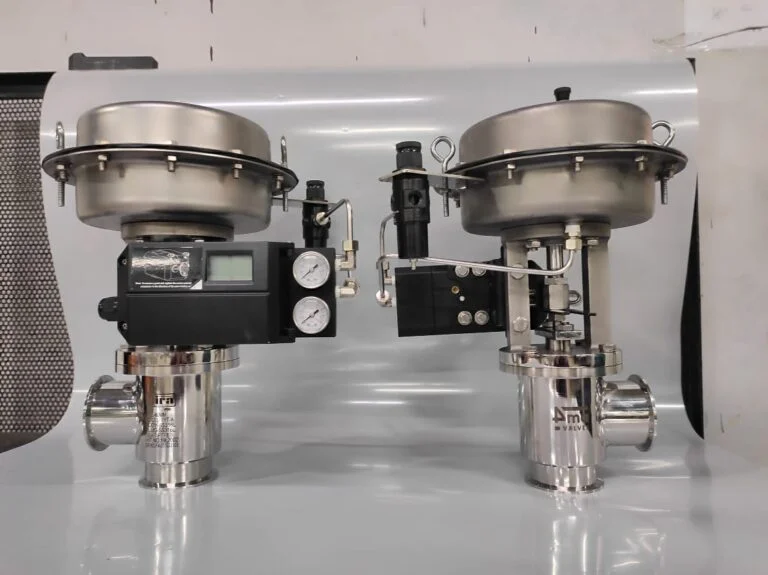
Pharmaceutical manufacturing requires precise control over different processes, including fluid transfer, ingredient mixing, temperature management, and production operations. Even small variations in flow rate or process conditions can affect product consistency and manufacturing efficiency. Control valves help regulate these variables, allowing operators to maintain stable and repeatable production conditions.
A reliable Pharma Control Valve Manufacturer focuses on developing valve solutions that meet the demanding requirements of pharmaceutical processing. These valves are used to regulate the flow of liquids, gases, and other process media while supporting accurate control throughout different stages of production.
Understanding Pharma Control Valves
A pharma control valve is designed to regulate the flow of process media within pharmaceutical manufacturing systems. It adjusts the flow according to signals received from a control system, helping maintain desired operating conditions.
Depending on the application, control valves can regulate pressure, flow rate, or other process parameters. They may be integrated with automated systems to support continuous monitoring and adjustment.
The valve’s construction, materials, and control mechanism should be selected according to the specific process requirements. This is particularly important in pharmaceutical environments, where equipment compatibility and process reliability are essential.
Maintaining Consistent Manufacturing Processes
Consistency is one of the most important requirements in pharmaceutical production. Each manufacturing batch must follow established process parameters to support predictable product quality.
Control valves help maintain consistency by regulating the movement of process materials. For example, controlled flow can support accurate ingredient transfer, mixing operations, and circulation through processing equipment.
Their contribution includes:
- Stable flow regulation: Helps maintain the required flow rate during production.
- Repeatable operation: Supports consistent process conditions across manufacturing batches.
- Improved process monitoring: Allows control systems to adjust valve operation according to changing requirements.
- Reduced process variation: Helps minimise unwanted fluctuations in flow and pressure.
These functions support better process management when combined with suitable instrumentation and properly configured control systems.
Importance of Hygienic Design and Material Selection
Pharmaceutical production often involves strict cleanliness requirements. Therefore, valve design must consider the possibility of product contamination, material compatibility, and cleaning procedures.
Stainless steel is commonly selected for pharmaceutical process equipment because of its corrosion resistance, durability, and cleanability. However, the appropriate material grade depends on the process medium and operating environment.
Surface finish, internal geometry, connection type, and sealing materials are also important considerations. A suitable hygienic design can help reduce areas where product residue may accumulate and support effective cleaning.
Where required, valves should be compatible with established cleaning-in-place (CIP) or sterilisation-in-place (SIP) procedures. Actual compatibility depends on the valve construction and manufacturer’s specifications.
Applications in Pharmaceutical Manufacturing
Pharma control valves support different operations across pharmaceutical facilities.
Liquid Processing: They regulate the movement of process liquids through pipelines, storage vessels, and production equipment.
Ingredient Mixing: Controlled flow helps maintain the required material proportions during mixing and formulation.
Water Treatment Systems: Valves regulate water flow in systems used to produce and distribute treated or purified water.
Temperature Control: In suitable systems, control valves regulate the flow of heating or cooling media to maintain required process temperatures.
Automated Production Lines: Integrated control valves respond to automation signals, helping coordinate different stages of manufacturing.
The correct valve type depends on the application, process conditions, and required level of control.
Factors to Consider When Selecting a Pharma Control Valve
Selecting the right valve requires careful evaluation of technical and operational requirements. Important factors include:
- Process compatibility: Confirm that construction materials and seals are suitable for the process medium.
- Pressure and temperature: Check the valve’s operating ratings against actual system conditions.
- Flow characteristics: Select a valve with suitable flow capacity and control characteristics.
- Hygienic requirements: Evaluate surface finish, internal design, and cleaning compatibility.
- Automation compatibility: Ensure the actuator, positioner, and control system meet application requirements.
A proper selection process helps improve reliability and supports long-term equipment performance.
Maintenance and Operational Reliability
Regular inspection is essential for maintaining control valve performance. Seals, actuators, connections, and internal components should be checked for wear, leakage, and operational issues.
Calibration and functional testing may also be required to ensure that the valve responds correctly to control signals. Maintenance schedules should follow equipment specifications and the facility’s quality procedures.
Proper installation and documentation further support reliable operation and help maintain process consistency.
Conclusion
Pharma control valves play an important role in maintaining process consistency and quality throughout pharmaceutical manufacturing. By regulating flow and supporting automated process control, they help maintain stable operating conditions across different production stages. Careful attention to hygienic design, material compatibility, valve selection, and maintenance allows pharmaceutical facilities to build reliable process systems and support consistent manufacturing standards.


