 WhatsApp Us Now
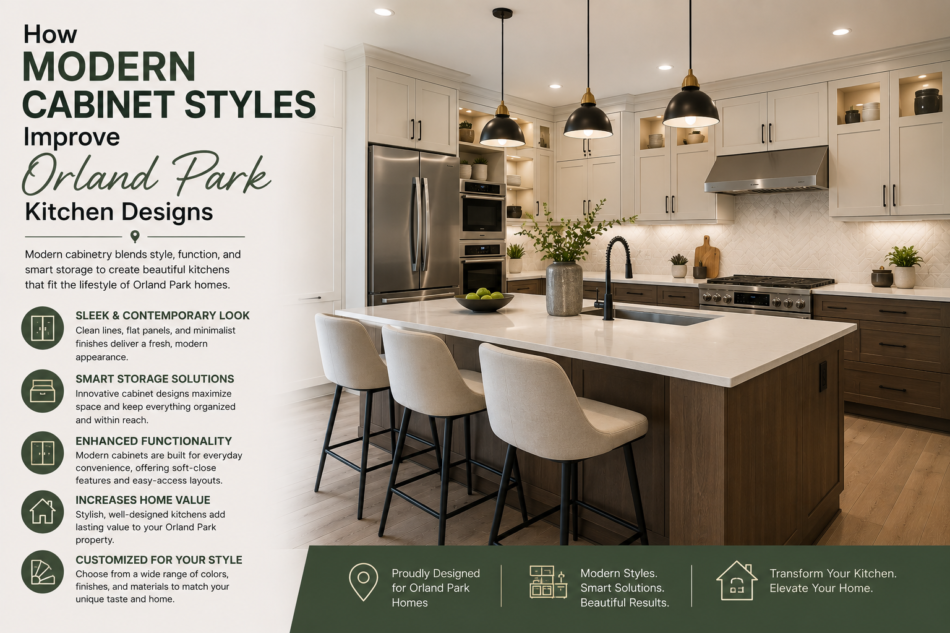
Cabinets affect almost every part of a kitchen. They influence storage, movement, lighting, cleaning, and the overall appearance of the room. However, selecting a cabinet style is not always simple. Homeowners must consider the size of the kitchen, the age of the home, their storage needs, and the materials already present in the space. This decision is especially important during a full kitchen update. A cabinet style may look attractive in a photo but feel too heavy, plain, or decorative after installation. Therefore, homeowners should look beyond temporary trends and choose cabinetry that supports both everyday use and long-term design goals.
For homes in Orland Park, Illinois, modern cabinet styles can help create kitchens that feel brighter, more organized, and easier to use. The best results come from combining a suitable door profile with practical storage, balanced colors, and an efficient layout.
Start with the Way the Kitchen Is Used
Before choosing cabinet doors or finishes, homeowners should think about how they use the kitchen each day. A family that cooks several meals at home may need deep drawers, pantry storage, and clear preparation areas. Someone who entertains often may prefer an island with seating and extra storage. The current layout should also be reviewed. In some kitchens, the main problem is not the appearance of the cabinets. It may be limited counter space, difficult corner storage, narrow walkways, or appliances placed too far apart.
Visiting a local cabinet showroom in Orland Park can help homeowners compare cabinet layouts, door profiles, finishes, hardware, and storage accessories before making a final choice. Looking at full samples is often more useful than judging colors and materials from a small online image. A good plan should answer several practical questions. Are dishes stored near the dishwasher? Is there enough space beside the stove for food preparation? Can cabinet doors open without blocking nearby appliances? These details may seem small, but they have a major effect on daily comfort.
Choose a Cabinet Style That Fits the Home
Modern cabinetry does not always mean flat, plain, or cold. Many cabinet styles can create an updated appearance when they are paired with the right colors and materials. Slab cabinet doors have a completely flat front. They work well in highly contemporary kitchens because they create smooth and uninterrupted lines. However, fingerprints and marks may be more visible on some glossy finishes. Raised-panel cabinets include more depth and decorative detail. They often suit traditional homes, although simpler colors and hardware can give them a more updated appearance.
Recessed-panel doors sit between these two styles. They offer more detail than a slab door but usually feel lighter than heavily raised designs. Shaker cabinets are one of the most familiar examples of recessed-panel cabinetry. The right choice depends on the character of the property. An older Orland Park home may benefit from a style that respects its traditional features. Meanwhile, a newer or open-concept home may look better with cleaner lines and fewer decorative details.
Use Clean Door Profiles to Reduce Visual Clutter
Cabinets cover a large amount of visible space. Therefore, heavily detailed doors can sometimes make a small kitchen feel crowded. Clean door profiles reduce visual noise and allow the room to feel calmer. Slim frames and simple panels are particularly helpful in kitchens with many upper cabinets. They provide enough depth to keep the design interesting without adding unnecessary decoration.
This approach also allows other features to receive more attention. A patterned backsplash, stone countertop, statement light fixture, or wood floor can stand out without competing with complex cabinet details.
Homeowners do not need to remove every decorative feature. Instead, they should create balance. When cabinet doors are simple, the room can support stronger hardware or a more noticeable countertop. When cabinets are highly detailed, the surrounding materials should usually remain quieter.
Select Colors According to Light and Room Size
Cabinet color can change how large, bright, or warm a kitchen feels. Light finishes reflect more light and often make smaller rooms appear more open. White, cream, light grey, and pale wood tones are common choices for this reason. Dark cabinets add depth and contrast. Navy, charcoal, espresso, and deep green can create a strong design, particularly in kitchens with good natural light. However, using dark colors across every cabinet may make a compact room feel enclosed.
A two-tone layout can provide a balanced solution. Homeowners might use white or light grey wall cabinets with a darker island. Another option is to place a deeper color on the lower cabinets while keeping the upper section bright. Color undertones also matter. Some grey finishes have a blue or cool base, while others contain warmer beige or brown tones. The cabinet sample should be compared with the flooring, countertops, backsplash, and wall paint before ordering.
Natural and artificial lighting can also change the way a finish appears. A cabinet that looks neutral in a showroom may seem warmer or cooler inside the home. Reviewing samples at different times of day can prevent an unexpected result.
Consider Shaker Cabinets for Flexible Design
Shaker cabinetry remains popular because its basic door structure works with many design directions. The flat center panel and simple surrounding frame provide definition without making the kitchen feel overly formal. Homeowners can explore modern Shaker cabinet designs when they want a door style that can support modern, transitional, farmhouse, or traditional interiors.
For a contemporary look, Shaker doors can be paired with slim handles, light quartz countertops, and a simple backsplash. Matte black or brushed nickel hardware can strengthen the clean appearance. For a warmer design, homeowners can choose natural wood tones, brass hardware, cream countertops, and textured tile. Cup pulls and soft neutral colors can also give Shaker cabinetry a farmhouse-inspired character.
Slim Shaker doors offer an even more streamlined variation. Their narrower frames make the cabinet fronts feel lighter while keeping the familiar recessed-panel structure. This can work well in updated kitchens where completely flat doors may feel too plain.
Improve Storage Instead of Adding More Cabinets
More cabinetry does not always result in better storage. Poorly planned cabinets can leave deep corners, narrow openings, and shelves that are difficult to reach. Modern kitchen design focuses on making each cabinet easier to use. Deep drawers can store pots, pans, and small appliances more effectively than low shelves. Pull-out trays can improve access inside base cabinets. Vertical dividers can organize baking sheets and cutting boards.
Pantry cabinets can also reduce countertop clutter by creating space for food, serving pieces, and small appliances. Meanwhile, drawer organizers make utensils easier to find and keep items from moving around. Corner cabinets require special attention. Lazy Susan systems, pull-out shelves, and angled drawers can make difficult areas more useful. The best option depends on the shape of the kitchen and the available opening. Homeowners should identify the items they use most often and place them near the relevant work area. Cooking tools belong close to the range, while dishes and glasses should remain near the dishwasher or dining area.
Coordinate Cabinets with Countertops and Hardware
Cabinets should not be selected separately from the rest of the kitchen. Countertops, hardware, flooring, and backsplash materials need to work together. Busy countertops often look best with simple cabinet doors. If the stone includes strong movement or veining, a clean Shaker or slab profile can keep the room balanced. Plain countertops allow more freedom with cabinet color and hardware. A simple white surface, for example, can work with grey, blue, green, wood-tone, or two-tone cabinets. Hardware provides another opportunity to personalize the kitchen. Long bar pulls create a modern effect, while round knobs feel more traditional. Brass adds warmth, matte black creates contrast, and brushed nickel offers a quieter look. The size of the hardware should match the cabinet doors and drawers. Very small knobs may feel lost on wide drawers, while oversized pulls can overwhelm narrow doors. Using one finish throughout the kitchen often creates the most connected appearance.
Keep Walkways and Appliances in Mind
A beautiful cabinet plan can still fail when it limits movement. Homeowners should consider door swings, drawer openings, appliance clearance, and walking space before approving the design. A refrigerator door may block a nearby drawer. A dishwasher can prevent access to a corner cabinet when open. An island may provide useful storage but leave too little space for people to walk comfortably.
Appliance specifications should be confirmed before cabinets are ordered. Even small differences in refrigerator, range, or dishwasher dimensions can affect filler pieces, countertop openings, and cabinet alignment. Professional measurement can reduce these risks. It allows the layout to account for walls that are not perfectly straight, uneven floors, existing plumbing, and other conditions that may not be obvious from basic measurements.
Avoid Designing Around a Short-Lived Trend
Trends can provide useful inspiration, but they should not control every decision. Cabinets are a major investment and are usually expected to remain in place for many years. Homeowners can create a current look through features that are easier to replace. Hardware, lighting, paint, stools, and decorative accessories can all be updated later. Cabinet doors and layouts should provide a more stable foundation.
Neutral colors and simple profiles generally offer greater flexibility. However, neutral does not have to mean plain. Texture, natural wood, contrasting islands, and carefully chosen hardware can add personality without making the kitchen dependent on one trend. A successful kitchen should feel connected to the rest of the home. It should also reflect the homeowner’s needs rather than copying a showroom display exactly.
Final Thoughts
Modern cabinet styles can improve Orland Park kitchen designs by creating cleaner lines, better storage, and a more balanced appearance. However, door style is only one part of the decision. Homeowners should also consider lighting, room size, cabinet construction, color undertones, countertop patterns, hardware, and everyday storage needs. An efficient layout will provide more value than a design based only on appearance. Shaker cabinets are a strong option because they can adapt to many interiors. Their clean frame-and-panel design offers enough character for traditional homes while remaining simple enough for updated spaces. By comparing full-size samples, planning storage carefully, and measuring the room accurately, homeowners can create a kitchen that looks current and remains practical for years.


