 WhatsApp Us Now
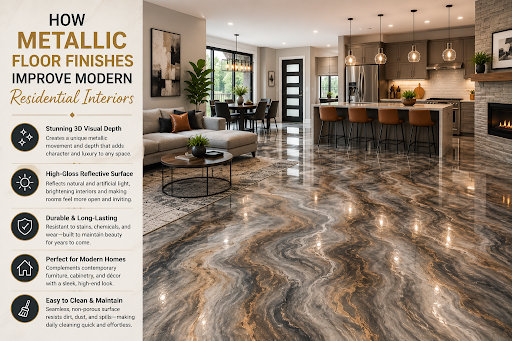
Residential flooring has an important effect on how a room looks, feels, and functions. Traditional choices such as carpet, wood, and tile remain common, but decorative concrete coatings are becoming another option for homeowners who want a smooth and modern interior surface. Metallic floor finishes are especially known for their flowing patterns and reflective appearance. They can create effects that resemble marble, clouds, waves, smoke, or liquid metal. However, choosing this type of flooring should involve more than selecting an attractive color. Homeowners should also consider the room’s purpose, lighting, existing concrete condition, daily traffic, cleaning needs, and preferred level of gloss.
What Makes a Metallic Floor Finish Different?
A metallic floor is created by blending reflective or pearlescent pigments into a resin-based coating. As the coating is applied, the pigments move and blend across the surface. This movement creates variation in color, depth, and pattern. Professionally installed metallic epoxy floor coating can provide a more individualized appearance than a plain, single-color coating. Even when similar pigments are used, natural movement during application means that each completed floor develops its own pattern.
A complete metallic flooring system commonly includes:
- Concrete surface preparation
- Crack and surface repairs
- Primer or base coat
- Metallic pigment layer
- Clear protective topcoat
The quality of every layer affects the finished appearance. The decorative coat creates the visual pattern, while the preparation and topcoat support adhesion, durability, stain resistance, and maintenance.
Where Metallic Flooring Works Best in a Home
Metallic finishes can be used in several residential areas, but they are generally most effective where design is an important part of the room.
Common applications include:
- Living rooms
- Finished basements
- Home offices
- Entertainment spaces
- Kitchens
- Hallways
- Home studios
- Interior entry areas
A living room may benefit from a soft neutral metallic design that complements furniture and wall colors. A finished basement may use a brighter reflective finish to make the room feel more open. A home studio or entertainment space may support darker or more dramatic patterns. The finish should always match the function of the room. A decorative area may prioritize visual depth, while an active family space may require greater scratch resistance, traction, and easy maintenance.
Choose a Finish That Matches the Interior Style
Metallic floors are available in a wide range of color combinations. The right choice should support the existing interior rather than compete with it. Modern interiors often work well with silver, pearl, white, charcoal, or cool-gray pigments. These colors can create a clean and polished appearance. Warm residential spaces may suit bronze, copper, beige, cream, or brown tones. These shades can coordinate with wooden furniture, warm lighting, and neutral walls. Industrial-style interiors may use darker gray, black, blue, or steel-inspired designs. Luxury interiors may combine several closely related pigments to create movement similar to natural stone. Homeowners should consider permanent elements such as cabinets, fireplaces, countertops, stairs, and wall finishes before selecting a color blend. Furniture can be changed later, but the flooring should continue to fit the overall room.
Consider the Size of the Room
The size of the space affects how a metallic pattern is perceived. A bold design with strong contrast may look balanced in a large open room but feel visually crowded in a small area. Smaller rooms often benefit from lighter colors and softer pigment movement. These choices can reflect more light and help the room feel less enclosed. Larger rooms can support wider swirls, darker tones, and stronger color variation. However, the design should still remain balanced across the full floor area. The installer should consider the direction of the room, entrances, focal points, and natural movement through the space. Pigment patterns can be arranged to guide the eye toward important architectural features.
Review the Room’s Lighting
Lighting has a major effect on metallic flooring. Reflective pigments can appear different under natural daylight, warm bulbs, cool LED lighting, or directional spotlights. Natural light may reveal more color variation during the day. Artificial lighting may strengthen the floor’s shine or highlight specific areas of movement.
Dark floors can create a dramatic effect in a well-lit room, but they may make a space with limited lighting feel smaller. Light silver, pearl, cream, and soft-gray finishes may help brighten basements or interior rooms with fewer windows. Homeowners should review physical samples inside the actual room whenever possible. A sample viewed online or outdoors may not accurately show how the colors will appear under the property’s lighting.
Compare Gloss, Satin, and Textured Topcoats
The final topcoat influences both appearance and performance. Metallic floors are commonly associated with a high-gloss surface, but other finish levels may also be available.
High-Gloss Finish
A high-gloss topcoat reflects more light and emphasizes the depth of the metallic pattern. It can create a polished appearance in living rooms, entertainment spaces, and modern interiors. However, glossy surfaces may show dust, footprints, pet hair, or small scratches more clearly.
Satin Finish
A satin topcoat provides softer reflection. It allows the metallic design to remain visible without creating a mirror-like surface. This finish may suit busy residential areas where homeowners want a decorative appearance with less visible maintenance between cleanings.
Textured Finish
A textured or slip-resistant additive can improve traction in entryways, kitchens, basements, or other areas where moisture may reach the floor. Too much texture can make cleaning more difficult, so the level should be selected according to the room’s actual safety needs.
Evaluate the Existing Concrete
Metallic flooring depends on a stable and properly prepared concrete surface. The slab should be examined for cracks, pitting, moisture, stains, weak areas, and previous coatings before installation begins. Old paint, adhesive residue, oil, and surface contamination may prevent the coating from bonding properly. Cracks and damaged sections may also remain visible through a smooth decorative finish if they are not repaired.
Mechanical grinding is commonly used to remove weak material and create a suitable profile for the new coating. Preparation may also include:
- Crack filling
- Edge repair
- Old coating removal
- Dust extraction
- Degreasing
- Moisture testing
- Surface leveling
A decorative finish cannot correct an active water problem or unstable concrete. The underlying condition must be addressed before appearance is considered.
Consider Moisture in Ground-Level Rooms
Concrete can release moisture vapor even when the surface appears dry. This is particularly important in basements, ground-level living spaces, and rooms built over concrete slabs. Excessive moisture beneath a coating can contribute to bubbling, discoloration, whitening, peeling, or loss of adhesion. Testing can help determine whether a moisture-control primer or another treatment is required. Homeowners should also inspect the property for plumbing leaks, drainage problems, foundation cracks, or exterior water entry. A coating may protect the surface, but it should not be used to conceal the source of ongoing moisture.
Think About Daily Residential Use
A decorative floor still needs to handle normal household activity. The coating system should be selected according to the people, pets, furniture, and activities present in the room.
Important considerations include:
- Regular foot traffic
- Children playing
- Pet claws and hair
- Moving chairs
- Heavy furniture
- Food and drink spills
- Cleaning products
- Exercise equipment
- Direct sunlight
A protective topcoat can help improve scratch, stain, and abrasion resistance. Furniture pads can also reduce marks caused by chairs, tables, and sofas. The flooring should be matched to real daily conditions rather than selected only for its appearance in photographs.
Select the Right Floor for a Living Room
Living rooms require a balance of style, comfort, and practical maintenance. The floor is highly visible, but it also supports furniture, family activities, guests, pets, and frequent movement. When reviewing epoxy flooring for modern living rooms, homeowners should consider the complete interior design. The selected color should work with walls, furniture, natural light, and adjoining rooms.
A seamless floor can create a continuous appearance without grout lines interrupting the room. This may be helpful in open-concept properties where the living room connects with a dining area, hallway, or kitchen.
Homeowners should also think about acoustics and comfort. Area rugs can soften selected seating areas without covering the entire decorative floor. Rugs should use suitable backing to avoid trapping moisture or marking the finished surface.
Plan for Cleaning and Maintenance
Metallic floors generally have a sealed surface that is easier to clean than unfinished concrete. Dust, spills, and household dirt remain on top rather than immediately entering the slab.
Routine maintenance may include:
- Sweeping or vacuuming loose dirt
- Damp mopping with a suitable cleaner
- Removing spills promptly
- Avoiding abrasive cleaning pads
- Using furniture protectors
- Inspecting high-traffic areas
- Following the installer’s care instructions
Harsh chemicals should not be used unless they are approved for the coating. Abrasive tools may reduce gloss or leave visible marks.
Glossy dark floors may require more frequent cleaning because light dust is easier to see. Varied gray, pearl, or blended designs may conceal small marks more effectively between cleanings.
Compare the Full Flooring System
Homeowners should compare complete systems rather than focusing only on the word “metallic.” Two installations can use metallic pigments but include different preparation methods, primers, layer counts, and protective topcoats.
A written estimate should explain:
- How the concrete will be prepared
- Which repairs are included
- Whether moisture testing is needed
- The type of primer
- The number of metallic layers
- The selected pigment colors
- The protective topcoat
- Slip-resistant options
- Curing time
- Maintenance requirements
- Warranty coverage
These details make it easier to understand the quality and expected performance of the proposed system.
Planning Metallic Flooring in Woodland Park, NJ
Homes in Woodland Park, NJ, may experience seasonal humidity, rainfall, winter snow, and changing temperatures. Although metallic flooring is often installed indoors, local conditions can still affect basements, ground-level living areas, and concrete slabs.
Moisture testing may be especially important in lower-level rooms. Homes with open entry areas may also bring water, salt, and dirt onto the floor during winter.
Epoxy Shine works with residential decorative flooring in Woodland Park, NJ. A site assessment can help identify slab damage, moisture concerns, lighting conditions, color options, and the protective finish required for the room. The company’s metallic service is positioned for custom residential and commercial designs, while its living-room flooring page focuses on smooth, customizable interior surfaces.
Common Mistakes to Avoid
Homeowners can improve the result by avoiding several common selection mistakes:
- Choosing colors only from online photographs
- Ignoring room lighting
- Selecting a design that conflicts with permanent fixtures
- Choosing gloss without considering maintenance
- Coating over damaged or contaminated concrete
- Ignoring moisture vapor
- Comparing estimates without reviewing preparation
- Selecting appearance without considering daily use
- Using insufficient protection in high-traffic areas
The most attractive sample is not always the most suitable option for the room.
Final Thoughts
Metallic floor finishes can add color, movement, reflection, and visual depth to residential interiors. They may work well in living rooms, basements, studios, home offices, and other spaces where homeowners want a distinctive decorative surface.
The right system should be chosen according to the concrete condition, room size, lighting, interior design, moisture level, traffic, traction, and cleaning expectations.
A successful metallic floor is not created by pigment alone. Proper preparation, repairs, material selection, skilled application, and a suitable protective topcoat all contribute to the final result. When these factors are considered together, metallic flooring can provide a practical and visually distinctive surface for a modern home.


