 WhatsApp Us Now
Walk through any machine shop long enough and you start noticing the setups that never seem to move. The clamps stay tight, the fixtures stay square, and the machinist running the table is not stopping every hour to make adjustments. Then there are the troublesome setups. Same machine, same operator, same cutting conditions, yet something always shifts. More often than not, the problem starts in the workholding hardware itself.
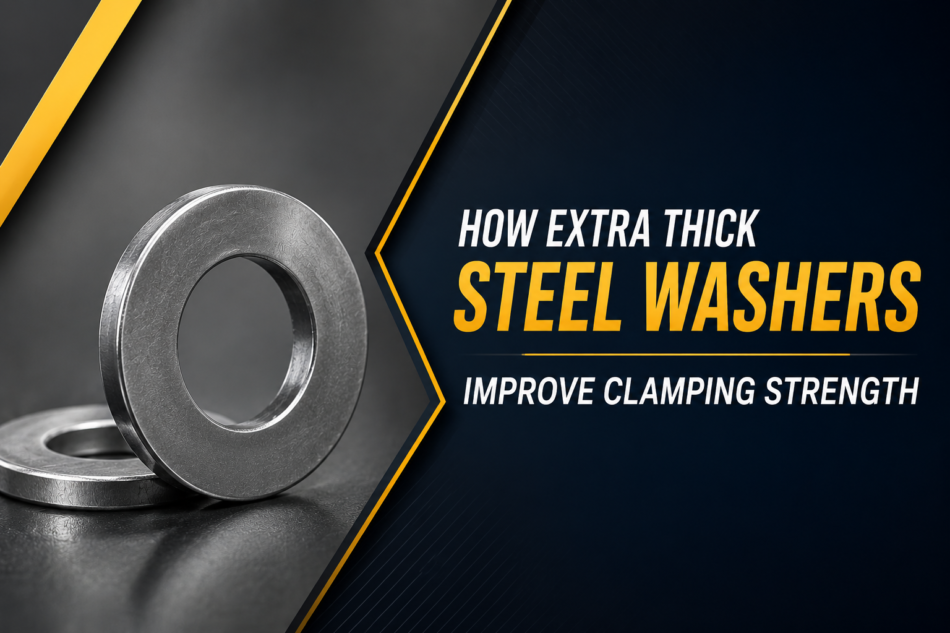
Washers rarely get much attention in conversations about machining accuracy, but they should. Extra Thick Steel Washers are built specifically for machine tool table workholding where fastening pressure needs to stay stable under real machining loads. These washers are machined from 12L14 cold rolled steel bar and designed with chamfered outside edges and smooth beveled surfaces.
Their inside diameters are slightly oversized in relation to the bolt diameter, which allows proper fitment with clamps, studs, and T-slot hardware used throughout machining setups. The added thickness is not cosmetic. It changes how the entire assembly handles pressure.
The Smallest Components Often Carry the Most Stress
A machine table setup is really a chain of pressure transfer. Tightening force moves from the nut into the washer, through the clamp, down into the fixture, and finally into the table itself. If one part of that chain weakens, the whole setup loses stability.
That is exactly why thicker washers matter. A thin washer may look acceptable during installation, but once clamping pressure increases, problems begin showing up underneath the hardware. Thin washers can flex, compress unevenly, or create pressure points beneath clamps and nuts. Over time, those inconsistencies affect the rigidity of the setup.
Extra thick flat steel washers spread the load over a larger and more stable surface area. Instead of concentrating force into a narrow contact point, they help distribute pressure more evenly throughout the workholding assembly.
That even pressure matters more than many people realize. Stable workholding depends on consistency. Once clamping force becomes uneven, the setup slowly loses predictability.
Machining Fixtures Depend on Stable Pressure
Workholding hardware is expected to do one thing exceptionally well: prevent movement during machining operations.
That responsibility falls across several components working together:
- T-slot bolts
- T-slot nuts
- double end studs
- flanged nuts
- serrated clamps
- plain clamps
- step blocks
Each component relies on a stable bearing surface beneath it. Extra thick washers improve that support by resisting deformation under heavy fastening pressure. Their thicker construction creates a more rigid surface beneath the nut or clamp, helping maintain even contact throughout the assembly.
This becomes especially important on larger fixtures where multiple clamping points are spread across the machine table. Uneven compression beneath one fastener can affect pressure distribution across the entire setup.
Experienced machinists notice those problems quickly. One clamp suddenly needs retightening more often. Another starts leaving uneven marks beneath the fixture. The setup no longer feels solid during machining.
Usually, those issues do not start with the clamp. They start beneath it.
Repeated Tightening Cycles Wear Down Standard Hardware
Production machining puts enormous stress on workholding systems. Fixtures are constantly adjusted, repositioned, tightened, and broken down again. All tightening cycle places pressure directly against the washer surface.
Standard washers eventually begin showing signs of fatigue because the material beneath the fastener compresses unevenly over time. Once the washer deforms, pressure no longer transfers consistently through the assembly.
Extra thick flat steel washers handle repeated fastening pressure far more effectively because they contain greater material volume beneath the load surface. That additional thickness helps the washer maintain its shape under continued use.
A washer that stays flat keeps clamp pressure more consistent. That consistency helps fixtures remain stable during machining operations.
The beveled surfaces and chamfered edges also help adjoining hardware seat properly against the washer face. It sounds like a small detail, but proper seating affects how evenly force moves through the entire setup.
Machine shops that run repeat production work understand this well. Small inconsistencies in workholding eventually become larger machining problems.
Better Support for Jigs and Fixtures
Jigs and fixtures exist to create repeatability. The workpiece must remain fixed in a specific orientation while machining takes place. Any movement affects accuracy.
Extra thick washers contribute to fixture stability by supporting more controlled load transfer beneath clamps and studs. Because the washer surface remains rigid under pressure, fastening force stays more evenly distributed across the setup.
That becomes particularly important in workholding systems using:
- forged clamps
- serrated step clamps
- adjustable strap clamps
- step blocks
- double end studs
These components are designed specifically for machine tool table applications where rigid positioning matters throughout machining operations.
A washer that compresses unevenly weakens the consistency of the entire fixture arrangement. Extra thick washers help reduce that risk by maintaining a stronger support surface beneath the hardware.
Industrial suppliers such as George H. Seltzer & Co. continue producing extra thick flat steel washers specifically for machining and workholding applications because standard fastening hardware is often insufficient for the demands placed on machine tool table systems.
Design Details That Actually Matter
Extra thick flat steel washers are not simply thicker versions of standard hardware. Their machining details serve a practical purpose.
Chamfered outside edges minimize abrupt edges around the washer surface. Smooth beveled edges are good for seating under clamps and nuts. There are cases where the inside diameters are slightly oversized to ensure a good fitment with fastening hardware that is generally available in machine workholding assemblies.
The details provide for better pressure distribution and to minimize uneven pressure under the set up. The reliable workholding relies on parts that fit properly, distribute load evenly and are rigid during the working process. If all components are operating in a stable manner, the overall stability of the assembly increases.
Demand for this type of industrial workholding hardware continues to be high in these machining applications where accurate positioning and repeatable setup performance are vital. Secure positioning and repeatable setup operations continue to be critical for these kinds of industrial workholding applications and suppliers such as George H. Seltzer & Co. are making new workholding products for this type of machine.
Conclusion
Good workholding requires controlled pressure. The load is applied by the use of clamps and studs, but the washers help to determine its effectiveness. Pressure that is balanced or even results in stable fixtures. As soon as the pressure is not uniform, the movement follows.
Extra thick flat steel washers are designed to increase clamping strength by providing a larger bearing surface under fastening components, preventing uneven compression, and providing rigid positioning when machining. Industries such as machine shops, where setup stability is critical daily, continue to rely on well-fitted washers for their workholding needs as they do on reliable clamps and studs, T-slot hardware and Hardened Steel Washers for all industrial workholding applications.

