 WhatsApp Us Now

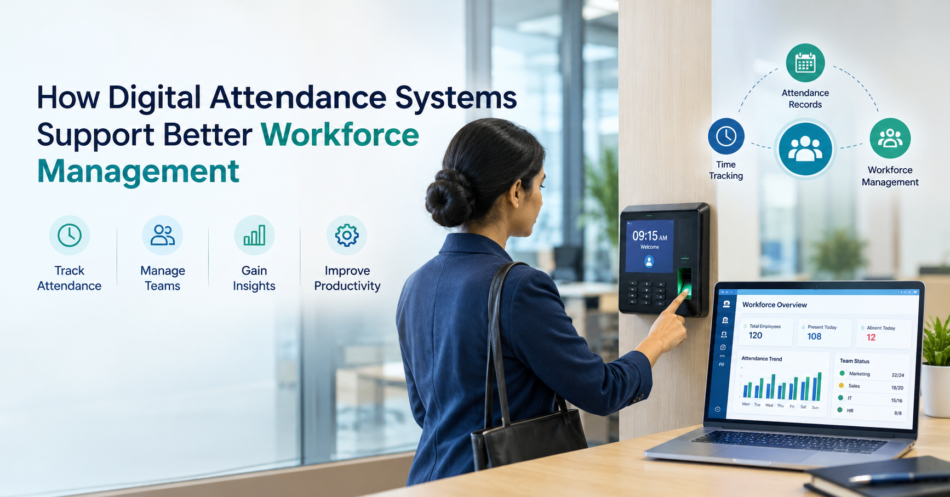
Effective workforce management depends on accurate information about employee attendance, working hours, leave, and schedules. Manual attendance tracking can create errors, consume administrative time, and make it difficult to monitor workforce patterns. Attendance management software helps businesses digitize these activities by providing a structured way to record and manage employee attendance. With automated tracking, real-time information, and accessible reports, organizations can improve workforce visibility while reducing the administrative effort required to manage everyday attendance processes.
Accurate Attendance Tracking
One of the main benefits of digital attendance systems is improved accuracy. Manual registers and spreadsheets can result in incorrect entries, duplicate records, or missing attendance information.Digital systems can record employee check-ins and check-outs automatically through supported attendance methods. This creates a more consistent record of working hours and reduces the need for HR teams to manually enter attendance data.
Real-Time Workforce Visibility
Managers need timely information to understand workforce availability. Digital attendance systems can provide updated attendance information, allowing managers to see who is present, absent, late, or working remotely, depending on the system’s capabilities.
This visibility can help supervisors respond quickly to staffing gaps and make better decisions about daily workforce allocation.
Simplified Leave Management
Attendance and leave management are closely connected. When employee leave records are maintained separately from attendance information, HR teams may need to spend additional time verifying data.Digital systems can connect attendance and leave records, helping organizations maintain a clearer view of employee availability. Employees can also submit leave requests digitally, while managers can review and approve them through structured workflows.
Better Working-Hour Management
Understanding employee working hours is important for organizations that manage shifts, overtime, flexible schedules, or multiple work locations.Digital attendance platforms can track working hours and provide reports that help managers identify attendance patterns. These insights can support better scheduling and resource allocation while helping organizations maintain more organized workforce records.
Reduced Administrative Work
Manual attendance management often requires HR professionals to collect records, verify entries, calculate working hours, and prepare reports. These repetitive tasks can take valuable time away from more strategic HR responsibilities.Automation reduces the amount of manual effort required to maintain attendance records. HR teams can spend less time managing routine data and more time focusing on employee support and workforce planning.
Improved Payroll Data Accuracy
Attendance information can directly affect payroll calculations. Working days, leave, overtime, and attendance-related adjustments need to be accurately recorded before payroll is processed.A digital attendance system can provide structured attendance data that can be used during payroll preparation. This reduces repetitive data entry and makes it easier for payroll teams to verify employee attendance information before processing salaries.
Useful Workforce Reports
Digital systems can generate reports covering attendance patterns, absences, late arrivals, working hours, and other workforce metrics. These reports provide managers with useful information for understanding workforce behavior.Regular analysis can help organizations identify recurring attendance issues, evaluate staffing requirements, and improve workforce planning. Instead of relying on assumptions, managers can use recorded data to support operational decisions.
Supporting Flexible Workplaces
Modern workplaces may include office-based, remote, hybrid, and field employees. Traditional attendance methods may not provide enough flexibility for these working arrangementsDigital attendance solutions can support different attendance processes depending on organizational requirements. Mobile access and other digital options can make attendance management more convenient for employees while maintaining visibility for managers.
Improving Employee Transparency
Employees benefit when attendance information is easy to access and understand. Digital systems can allow employees to review their attendance records, working hours, leave information, and related details through employee-facing portals or applications.Greater transparency can reduce confusion and make it easier to identify discrepancies early. Employees can raise concerns before incorrect information affects payroll or other HR processes.
Supporting Smarter Workforce Planning
Reliable attendance data can contribute to better workforce planning. Organizations can examine attendance trends, staffing patterns, overtime requirements, and employee availability to understand where operational adjustments may be needed.Over time, this information can help businesses improve scheduling, allocate resources efficiently, and develop more effective workforce management strategies.
Conclusion
Digital attendance systems provide businesses with a practical way to improve workforce management through automation, accurate records, real-time visibility, and better reporting. They reduce repetitive administrative work while helping HR teams and managers make more informed decisions about employee availability and working hours.
When attendance data is connected with payroll processes, businesses can also improve the flow of information used for salary calculations. Organizations looking for efficient payroll management can combine digital attendance tracking with payroll software Bangalore solutions to create a more connected process for managing attendance, working hours, leave, and payroll-related information.


