 WhatsApp Us Now

Think about the last time you hired a plumber or bought running shoes online. You probably didn’t see one ad and buy on the spot. You searched Google, clicked through a couple of websites, maybe checked the brand’s Instagram or its reviews, and came back days later through an email or a reminder ad.
That’s how most customers buy now. They move between search results, websites, social feeds, paid ads, and their inbox before they decide. Each stop shapes what they think of a business.
This is why digital marketing channels work best as a team. A business that shows up in only one place leaves gaps, and competitors are happy to fill them. A strong online presence comes from making sure each channel hands the customer off smoothly to the next.
Understanding Different Digital Marketing Channels
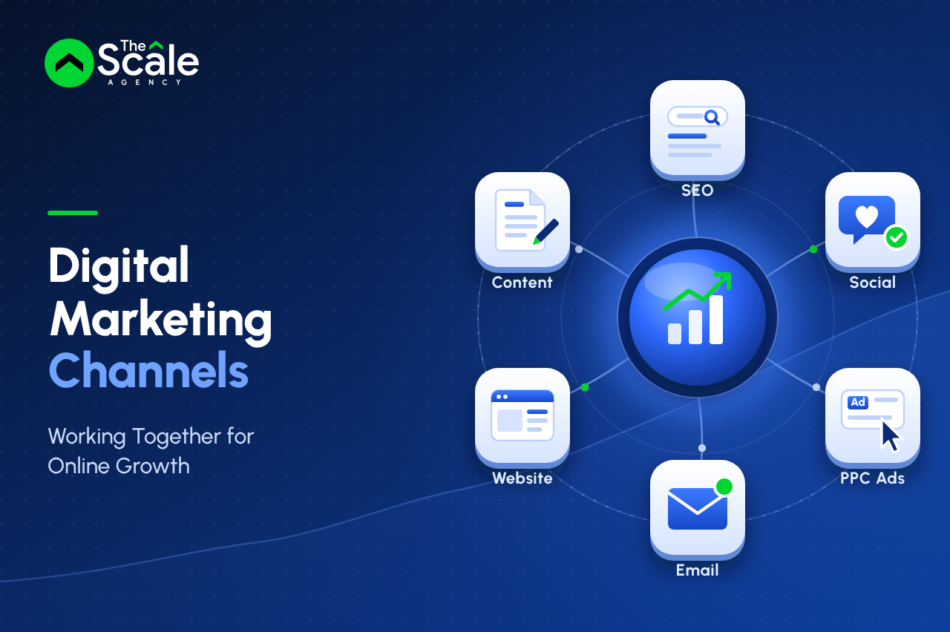
There are many types of digital marketing channels, but most small and mid-sized businesses rely on a core group. Each one has a different job.
- Search engine optimization (SEO) helps your website appear in Google when people look for what you sell.
- Content marketing gives people useful information through blog posts, guides, videos, and FAQs.
- Social media keeps your brand visible and gives customers a place to talk to you.
- Pay-per-click (PPC) advertising puts your business at the top of search results or in social feeds right away, for a cost.
- Email marketing lets you stay in touch with people who already know you.
- Your website is where all of that attention lands and, ideally, turns into a call, a booking, or a sale.
It helps to sort these channels by the moment they serve. Search and paid ads catch people who are actively looking. Social and content build familiarity before someone needs you. Email and your website turn that familiarity into action. No single channel covers every moment well.
How Different Digital Marketing Channels Work Together
The real value shows up where channels overlap. Here’s what that looks like in practice.
SEO and Content Marketing
SEO and content marketing are almost impossible to separate. Search engines reward pages that answer real questions, and content is how you provide those answers.
Picture a family-owned HVAC company in Phoenix. A generic “Services” page won’t do much. A guide on how often to replace an AC filter in the Arizona heat answers a question local homeowners actually type into Google. That page earns search traffic, builds trust, and gives the company a natural reason to mention its maintenance plans.
The key is matching content to what your customers search for, then keeping it accurate and current.
Social Media and Digital Marketing
Social media works best as a distribution and relationship channel rather than a sales counter. It gets your content in front of people who weren’t searching for it yet.
That same HVAC company can turn its filter guide into a short video for Facebook or a quick tip on Instagram before summer starts. People who see it may not need service today, but they’ll recognize the name when their system quits in July. Social also gives customers a public place to ask questions, and how you respond tells others a lot about your business.
PPC and SEO Strategy
Some owners treat paid search and organic search as an either-or choice. A smarter PPC and SEO strategy uses them together.
SEO takes time. New pages can take months to rank, especially in competitive markets. PPC fills that gap by putting you in front of searchers right away while your organic presence grows. Ads also show you quickly which keywords and headlines get clicks, and that information can shape your content.
As certain pages start to rank well, you can shift ad spend toward terms where you’re still weak. Appearing in both the paid and organic results for an important search also makes your brand look more established.
Email Marketing Strategy
Most visitors won’t buy on their first visit. A good email marketing strategy gives them a reason to stay connected.
Consider an online skincare startup. A first-time visitor might leave without buying but sign up for a short guide to building a simple routine. That email sequence can explain ingredients, help readers choose products for their skin type, and include an offer once the subscriber has had time to learn about the brand. Later emails can remind existing customers when it’s time to reorder.
Email also ties back to everything else. New blog posts, social campaigns, and promotions all reach your list directly, without depending on an algorithm.
Website Optimization and Conversion
All of these online marketing channels send people to one place: your website. If it’s slow, confusing, or hard to use on a phone, you lose the value of the traffic you worked to earn.
Small fixes often matter most. A headline that matches the ad someone clicked. A phone number that’s easy to tap on mobile. A short form instead of a long one. Reviews placed near the “Book Now” button. Each one removes a reason to leave.
Why an Integrated Digital Marketing Approach Matters for Businesses
When channels are connected, customers see the same brand, message, and offer wherever they find you. That consistency builds recognition faster than any single campaign can.
It also improves engagement. Someone who reads your blog, sees your post, and then gets your email starts to feel like they know you. That familiarity makes them more likely to reply, click, or reach out, which means more qualified leads.
Budgets work harder, too. When you can see that a blog post brings in email subscribers who later become customers, you know where to invest. Without that connection, it’s easy to cut a channel that was quietly doing important work.
This is the thinking behind a 360-degree digital marketing approach, where every channel is planned around the full customer journey instead of in isolation. Done consistently, it builds stronger customer relationships and steadier long-term growth than chasing quick wins on one platform.
How Businesses Can Build an Effective Digital Marketing Strategy
You don’t need a large budget or a big team to start. You need a clear plan and the patience to stick with it.
1. Understand your target audience. Talk to existing customers. Ask how they found you, what nearly stopped them from buying, and where they spend time online. Their answers will tell you more than any trend report.
2. Set clear marketing goals. “Get more traffic” is too vague. Aim for something you can measure, like booked appointments, online orders, or qualified leads each month.
3. Choose relevant online marketing channels. A B2B software startup will likely get more from LinkedIn, search, and email than from TikTok. A local bakery might lean on its Google Business Profile, Instagram, and a simple email list. Start where your customers already are.
4. Maintain consistent brand messaging. Your tone, offer, and visual style should feel the same on your website, ads, social profiles, and emails.
5. Connect content across platforms. Plan one strong piece of content, then adapt it. A blog post can become a short video, a few social posts, an email, and a landing page for ads.
6. Measure results and improve campaigns. Set up conversion tracking in Google Analytics, tag your links, and review results every month. Look at how channels support each other, not only which one gets credit for the final sale.
Final Thoughts
Customers don’t think in channels. They think about a problem they need solved and the business that helped them solve it. When your digital marketing channels are connected, each one makes the others more effective, and the path from first search to final purchase feels natural.
Treating every platform as a separate task usually leads to scattered effort and mixed results. Connecting them gives you a clearer view of what works, a more consistent brand, and an online presence that gets stronger with time.


