 WhatsApp Us Now
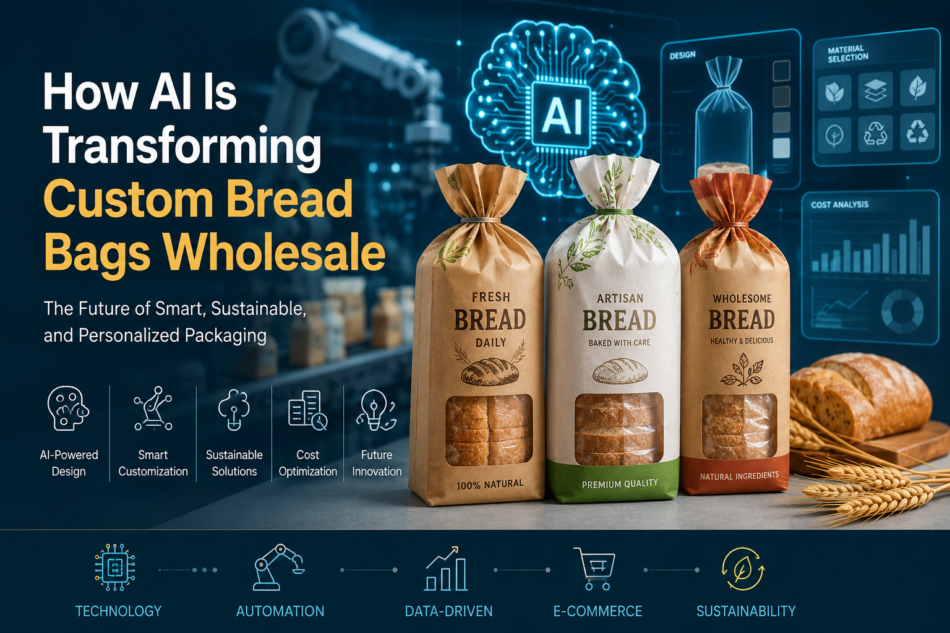
Discover how AI is transforming custom bread bags wholesale through smarter design, material selection, automation, cost analysis, and sustainable packaging.
Artificial intelligence is changing how businesses approach packaging design, manufacturing, inventory planning, and customer experiences. For bakeries, food brands, retailers, and packaging suppliers, custom bread bags wholesale can benefit from AI-powered workflows that make packaging development faster, more precise, and data-driven.
Instead of relying entirely on manual design revisions and traditional production decisions, businesses can use AI to analyze information, generate concepts, compare materials, predict demand, and optimize packaging specifications. These capabilities connect packaging with technology, automation, e-commerce, and modern manufacturing.
AI does not replace packaging professionals. Instead, it provides tools that help designers, manufacturers, and businesses make better decisions throughout the packaging life cycle.
AI-Powered Custom Bread Bags Wholesale Design
Packaging design is one of the areas where AI can provide significant assistance. Designers can use AI-powered software to generate multiple concepts based on brand colors, product characteristics, target customers, and preferred visual styles.
For custom bread bags wholesale, this can make the initial design process more efficient. A bakery could explore several combinations of typography, illustrations, colors, bag structures, and branding elements before selecting a final direction.
AI can also help evaluate design variations against specific requirements. For example, a business may want packaging that looks traditional, premium, minimalist, or environmentally conscious. AI-assisted design workflows can quickly generate concepts aligned with those objectives.
The final design still requires human review, especially for brand accuracy, regulatory information, printing requirements, and food-packaging considerations.
Automated Packaging Customization
Customization traditionally involves several rounds of communication between a customer, designer, and manufacturer. AI and automation can simplify parts of this workflow by helping businesses organize specifications and generate design variations more efficiently.
A wholesale customer may need different custom bread bags wholesale designs for multiple bread varieties. Instead of creating every variation from scratch, automated systems can use an established template and modify approved elements such as product names, colors, illustrations, or nutritional information.
This approach can help maintain brand consistency while reducing repetitive design work. It is particularly useful for businesses selling multiple products through physical stores and e-commerce channels.
Automated workflows can also connect design files with production information, reducing the need to manually transfer specifications between different stages of the packaging process.
AI for Custom Bread Bags Wholesale Material Selection
Material selection has a direct impact on packaging performance, cost, sustainability, and product presentation. AI can assist businesses by analyzing multiple factors when evaluating packaging materials.
For custom bread bags wholesale, these factors may include product requirements, bag dimensions, durability, barrier properties, printing needs, shipping conditions, and sustainability objectives. AI-based systems can help compare available options against predefined criteria.
For example, if a bakery wants lightweight packaging with a stronger sustainability focus, data-driven tools can help identify material options worth evaluating. The packaging professional can then assess those recommendations based on actual manufacturing capabilities and food-contact requirements.
This creates a more systematic approach to material selection rather than relying solely on assumptions or previous orders.
Personalized Branding and Printing
Branding is particularly important for bakery packaging because the bag is often one of the first things customers see. AI can support personalized packaging by analyzing customer preferences, market trends, and brand characteristics.
Businesses using custom bread bags wholesale can experiment with different visual directions for specific product categories. AI-assisted tools may help generate ideas for colors, layouts, typography, illustrations, and seasonal designs.
For e-commerce businesses, packaging can also be designed to create a stronger unboxing experience. A visually distinctive bread bag can appear in product photography, social media content, and customer-generated images, extending the role of packaging beyond the physical store.
However, professionalization should remain consistent with the overall brand identity. AI-generated concepts should be reviewed and refined by designers before being used for commercial production.
AI-Driven Packaging Cost Analysis
Cost management is another area where AI can support wholesale packaging decisions. Packaging costs can depend on materials, dimensions, printing processes, finishing techniques, order quantities, shipping, and manufacturing requirements.
AI-powered analytical tools can process these variables and identify opportunities for optimization. For businesses ordering custom bread bags wholesale, data-driven analysis may help compare different bag sizes, material choices, order volumes, and production specifications.
For example, a business could evaluate whether changing bag dimensions would reduce material consumption without negatively affecting product protection or appearance. Similarly, historical ordering data could help identify purchasing patterns and improve future planning.
The objective is not simply to choose the cheapest packaging. Effective cost analysis balances price with quality, functionality, branding, sustainability, and customer expectations.
Sustainable Bread Bag Solutions
Sustainability is increasingly connected with technology and data. AI can help packaging teams analyze material usage, production waste, transportation requirements, and other factors that influence the environmental impact of packaging.
For custom bread bags wholesale, AI-assisted workflows can support decisions about lightweight designs, material efficiency, and production optimization. Reducing excess material can potentially lower both packaging waste and transportation requirements.
AI can also help businesses compare packaging concepts against sustainability objectives. However, sustainability claims should always be verified using reliable material specifications and appropriate documentation rather than relying solely on AI-generated recommendations.
The most effective approach combines technology with responsible material sourcing, efficient manufacturing, and accurate environmental information.
AI, E-Commerce, and Wholesale Packaging Workflows
The growth of e-commerce has created new requirements for packaging. Businesses need packaging that performs well during storage, transportation, delivery, and customer handling while maintaining a strong visual identity.
AI can connect e-commerce data with packaging decisions. Sales information, product demand, customer reviews, and purchasing patterns can help businesses determine which packaging sizes and designs are most practical.
For brands purchasing custom bread bags wholesale, these insights can support better inventory planning. Instead of ordering packaging based only on previous assumptions, businesses can use sales data and demand forecasts to make more informed purchasing decisions.
This is particularly useful for bakeries that sell products through multiple channels, including physical stores, online marketplaces, subscription services, and direct-to-consumer websites.
The Future of AI in Wholesale Packaging
AI’s role in packaging is likely to expand as businesses adopt more connected digital workflows. Future systems may integrate design software, inventory platforms, manufacturing equipment, quality-control systems, and e-commerce analytics into more unified packaging operations.
For custom bread bags wholesale, this could mean faster prototyping, more accurate demand forecasting, improved material utilization, automated quality checks, and increasingly personalized designs.
The strongest results will come from combining artificial intelligence with human expertise. Packaging designers understand visual communication, manufacturers understand production constraints, and food businesses understand their customers. AI can bring these disciplines together by processing information and accelerating repetitive tasks.
Ultimately, AI is making packaging more connected to technology, automation, manufacturing, e-commerce, and data-driven decision-making. For businesses like HofPack exploring custom bread bags wholesale, adopting these technologies can create opportunities to improve efficiency while developing packaging that is functional, attractive, and aligned with modern consumer expectations.


