 WhatsApp Us Now
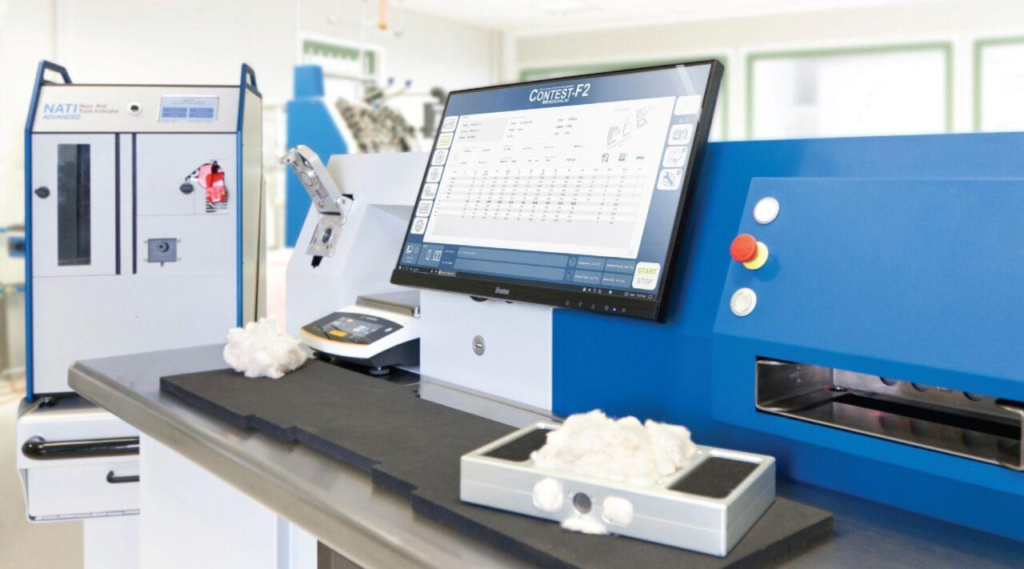
Developing a new fiber in a laboratory can be exciting. A promising sample may demonstrate excellent strength, softness, absorbency, biodegradability, or other desirable properties. But moving from a small laboratory experiment to reliable industrial production is a completely different challenge.
For textile, nonwoven, and advanced-material manufacturers, the gap between “it works in the lab” and “it works at commercial scale” can be significant.
This is where expert fiber consultation can help companies identify technical challenges early and develop a more practical route toward commercialisation.
Why Laboratory Results Don’t Always Translate to Production
Laboratory experiments typically operate under controlled conditions.
Researchers may work with:
- Small quantities of raw material
- Carefully controlled temperatures
- Highly consistent feedstocks
- Small processing equipment
- Limited production cycles
- Extensive manual adjustments
Industrial manufacturing is much less forgiving.
Large-scale equipment introduces variations in temperature, pressure, residence time, material flow, humidity, and mechanical forces.
A fiber that performs consistently in a laboratory may therefore behave differently when production volumes increase.
Raw Material Consistency Is Critical
One of the first scale-up challenges is raw material consistency.
Bio-based materials such as cellulose can vary according to their source, processing history, moisture content, molecular characteristics, and purity.
These differences can affect fiber formation and final properties.
For companies working with regenerated or modified cellulose materials, cellulose fiber consulting can help evaluate raw-material specifications and determine which characteristics need to be controlled before production begins.
The objective is simple:
Make sure the material going into the process is consistent enough to produce the material coming out.
Equipment Changes Everything
Laboratory equipment and industrial machinery rarely behave exactly the same way.
Increasing production capacity can change:
- Mixing efficiency
- Heat transfer
- Material residence time
- Shear conditions
- Pressure
- Drying behaviour
- Fiber formation
- Throughput
Small process changes can have surprisingly large effects on fiber morphology and performance.
This is why scale-up should be treated as an engineering and materials challenge—not simply a matter of making the same process bigger.
Maintaining Fiber Properties at Scale
A new fiber may have a target specification for properties such as:
- Tensile strength
- Elongation
- Fiber diameter
- Moisture absorption
- Softness
- Thermal stability
- Surface characteristics
The challenge is maintaining those properties consistently across industrial production.
A fiber consultant can help manufacturers identify which process variables have the greatest influence on critical fiber characteristics.
This can allow production teams to focus their monitoring efforts where they matter most.
The Challenge of Nonwoven Production
Scale-up becomes even more complex when fibers are intended for nonwovens.
The fiber must not only be produced consistently—it must also perform correctly during web formation and bonding.
Factors such as fiber length, crimp, surface chemistry, moisture behaviour, and strength can influence:
Fiber → Web formation → Bonding → Finishing → Final product
A change in fiber chemistry may therefore create unexpected problems later in the manufacturing process.
Specialised nonwoven consulting can help companies investigate these interactions and optimise fiber characteristics for the intended nonwoven process.
From Prototype to Repeatable Manufacturing
A successful prototype proves that something is possible.
Industrial production requires proof that it can be repeated.
That means manufacturers need to establish:
- Stable raw-material specifications
- Repeatable process conditions
- Appropriate quality controls
- Reliable equipment settings
- Acceptable production yields
- Consistent final properties
- Practical production costs
Without these elements, scaling a promising fiber can become expensive and unpredictable.

Sustainability Must Also Scale
For bio-based fibers, sustainability claims need to be evaluated at industrial scale.
A laboratory process may use small quantities of chemicals, water, and energy. At commercial volumes, those requirements can become much more significant.
Companies should therefore assess:
- Energy consumption
- Water requirements
- Chemical recovery
- Waste generation
- Raw-material sourcing
- Process efficiency
- Product lifetime
- End-of-life options
A fiber isn’t necessarily sustainable simply because its raw material is renewable.
The entire manufacturing system matters.
Why Independent Fiber Consulting Services Can Help
Internal research teams often have deep expertise in their specific technology, but an external perspective can identify issues that are easy to overlook.
Professional fiber consulting services can support companies with:
- Material evaluation
- Fiber development
- Process troubleshooting
- Scale-up planning
- Performance testing
- Raw-material assessment
- Nonwoven compatibility
- Sustainability evaluation
The goal isn’t to replace an internal R&D team.
It’s to provide additional technical insight when moving from research to commercial production.
Cellulose Fibers Need Special Attention
Cellulose-based fiber development can involve particularly complex chemistry.
Variables such as molecular weight, crystallinity, solubility, degree of polymerisation, moisture, and surface characteristics can influence processing and performance.
For companies developing regenerated or modified cellulose fibers, cellulose fiber consulting can help connect these molecular characteristics with practical manufacturing requirements.
This is particularly valuable when a material needs to meet both sustainability objectives and demanding performance specifications.
A Better Approach to Scale-Up
The most effective scale-up strategies don’t wait until the pilot plant to discover problems.
Companies can reduce risk by identifying critical variables during laboratory development and then progressively testing them at pilot and pre-industrial scale.
A useful approach is:
Laboratory → Pilot → Demonstration → Industrial production
Each stage should confirm not only that the material works, but that the process remains stable and economically realistic.
Final Thoughts
Moving a new fiber from laboratory research to industrial production is rarely a straightforward journey.
The chemistry may be promising, but commercial success depends on raw-material consistency, equipment behaviour, process control, fiber properties, downstream compatibility, economics, and sustainability.
Expert fiber consultation can help companies bridge the gap between research and manufacturing by identifying scale-up risks before they become expensive production problems.
Whether the project involves advanced fibers, sustainable cellulose materials, or nonwoven applications, the objective remains the same:
Turn a promising laboratory material into a consistent, scalable, commercially viable product.
