 WhatsApp Us Now
If you want to experience the true heartbeat of Ethiopia, you need to step away from the bustling city streets, pull up a low wooden stool, and join a local community for a traditional coffee ceremony. In a country widely celebrated as the birthplace of Arabica coffee (Coffea arabica), coffee is much more than just a morning pick-me-up. It is a sacred daily ritual, a profound gesture of hospitality, and a vibrant social event that brings families, friends, and travelers together.
Whether you are planning your next big cultural adventure or dreaming of wandering through the lush, misty highlands of Kaffa, understanding this ancient ceremony will enrich your journey. If you are ready to turn those dreams into reality and want to make sure your travel documents are sorted, you can quickly check your travel eligibility through the Ethiopia e-Visa Eligibility Guide before diving into the details. Let us take you deep into the traditions, steps, and heartwarming community spirit behind Ethiopia’s famous coffee-roasting custom.
The Birthplace of Coffee: A Rich Cultural Legacy
Long before coffee became a global commodity enjoyed in modern cafes from New York to Tokyo, it was discovered in the ancient forests of Ethiopia. Legend has it that a young goat herder named Kaldi noticed his goats becoming unusually energetic and lively after nibbling on glossy red cherries from a mysterious shrub. Curious, he tried them himself, and the rest is global history.
Today, this rich heritage is kept alive daily in homes, roadside stalls, and village squares across the country. When you participate in an Ethiopian coffee ceremony, you are stepping directly into centuries of living history.
What Happens During an Ethiopian Coffee Ceremony?
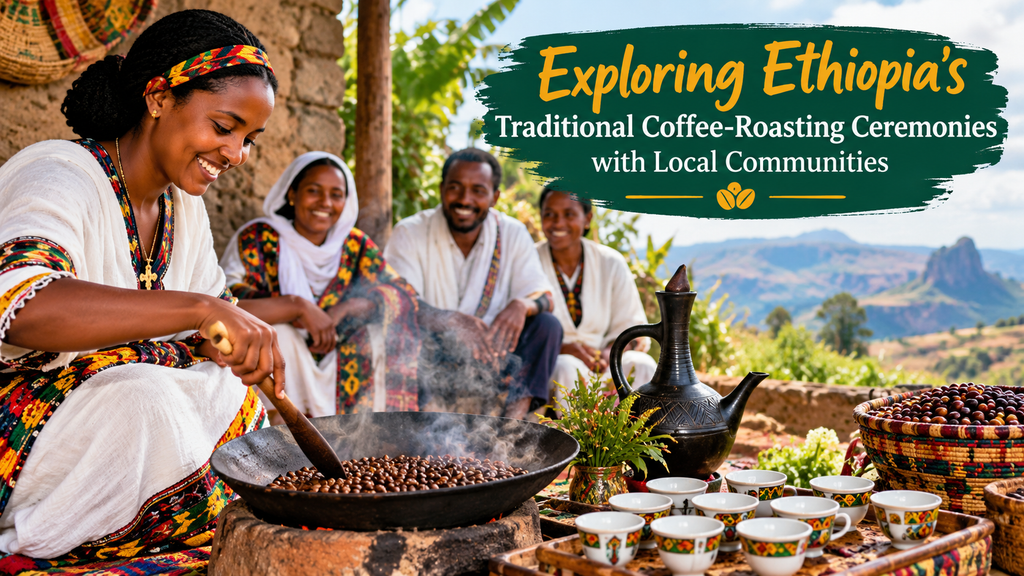
A traditional coffee ceremony—known locally as Jebena Buna—is an unhurried, multi-step sensory experience that usually lasts between one to two hours. Here is what you can expect when a local host invites you to share a cup:
1. Washing and Roasting the Green Beans
The ceremony begins with the host sorting raw, green coffee beans by hand to remove any impurities. These beans are then washed in a shallow metal pan. Once clean, the host places them onto a flat iron pan (mitad) and roasts them over an open charcoal stove. As the beans slowly turn from green to a rich, glossy dark brown, the host will gently fan the pan toward the guests, inviting everyone to close their eyes and inhale the warm, buttery, and earthy aromas.
2. Grinding with the Mokecha
Once roasted to perfection, the hot beans are transferred to a wooden mortar (mokecha) and crushed by hand using a heavy wooden pestle (zenezena) until they reach a uniform, aromatic powder.
3. Brewing in the Traditional Clay Jebena
The ground coffee is then poured into a traditional, round-bottomed clay pot with a long neck and spout, called a jebena. Water is added, and the pot is placed directly over the glowing embers of the charcoal stove until it reaches a rolling boil. Expert hosts know precisely when to remove it so the flavors extract fully without burning.
4. The Pour and the Blessing: Three Rounds of Coffee
Pouring coffee from a jebena is an art form in itself. The host lifts the pot high above a tray lined with small, handleless cups (cini) and pours a steady, unbroken stream of dark, fragrant coffee without spilling a single drop.
In Ethiopian culture, drinking coffee is done in three distinct rounds, each holding cultural significance:
- Abol: The first and strongest cup, representing the main round of conversation and connection.
- Tona: The second cup, brewed using the same grounds with a bit more water, shared to honor the friendship between host and guest.
- Baraka: The final and third cup, which signifies a blessing for the household, peace, and good health.
Accompanying the coffee, hosts often serve traditional snacks like roasted barley, popcorn, or boiled local snacks like kolo, adding a delightful crunch to the experience.
Immersing Yourself in Local Communities
Participating in a coffee ceremony is rarely a solitary affair; it is deeply communal. In rural villages and urban neighborhoods alike, neighbors drop by unannounced to share gossip, solve community problems, or simply enjoy each other’s company over a steaming cup.
For travelers, joining this ritual is the fastest way to break down cultural barriers. Even if you do not share a common spoken language, the shared smiles, the scent of burning incense (frankincense or myrrh is often lit during the ceremony), and the warmth of the host create an immediate, unforgettable human connection.
Planning Your Ethiopian Cultural Adventure
Are you ready to smell the roasting beans, meet warm local communities, and experience the birthplace of coffee firsthand? Organizing your trip is easier than you think, but you want to ensure your travel preparations are smooth and hassle-free.
Why Choose Us for Your Ethiopian Adventure Preparations?
Navigating international travel requirements can feel overwhelming, but our dedicated team is here to support you every step of the way:
- Reliable Travel Visa Services: Our global approach has assisted numerous travelers in obtaining their Visa. You can easily check your eligibility and requirements by visiting the Ethiopia e-Visa Eligibility Guide.
- Round-the-Clock Assistance: Reach out to us 24/7, and our experts will respond within 72 hours to answer any questions you have.
- Experienced Visa Consultants: Receive expert guidance to ensure the acceptance of your application and avoid unnecessary delays.
- Efficient Visa Application Process: Apply for your Visa in minutes with our simplified form, leaving you more time to plan your itinerary and dream about your first cup of authentic Ethiopian coffee.
Pack your bags, keep an open heart, and get ready for the most aromatic journey of your life!