 WhatsApp Us Now

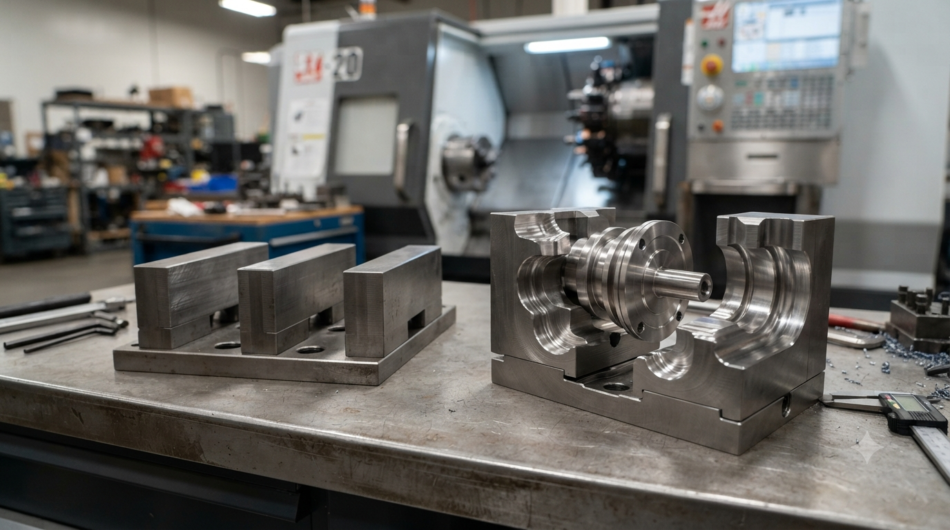
A Small Jaw Choice Can Mean the Difference Between a Clean Part and Costly Scrap
A small mistake in workholding can create big problems in a machine shop. A part may slip during machining, develop unwanted marks, or fail to meet the required dimensions. This can lead to wasted material, extra setup time, and costly rework.
Choosing the right soft jaws can help prevent these problems. Soft jaws hold a workpiece firmly inside a lathe chuck. They can also be machined to match the shape and size of a specific part.
When selecting soft jaws, shops usually have two main options: standard soft jaws and custom soft jaws. Standard jaws are useful for general machining jobs, while custom jaws are made to fit a particular part or production process.
But which option is better for your shop?
The answer depends on several factors, including part shape, production volume, setup time, and total tooling cost. In this guide, we will compare both options to help you make the right choice.
Standard Soft Jaws Keep Common Jobs Simple
Standard soft jaws are a common choice for machine shops because they offer flexibility. They can be machined to hold different workpiece shapes and sizes. This makes them useful for shops that handle many types of machining jobs.
Where Standard Jaws Work Well
Standard soft jaws usually come as machinable blanks. They are not always ready to hold a finished part straight out of the box. A machinist must bore, mill, or machine them to match the workpiece.
For example, if a shop needs to hold a round metal part, the machinist can bore the jaws to create a matching holding surface. This helps the jaws grip the part more evenly.
Standard soft jaws work well for:
- One-time machining jobs.
- Small production runs.
- Prototype parts.
- Repair and replacement work.
- Shops that handle different part sizes.
One major benefit is flexibility. A shop can machine standard jaws for a particular job without ordering a fully custom jaw set.
They are also useful when production needs change often. Instead of keeping many special jaw sets, machinists can use suitable standard blanks and machine them as needed.
The Limits of a General Fit
Although standard soft jaws are flexible, they may not provide the best fit for every workpiece.
A general jaw design may offer limited support for parts with unusual shapes. This can create pressure points during clamping. If the grip is not even, the part may move or develop surface marks.
Some common problems include:
- Extra setup time to machine and adjust the jaws.
- Less support for irregular workpiece shapes.
- Uneven clamping pressure.
- Part movement during cutting.
- Marks on delicate surfaces.
The final result depends on several factors. These include the shape of the part, its material, clamping force, and the accuracy of jaw machining.
For example, a thin-wall aluminum part needs careful handling. Too much clamping pressure can change its shape. A poor jaw fit can make this problem worse.
Standard jaws can still work for these jobs, but the machinist must check the contact area and gripping force before starting production.
Shop-Floor Example: A Short-Run Repair Part
Imagine a machine shop receives an order for 20 replacement metal parts. The parts have a simple round shape and do not require a special holding design.
In this situation, standard soft jaws can be a practical choice.
The machinist can take a standard jaw blank, machine the correct bore, and use it to hold the parts during turning.
Since the order is small, investing in a custom jaw set may not be necessary. The shop can also keep the machined jaws for future jobs with similar part dimensions.
However, the shop should record a few important details:
- How much time does jaw preparation take?
- Does the part move during machining?
- How many parts pass the first inspection?
- Is there any scrap or rework?
These records help the shop understand whether standard jaws are giving the expected results.
Custom Soft Jaws Pay Off When Fit and Repeatability Matter
Custom soft jaws are designed for a specific workpiece or machining operation. Unlike general-purpose jaw blanks, they are made to match the part’s shape, size, and holding requirements.
They are a good choice when a standard jaw cannot provide enough support or when the same part needs to be produced again and again.
What Makes a Jaw Custom?
Custom soft jaws are designed around the workpiece. Their shape and features depend on how the part needs to be held during machining.
A custom jaw set may include:
- Nests: Special pockets that hold a part in a fixed position.
- Relief cuts: Extra spaces that prevent unwanted contact with certain areas.
- Stops: Features that help position every part at the same location.
- Tool clearance: Space for cutting tools to reach the required areas.
- Special grip profiles: Shapes that match round, irregular, or complex parts.
These features help create a better connection between the jaw and the workpiece.
For example, a custom jaw with a matching pocket can support a part over a larger contact area. This can help reduce movement and improve positioning during machining.
Custom jaws can also make loading easier. Operators do not need to spend as much time adjusting the position of every part when the jaw design provides a clear and repeatable locating point.
Jobs That Benefit Most
Not every machining job needs custom soft jaws. However, some applications can benefit greatly from their design.
1. Repeat Production
When a shop produces the same part in large quantities, consistent positioning becomes important. Custom jaws help operators load parts in a similar position throughout the production run.
2. Odd-Shaped Parts
Some workpieces have uneven surfaces, special profiles, or unusual shapes. Standard jaws may not hold them securely. Custom jaws can be designed to match these shapes.
3. Thin-Wall Parts
Thin-wall components can bend or become distorted when too much pressure is applied. Custom jaws can provide better support and help spread the gripping force over a larger contact area.
4. Parts With Delicate Surfaces
Some components need a clean surface after machining. Custom jaws can be designed to avoid sensitive areas and reduce unwanted jaw marks.
A better jaw fit does not automatically remove every machining problem. The correct clamping force, jaw material, and machining setup are still important.
Case Study: Holding a Thin-Wall Part
Consider a shop that machines thin-wall metal housings.
The shop initially uses flat or lightly bored standard jaws. These jaws hold the part, but the contact area is limited. During clamping, the part may experience uneven pressure.
This can lead to several problems:
- The part may become slightly distorted.
- Runout may increase.
- Surface marks may appear.
- Operators may need extra time to adjust the setup.
The shop decides to consider a custom jaw design with a matching nest. The new design supports more of the workpiece surface and provides a more stable holding position.
Before and after the change, the shop should compare setup time, measured runout, surface marks, and scrap rate.
However, actual improvements must come from shop records. Without measured results, it would not be correct to claim a specific percentage reduction in scrap or setup time.
This example shows why custom jaws can be useful for delicate parts. Their main value is the ability to match the workpiece instead of depending on a general holding surface.
Compare Total Job Cost, Not Jaw Price Alone
When choosing between standard and custom soft jaws, many shops focus only on the purchase price. However, the jaw price is just one part of the total cost.
A cheaper jaw may require more machining, setup time, and adjustments. On the other hand, a custom jaw may cost more at the beginning but save time during repeated production.
Add Up the Full Cost of Each Option
Before making a decision, consider these costs:
1. Jaw Cost
Compare the purchase price of standard jaw blanks with the price of custom-made jaws.
2. Design and Machining Time
Standard jaws may need machining before use. Custom jaws may also require design and manufacturing time before delivery.
3. Setup Labor
Consider how much time operators spend installing, adjusting, and checking the jaws.
4. Changeover Time
If the shop regularly changes between different parts, the time needed to replace and prepare jaws can affect production costs.
5. Scrap and Rework
Poor holding can cause damaged parts, rejected components, and additional machining work.
A simple formula can help compare both options:
Total Cost Per Job = Tooling Cost + Setup Cost + Run Cost + Scrap or Rework Cost
For example, standard jaws may be cheaper for a small order. But if the same part returns regularly, custom jaws may become more cost-effective over time.
Measure the Numbers That Matter
Do not make the decision based only on estimates. Record actual production results wherever possible.
Here are some useful measurements:
| Measurement | What It Tells You |
|---|---|
| Setup time | Time needed to prepare the job |
| Changeover time | Time needed to switch jaw sets |
| First-piece pass rate | How many first parts meet specifications |
| Runout | How accurately the part rotates |
| Scrap rate | Number of rejected parts |
| Jaw life | How long the jaws remain suitable for use |
Try to compare both jaw options using the same part, material, machine, and machining process. Also record the batch size.
This makes the comparison more useful and helps identify which option gives better results.
Expert Insight: When Do Custom Jaws Earn Back Their Cost?
A machinist, tooling engineer, or workholding supplier can provide useful advice about jaw selection.
When speaking with an expert, ask questions such as:
- At what production volume do custom jaws become more cost-effective?
- How does part geometry affect jaw design?
- How does clamping force affect thin-wall components?
- Which jaw materials are suitable for different applications?
- How can shops improve repeatability and reduce part movement?
Include a verified quote from the expert, along with their name, job title, and company. This adds real industry experience and makes the article more trustworthy.
Choose Jaws Based on the Part, Batch, and Process
There is no single jaw option that works best for every machining job. The right choice depends on what you are producing and how often you need to produce it.
Use Standard Jaws When Flexibility Matters Most
Standard soft jaws are a good choice when:
- You handle different part types.
- Production runs are short.
- Part shapes are simple.
- You have a limited tooling budget.
- You need a practical solution for one-time jobs.
Before buying new jaws, check whether an existing standard jaw blank can be safely machined for the job.
This can help control tooling costs while giving your shop the flexibility it needs.
Choose Custom Jaws When the Job Repeats
Custom soft jaws are worth considering when:
- You produce the same parts regularly.
- The workpiece has an unusual shape.
- Thin-wall parts need extra support.
- Surface marks must be avoided.
- Operators need faster and more consistent loading.
- Standard jaws cannot provide the required grip.
Before ordering custom jaws, confirm that the design supports the workpiece properly. It should also provide enough clearance for cutting tools and should not create unnecessary pressure on delicate areas.
Use a Quick Decision Checklist
Ask these questions before choosing your next jaw set:
- How many parts will you produce, and how often will the job return?
- Does the part need extra support or special positioning?
- Is surface protection important?
- Do standard jaws require too much setup or adjustment?
- Will the saved setup and rework time cover the custom jaw cost?
If the job is small and simple, standard jaws may be enough. If the job requires repeatability, better support, or special gripping features, custom jaws may be the better investment.
Make the Jaw Choice That Fits the Next Job
Both standard and custom soft jaws have an important role in machining. Standard jaws offer flexibility and are useful for short runs, prototypes, and general-purpose work. Custom jaws provide a closer fit and can improve support and repeatability for demanding or repeated jobs.
The best choice depends on your workpiece, production volume, machining process, and total job cost.
Before making a final decision, test the jaw fit, check clamping pressure, and record important measurements such as setup time, runout, and scrap rate.
A careful comparison can help your shop reduce unnecessary costs, improve part quality, and make every machining job more efficient.


